
Historical Highlights, formerly called Senate Stories, is a collection of brief essays on Senate history.
Capitol Extension's Cornerstone Dedicated
 On the Fourth of July, 1851, sunny and unseasonably mild weather attracted large crowds to the Capitol’s east front plaza. The festive multitudes looked forward to a day of parades, speeches, and fireworks. These events were to celebrate the laying of a cornerstone as the beginning of a major Capitol construction project.
Read the full Senate Story.
Former Slave Presides over Senate
 On February 14, 1879, a Republican senator from Mississippi presided over the Senate. In this instance, the Senate's customary practice of rotating presiding officers during routine floor proceedings set an important milestone. The senator who temporarily assumed those duties had a personal background that no other senator, before or since, could claim—he had been born into slavery.
Read the full Senate Story.
The Senate Passes the Smoot-Hawley Tariff
 A memorable scene from the movie Ferris Bueller’s Day Off has a high school teacher vainly struggling to get some response from his dazed students. He says: “In 1930, the Republican-controlled House of Representatives, in an effort to alleviate the effects of the... Anyone? Anyone?... the Great Depression, passed the... Anyone? Anyone? The tariff bill? The Hawley-Smoot Tariff Act. Which, anyone? Raised or lowered?... raised tariffs, in an effort to collect more revenue for the federal government. Did it work? Anyone?... Anyone know the effects? It did not work, and the United States sank deeper into the Great Depression.” This amusing scene managed to omit the U.S. Senate, but it was on June 13, 1930, that the Senate passed the Smoot-Hawley Tariff, among the most catastrophic acts in congressional history.
Read the full Senate Story.
First Woman Elected to Both Houses of Congress
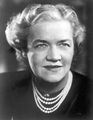 Is the Senate any place for a woman? This question dominated the 1948 Senate primary in the state of Maine. Seeking the Republican nomination were the current governor, a former governor, and a four-term House member named Margaret Chase Smith.
Read the full Senate Story.