
1861
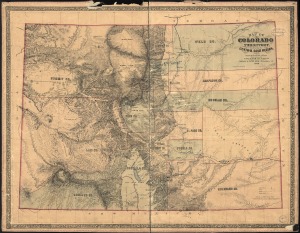
Colorado Territory was created within the state’s present borders.
1875
Congress passed legislation enabling Coloradans to hold a convention to draft a state constitution and submit it for approval.
1876
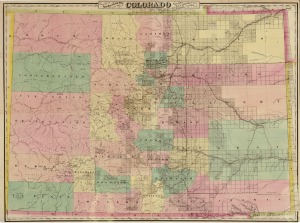
In compliance with the enabling act, President Ulysses S. Grant by proclamation admitted Colorado to the Union as the 38th state. Statehood occurred on the 100th anniversary of the Declaration of Independence thereby providing the nickname “The Centennial State.”
1876

Jerome Bunty Chaffee of Denver and Henry Moore Teller of Central City presented their credentials and took the oath of office as Colorado’s first senators. The senators then drew lots to determine their class assignments. Teller drew Class 1, with a term to expire on March 3, 1877. Chaffee drew Class 2, with a term to expire March 3, 1879. Chaffee and Teller were cousins, but also bitter political rivals.
1882
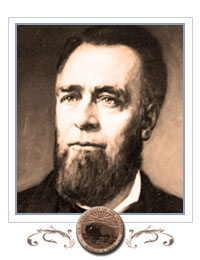
The Senate confirmed the nomination of Henry Moore Teller as secretary of the interior under President Chester A. Arthur. Teller resigned his Senate seat on April 17, 1876, and served as interior secretary until March 3, 1885. On March 4, 1885, he returned to the Senate and served until 1909. He is Colorado's longest-serving senator, with a total of 29 years, 5 months, and 3 days.
1890

Colorado senators Henry M. Teller, and Edward Oliver Wolcott of Denver, working with other western senators, secured passage of the Sherman Silver Purchase Act. This statute, designed to increase the market value of silver, established a plan for the U.S. Treasury to purchase 4.5 million ounces of silver bullion each month at market rates and to issue legal tender Treasury notes, at the option of that department, redeemable in gold or silver.
1893

Senator Henry M. Teller expressed his opinion about the Senate's role in protecting minorities against precipitous actions of a majority. “It is useless for anyone to say that the majority are capable of conducting things properly and will always conduct things properly. There is nothing in the world more wicked and cruel than the majority; and governments are instituted…to protect minorities against majorities. Majorities protect themselves.”
1893
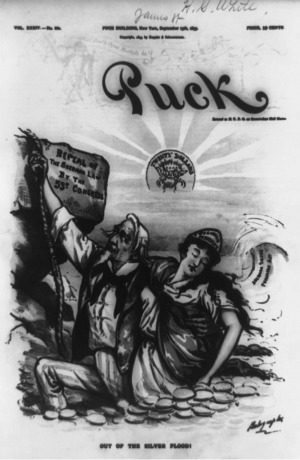
Senators Teller and Wolcott led a 46-day filibuster against a bill to repeal the Sherman Silver Purchase Act. Despite their efforts, Congress repealed the statute. This destroyed the market for silver and led to the closing of mines, banks, and businesses.
1893
Women were allowed to vote in the national election for the first time in Colorado after it became the second state to pass woman suffrage.
1898
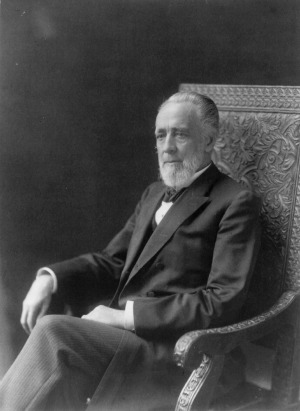
The Senate passed a joint resolution that repudiated Spain’s sovereignty over Cuba and called for U.S. intervention. It included the Teller Amendment, sponsored by Henry Teller, that recognized Cuba's independence and ensured the U.S. would not establish control of the island. On April 24, Spain declared war on the U.S.
1911

Following the death of Charles J. Hughes Jr. of Denver, the state legislature adjourned without electing a replacement. The seat remained vacant for two years until the legislature reconvened in January 1913 and elected Charles Spaulding Thomas of Denver for the two years remaining in Hughes' term.
1914
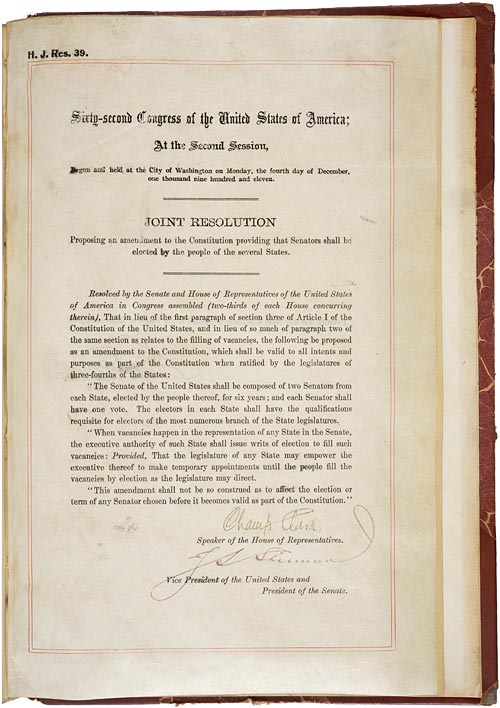
Charles Thomas became Colorado's first directly elected senator following the 1913 ratification of the Seventeenth Amendment to the U.S. Constitution
1924

Lawrence Cowle Phipps of Denver became chairman of the Senate Committee on Education and Labor (today's Committee on Health, Education, Labor, and Pensions), serving until 1926.
1946

Senate Republicans elected Eugene Donald Millikin of Denver as Conference chairman, a position he held until 1956.
1947
Eugene Millikin became chairman of the Senate Committee on Finance during the 80th Congress (1947–1949). He chaired that panel again from 1953 to 1955.
1949

Edwin Carl Johnson of Craig became chairman of the Senate Committee on Interstate and Foreign Commerce (today's Committee on Commerce, Science, and Transportation). He held that post for four years.
1959
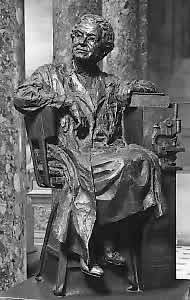
A statue of Florence R. Sabin of Denver, a pioneer in science and public health, was unveiled at the Capitol as Colorado's first contribution to the National Statuary Hall Collection.
1962
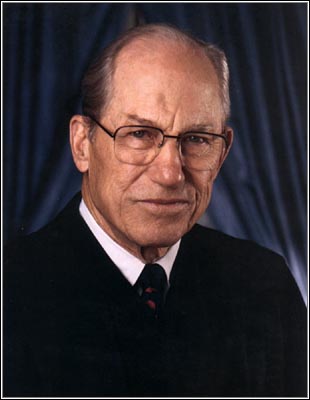
The Senate confirmed the nomination of Byron R. White of Wellington as an associate justice on the United States Supreme Court.
1969

Senate Republicans elected Gordon Allott of Lamar chairman of their Policy Committee. He served through 1972.
1984

Senate Republicans elected William Armstrong of Littleton chairman of their Policy Committee. He served through 1990.
1993

Senator Ben Nighthorse Campbell of Ignacio, a jewelry designer and rancher, became the third person of Native American ancestry to become a U.S. senator.
1995
Senator Ben Nighthorse Campbell changed parties, leaving the Democratic Party to join the Republicans. He maintained his seniority when he switched.
1997
Ben Nighthorse Campbell became chairman of the Senate Committee on Indian Affairs, serving until 2001, and again from 2003 to 2005.
1997
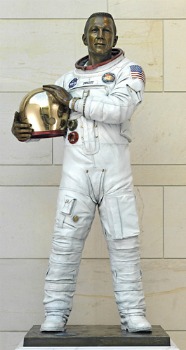
Congress accepted a statue of Apollo 13 astronaut and Denver native John L. Swigert, Jr., by George and Mark Lundeen, as Colorado's second contribution to the National Statuary Hall Collection.
2005

In taking the oath of office, Ken Salazar of Denver and Mel Martinez of Florida became the fourth and fifth Hispanic-Americans to serve in the Senate.
2009

Mark Udall of Eldorado Springs, who took his Senate oath on January 3, became Colorado's senior senator. He had served only 17 days as the state's junior senator, until the resignation of Ken Salazar elevated him to senior status.
2012

Senate Democrats announced that Michael Bennet of Denver would serve as their Democratic Senatorial Campaign Committee chairman for the 113th Congress.
2016
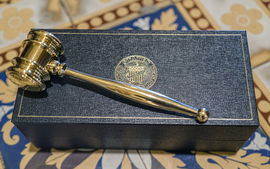
Cory Gardner of Yuma received the Golden Gavel Award for presiding over the Senate for 100 hours in a Congress.
2016

Senate Republicans elected Cory Gardner as their National Republican Senatorial Committee chairman for the 115th Congress.
2022

John Hickenlooper of Denver received the Golden Gavel Award for presiding over the Senate for 100 hours in a Congress.