
1627
The Province of Maine was sold to Massachusetts Bay Colony for 1,250 pounds.
1778
The Continental Congress created the District of Maine.
1819
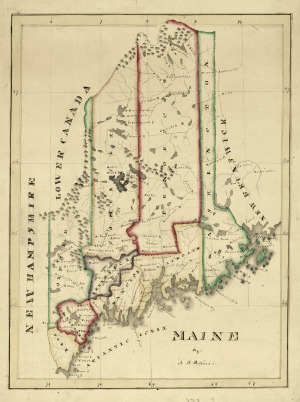
A referendum supporting the separation of Maine from Massachusetts to become a separate state won approval at the state level. At this time, seven members of the Massachusetts delegation to the U.S. House of Representatives represented locations in the District of Maine.
1820
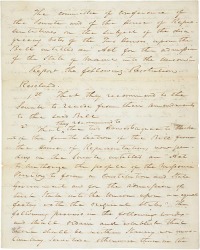
Maine entered the Union as the nation’s 23rd state as part of the Missouri Compromise, which provided that Missouri be admitted as a slave state in a pair with Maine as a free state.
1820

John Holmes of Alfred and John Chandler of Monmouth presented their credentials and took their oaths of office, becoming Maine’s first U.S. senators. They then drew lots to determine their class assignments. Senator Holmes drew Class 1, with a term to expire March 3, 1821. Senator Chandler drew Class 2, with a term to expire March 3, 1823.
1821

John Holmes became chairman of the Senate Committee on Finance, a position he held until May 8, 1822.
1843

John Fairfield of Saco took his oath as a senator. His informative correspondence with his wife was later compiled in The Letters of John Fairfield (1922).
1850
Upon his graduation from Bowdoin College, future senator William Pierce Frye went to work in the Portland law office of William Pitt Fessenden, who had previously served in the U.S. House and would soon win election to the Senate. Both men would later rise to distinction among Maine’s most notable senators.
1857

Inaugurated governor of Maine on January 8, 1857, Hannibal Hamlin of Hampden resigned on February 25 to begin his third term as U.S. senator.
1858
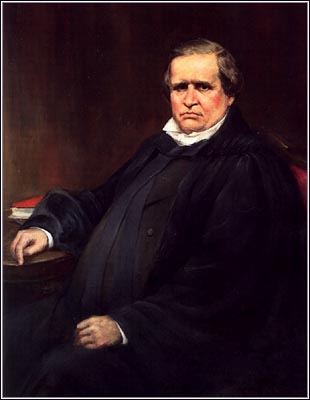
The Senate confirmed the nomination of Nathan Clifford of Newfield as associate justice of the Supreme Court.
1861
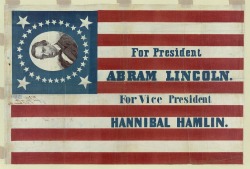
Hannibal Hamlin resigned his Senate seat effective January 17 having been elected vice president of the United States on the Republican ticket with Abraham Lincoln. Vice President Hamlin served as the Senate’s president through most of the Civil War, from March 1861 to March 1865.
1861
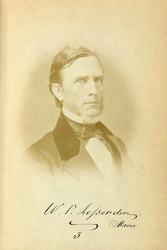
William Pitt Fessenden of Portland became chairman of the Senate Committee on Finance, a vital assignment in the early months and years of the Civil War. He held that position until July 1, 1864, and again from March 4, 1865, to March 3, 1867.
1864
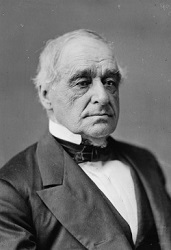
Vice President Hannibal Hamlin, who previously represented Maine in the Senate from 1848 to 1861 (and would return to serve from 1869 to 1881), enlisted in the Maine Coast Guard during the Civil War and participated in a summer encampment at Kittery. Promoted to corporal, the vice president drilled troops, guarded buildings, and peeled potatoes.
1864

Senator William Pitt Fessenden resigned his seat when the Senate confirmed his nomination as secretary of the treasury in the cabinet of President Abraham Lincoln. In 1865 the Maine legislature returned him to the U.S. Senate.
1867

Lott Morrill of Augusta became the first chairman of the newly established Senate Committee on Appropriations.
1869
William Pitt Fessenden replaced Lott Morrill, whose term had ended, as chairman of the Senate Committee on Appropriations. When Fessenden died in September 1869, Lott Morrill was appointed to replace him and was then selected as chairman of the Committee on Appropriations under the never-again-asserted theory that Maine should not be deprived of this powerful post merely because of an accident of fate.
1876
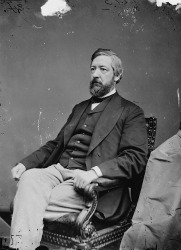
Former Speaker of the U.S. House of Representatives James G. Blaine of Augusta became a U.S. senator following his appointment to the seat by Maine's governor. He was subsequently elected.
1878
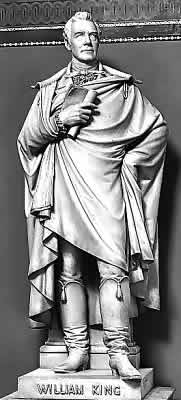
Maine dedicated its first entry in the National Statuary Hall Collection, a 7-foot, 5-inch marble likeness of William King, the state’s first governor.
1881
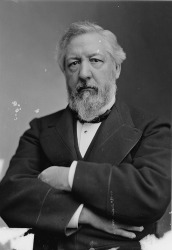
When the Senate confirmed his nomination as secretary of state, James Blaine resigned his Senate seat. Blaine served Presidents James Garfield and Chester Arthur from March 5 to December 12, 1881.
1887
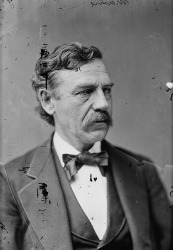
Senator William Pierce Frye of Lewiston became chairman of the Committee on Commerce (today's Committee on Commerce, Science, and Transportation). He held that post for nearly 21 years, making him the seventh longest-serving committee chairman in Senate history.
1889

The Senate confirmed the nomination of former senator James Blaine as secretary of state in the cabinet of President Benjamin Harrison. Blaine, who had been secretary of state briefly in 1881, served until 1892.
1890
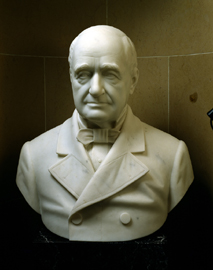
A bust of former vice president Hannibal Hamlin, by artist Franklin Simmons, was placed in the Senate Chamber as part of the Senate Vice Presidential Bust Collection. It was believed to have been the first time that a statue or bust of a living man had ever been commissioned by the U.S. government.
1896
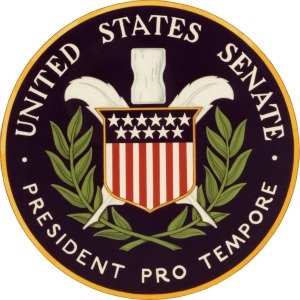
William Frye was elected Senate president pro tempore. He held that post for 15 years, until his death in 1911. During his tenure, he served as the Senate’s constitutional presiding officer during vacancies in the office of vice president from 1899 to 1901 and 1901 to 1905.
1896
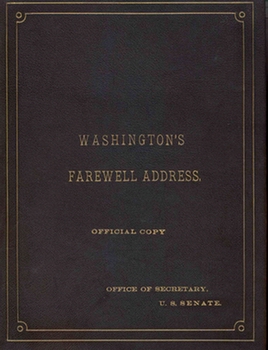
William Frye delivered George Washington's Farewell Address on the floor of the Senate, a tradition dating to 1862.
1909

Eugene Hale of Ellsworth became the third senator from Maine to chair the Committee on Appropriations. He served in that post for four years.
1911

William Frye and Eugene Hale set the record for the longest simultaneous service (nearly 30 years) for two senators from the same state—a record that remained until 1974. Even today, no state outside the South exceeds Maine in that distinction. Frye and Hale also hold the record as Maine’s longest-serving senators, with Frye serving the longest at 30 years and four months.
1916

Senator Charles F. Johnson of Waterville delivered George Washington's Farewell Address on the floor of the Senate, a tradition dating to 1862.
1916

Under the provisions of the Constitution’s newly ratified Seventeenth Amendment, Frederick Hale of Portland, son of Eugene Hale and grandson of Michigan senator Zachariah Chandler, became Maine’s first directly elected U.S. senator.
1935
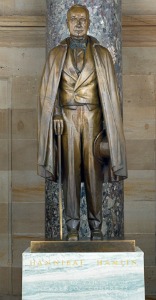
Maine dedicated its second entry in the National Statuary Hall Collection, a 6-foot, 8-inch bronze likeness of Hannibal Hamlin. In addition to his tenure as governor of Maine, House member, and vice president of the United States, Hamlin served in the Senate from 1848 to 1861 and 1869 to 1881.
1941
Wallace White of Auburn and later Lewiston, grandson of William Pierce Frye, delivered George Washington's Farewell Address on the floor of the Senate, a tradition dating to 1862.
1945
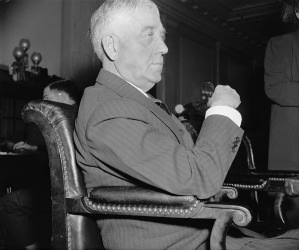
Wallace White was elected Senate Republican floor leader. White had been serving as acting leader since late 1943 during the illness and then after the death of Senator Charles McNary. He served in that post, including two years as majority leader (1947–1949), until he left the Senate in 1949.
1947

Wallace White became chairman of the Committee on Interstate and Foreign Commerce, (today's Committee on Commerce, Science, and Transportation). His grandfather, William Frye, had chaired the Senate Committee on Commerce (which became the Committee on Interstate and Foreign Commerce in 1947) for 21 years.
1947

Ralph Owen Brewster of Dexter became chairman of the Senate Special Committee to Investigate the National Defense Program. The committee was made permanent in 1948 and is now the Permanent Subcommittee on Investigations.
1949
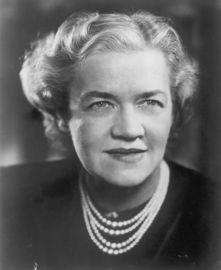
Margaret Chase Smith of Skowhegan began her Senate career, becoming Maine's first woman senator and the first woman to have served in both houses of Congress.
1949
Senator Margaret Chase Smith delivered George Washington's Farewell Address on the floor of the Senate, a tradition dating to 1862.
1950
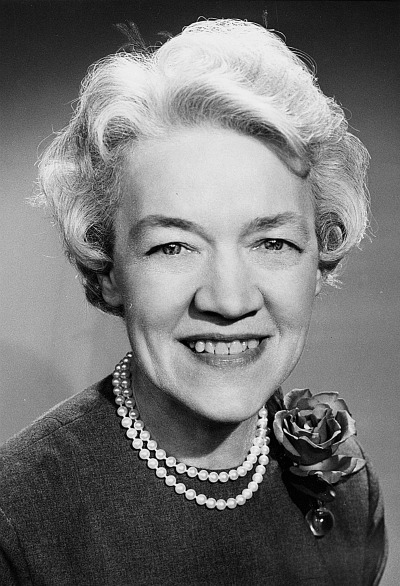
Senator Margaret Chase Smith delivered her "Declaration of Conscience" speech, attacking—without naming—Senator Joseph R. McCarthy (R-WI) for his anti-communist tactics of "vilification" and "smear."
1962
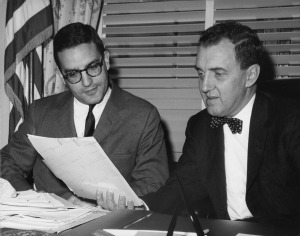
Future senator George Mitchell became executive assistant to Senator Edmund Muskie of Waterville. He continued in that post until 1965, when he returned to Maine to practice law.
1964
Edmund Muskie delivered George Washington's Farewell Address on the floor of the Senate, a tradition dating to 1862.
1964
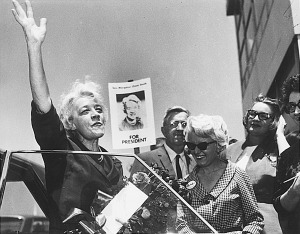
Margaret Chase Smith, the first woman to actively seek the presidential nomination of a major political party, became the first woman to be placed in nomination for the presidency at a major political party’s convention.
1968
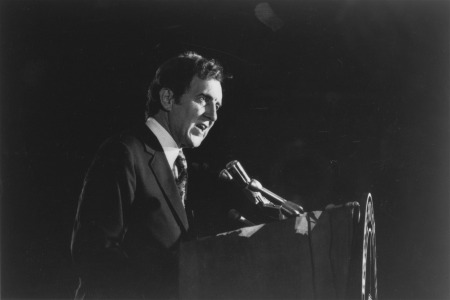
Senator Edmund Muskie was nominated as the Democratic Party’s candidate for vice president of the United States. Muskie and his presidential running mate, Vice President Hubert Humphrey of Minnesota, lost to former senator and vice president Richard Nixon and his running mate, Spiro Agnew.
1972
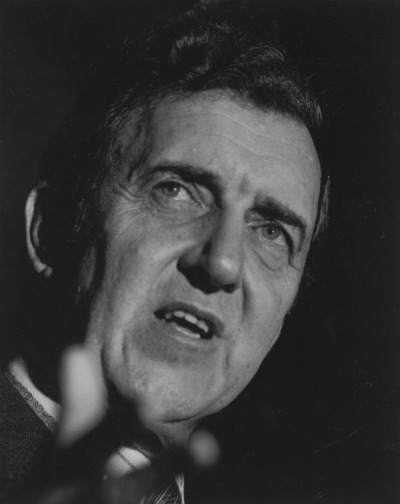
Edmund Muskie won the New Hampshire Democratic presidential primary, though he eventually lost his party's nomination to fellow senator George McGovern of South Dakota.
1973

Margaret Chase Smith concluded her 24-year Senate career, the longest tenure for any woman in the Senate’s history until 2011, when Barbara Mikulski of Maryland surpassed Chase’s record.
1974

Senator William Hathaway of Auburn earned a Golden Gavel Award for presiding over the Senate for 100 hours in a single session.
1980
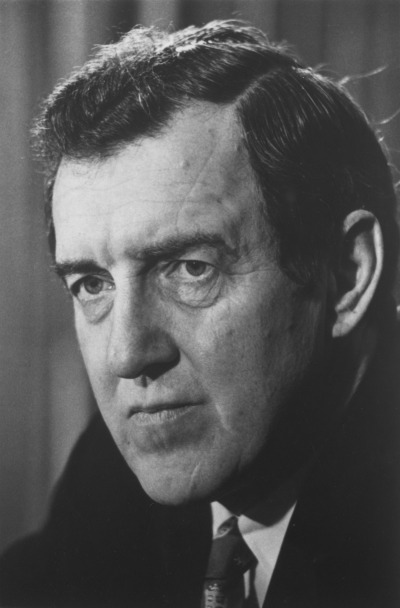
Following the Senate's confirmation of his nomination, Edmund Muskie resigned his Senate seat to serve as President Jimmy Carter’s secretary of state.
1981
Future senator Susan Collins, a member of the staff of Senator William Cohen of Bangor, served as staff director for the Senate Committee on Governmental Affairs, Subcommittee on Oversight of Government Management. Twenty-two years later, as a senator, she would become chair of the full committee (Committee on Homeland Security and Governmental Affairs).
1981
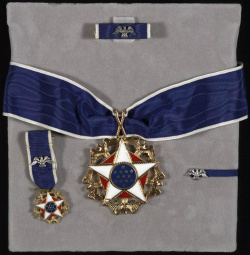
President Jimmy Carter awarded former senator Edmund Muskie the Presidential Medal of Freedom, awarded by the president of the United States to honor individuals who have made great contributions to either the United States or the world. To date, 30 senators have received the award.
1989
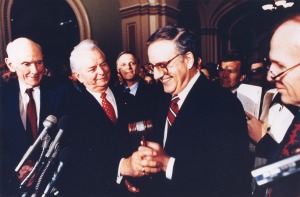
Senator George Mitchell became the Democratic Conference chairman and floor leader and served as majority leader until his retirement in 1995.
1989
Former senator Margaret Chase Smith received the Presidential Medal of Freedom, awarded by the president of the United States to honor individuals who have made great contributions to either the United States or the world. To date, 30 senators have received the award.
1996

Senator Olympia Snowe of Auburn won the Golden Gavel Award for presiding over the Senate for 100 hours in a single session.
1999
Former senator George Mitchell received the Presidential Medal of Freedom, awarded by the president of the United States to honor individuals who have made great contributions to either the United States or the world. To date, 30 senators have received the award.
1997

The Senate confirmed the nomination of former senator William Cohen as secretary of defense in the cabinet of President William Clinton.
2003

Susan Collins of Bangor became the chair of the Senate Committee on Governmental Affairs (today's Committee on Homeland Security and Governmental Affairs), a position she held until 2007. At the same time, Olympia Snowe was elected chair of the Senate Committee on Small Business and Entrepreneurship. Snowe chaired that committee until 2007.
2005
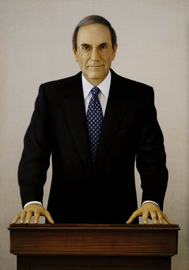
In a ceremony in the Old Senate Chamber, the Senate unveiled a portrait of former majority leader George Mitchell by Alan Magee which became part of the U.S. Senate leadership portrait collection.
2005
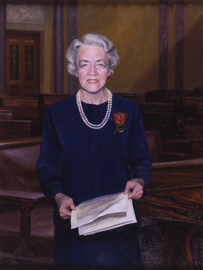
In a ceremony in the Old Senate Chamber, the Senate unveiled a portrait of former senator Margaret Chase Smith by Ronald Frontin.
2014

Angus King of Brunswick delivered George Washington's Farewell Address on the floor of the Senate, a tradition dating to 1862.
2015
Susan Collins became the chair of the Senate Special Committee on Aging, a position she held until 2021.