
1803

The Senate agreed to the ratification of the treaty with France providing for the Louisiana Purchase. Artist Constantino Brumidi later commemorated this treaty with the frescoed painting, Cession of Louisiana, above the doorway to S-124, then the Senate Committee on Territories, in the Capitol.
1812

Louisiana became the 18th state admitted to the Union. In September of that year, Jean Noel Destrehan of Destrehan and Allan Bowie Magruder of Opelousas were elected to serve as the state's first U.S. senators. Destrehan resigned before being seated, and Thomas Posey of Attakapas was appointed in Destrehan's place.
1812

Lots were drawn to determine class assignments for Senators Magruder and Posey. Magruder was assigned to Class 1, with a term to expire March 3, 1813. Posey was assigned to Class 3, with a term to expire March 3, 1817.
1815
After the Capitol was left in ruins from a British attack on the city of Washington, Louisiana senator Eligius Fromentin of New Orleans argued in favor of construction of an "unadorned"' Capitol, to be situated conveniently near the Georgetown area. "Our laws to be wholesome, need not be enacted in a palace," he reasoned. Congress opted to restore the existing Capitol.
1819

James Brown of New Orleans became chairman of the Senate Committee on Foreign Relations, serving until 1820.
1821

Henry Johnson of Donaldsonville became chairman of the Senate Committee on Indian Affairs, serving until 1823.
1826

Josiah S. Johnston became chairman of the Senate Committee on Commerce (today's Committee on Commerce, Science, and Transportation), serving until 1827.
1831

Edward Livingston of New Orleans resigned his Senate seat to become secretary of state under President Andrew Jackson. Jackson had given Livingston a recess appointment. The Senate confirmed the nomination on January 12, 1832.
1839

Alexander Mouton of Attakapas district, now Lafayette Parish, became chairman of the Senate Committee on Agriculture (today's Committee on Agriculture, Nutrition, and Forestry), serving until 1841.
1851

Pierre Soulé of New Orleans became chairman of the Senate Committee on Agriculture (today's Committee on Agriculture, Nutrition, and Forestry), serving until 1853.
1861

Senators Judah P. Benjamin and John Slidell, both of New Orleans, withdrew from the Senate after Louisiana seceded from the Union on January 26, 1861. Benjamin's seat was declared vacant by the Senate on March 14, 1861. Slidell's term expired on March 3, 1861, so the Senate took no formal action against him.
1864
Both R. King Cutler and Charles Smith presented credentials to the Senate to fill the Louisiana seats that had been vacant since before the outbreak of the Civil War. At the same time, Louisiana citizens submitted a memorial to the Senate asking that Cutler and Smith not be seated. Debate in the Senate over the seating of Cutler and Smith continued through the expiration of Smith's term, at which time Louisiana governor Michael Hahn's credentials were submitted to the Senate. Ultimately, these election cases remained unresolved. It was not until the state of Louisiana was formally restored to the Union in 1868 that the state was again represented in the Senate.
1868

Louisiana was formally readmitted to representation in Congress after the state legislature ratified the Fourteenth Amendment to the United States Constitution.
1873

Pinckney B. S. Pinchback presented his credentials to the Senate but spent the next three years in a dispute for the seat. On March 8, 1876, the Senate voted 32 to 29 not to seat Pinchback, preventing him from becoming the third African American United States senator. James B. Eustis of New Orleans was seated on December 10, 1877.
1873
Both John Ray and William L. McMillen appeared before the Senate with certificates of election for the same Senate seat, to complete the final six weeks of the term of Senator William P. Kellogg of New Orleans, who had resigned to run for governor. The case was referred to the Senate Committee on Privilege and Elections, who heard a confusing chronicle of rival legislatures, and ultimately neither candidate was seated.
1877

The Senate voted 30 to 28 in favor of seating William P. Kellogg following disputed elections by rival legislatures. Undaunted, Henry M. Spofford, the other claimant of the Senate seat, continued to press his claim until his death in 1880.
1894

The Senate confirmed the nomination of Senator Edward D. White, born in Lafourche Parish, as an associate justice of the Supreme Court. White resigned from the Senate on March 12, when he began his tenure on the Court. On December 12, 1910, White was nominated and confirmed as chief justice of the United States.
1932

Senator Huey P. Long of New Orleans traveled to Arkansas for an extraordinary nine-day campaign tour in support of long-shot Senate candidate Hattie Caraway. The highly publicized "Hattie and Huey" tour resulted in a landslide victory for Caraway.
1934

Senator Huey P. Long delivered his "Every Man a King" radio address nationwide. In 1932 and 1933, the Senate had rejected Long's legislative efforts to secure a more equitable distribution of the nation's wealth. With this classic speech, Long utilized his oratorical skills and the power of radio to take his cause directly to the American people.
1934

Following a third Senate investigation into campaign irregularities in Louisiana, the Senate Committee on Privileges and Elections concluded that no further Senate action was warranted with regard to the seating of Senators Huey P. Long and John H. Overton of Alexandria. The full Senate agreed by voice vote and Long and Overton retained their seats.
1935

Senator Huey P. Long began what would become his longest and most dramatic filibuster. Long, known as "The Kingfish," spoke for 15 hours and 30 minutes, the second-longest Senate speech to that date.
1935

Senator Huey P. Long was shot by an assassin in the state capitol building in Baton Rouge. Long died from his wounds two days later.
1936

Rose McConnell Long of New Orleans was appointed to fill the vacancy caused by the death of her husband, Senator Huey P. Long, becoming only the third woman to serve in the U.S. Senate and the first woman senator from Louisiana. She was subsequently elected in a special election and served until January 3, 1937.
1938
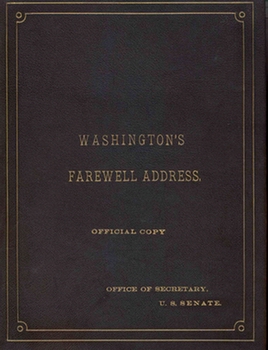
Senator Allen J. Ellender of Montegut delivered George Washington's Farewell Address on the floor of Senate, a tradition dating to 1862.
1941

A statue of Huey P. Long, by artist Charles Keck, was unveiled in the U.S. Capitol, becoming Louisiana's first contribution to the National Statuary Hall Collection.
1948

Russell B. Long of Shreveport was elected to fill the vacancy caused by the death of Senator John H. Overton. In doing so, Long became the first senator whose father (Huey P. Long) and mother (Rose McConnell Long) had also served in the Senate.
1951

Allen J. Ellender became chairman of the Senate Committee on Agriculture and Forestry (today's Committee on Agriculture, Nutrition, and Forestry), serving from 1951 to 1953, and again from 1955 to 1971.
1955
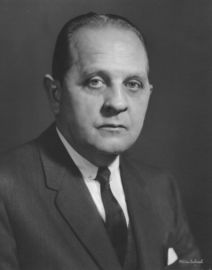
Felton M. "Skeeter" Johnston, who was born in Tallulah but later lived in Mississippi, was elected to serve as the secretary of the Senate, a position he held for more than 10 years.
1955

A bronze statue of Edward D. White, former senator and chief justice of the United States, by artist Arthur Morgan, was unveiled in the U.S. Capitol, becoming Louisiana's second contribution to the National Statuary Hall Collection.
1966
Russell B. Long became chairman of the Senate Committee on Finance, serving until 1981.
1971

Allen J. Ellender became chairman of the Senate Committee on Appropriations, serving until 1972.
1971
Allen J. Ellender was elected president pro tempore of the Senate, serving until July 27, 1972.
1972

Elaine S. Edwards of Marksville became the 11th woman to serve in the Senate and Louisiana's second woman senator when she was appointed by the governor, her husband, to fill the vacancy caused by the death of Senator Allen J. Ellender.
1984
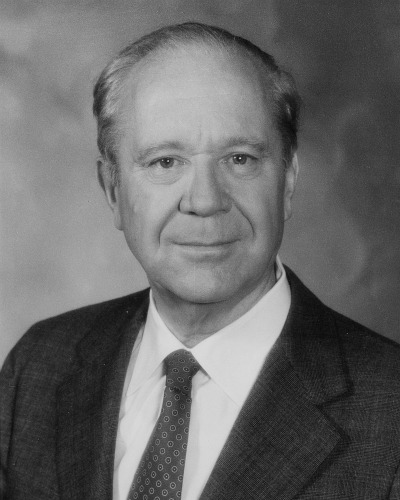
Senator Russell B. Long became Louisiana's longest-serving senator, surpassing Allen J. Ellender's record of 35 years, 5 months, and 26 days. Long went on to serve a total of 38 years and 3 days.
1987

J. Bennett Johnston of Shreveport, Caddo Parish, became chairman of the Senate Committee on Energy and Natural Resources, serving until 1995.
1987
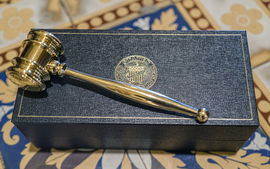
Senator John B. Breaux of Crowly received the Golden Gavel Award for presiding over the Senate 100 hours in a single session.
1998
Senator Mary L. Landrieu of Baton Rouge (and later New Orleans) delivered George Washington's Farewell Address on the floor of the Senate, a tradition dating to 1862.
2004

Senator John B. Breaux of Crowly delivered George Washington's Farewell Address on the floor of the Senate, a tradition dating to 1862.
2006

Senator David Vitter of Metairie received the Golden Gavel Award for presiding over the Senate 100 hours in a single session.
2009

Mary L. Landrieu, Louisiana's third woman senator, became chairman of the Senate Committee on Small Business and Entrepreneurship, serving until February 2014.
2014
Mary L. Landrieu became the first woman to chair the Senate Committee on Energy and Natural Resources, serving until 2015.
2015
David Vitter became chairman of the Senate Committee on Small Business and Entrepreneurship, a position he held until 2017.
2016

Senator Bill Cassidy of Baton Rouge received the Golden Gavel Award for presiding over the Senate 100 hours in a single session.
2025
Senator Bill Cassidy became chairman of the Senate Committee on Health, Education, Labor, and Pensions.