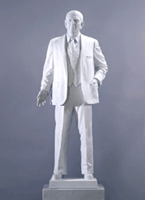

Richard B. Russell (miniature replica)
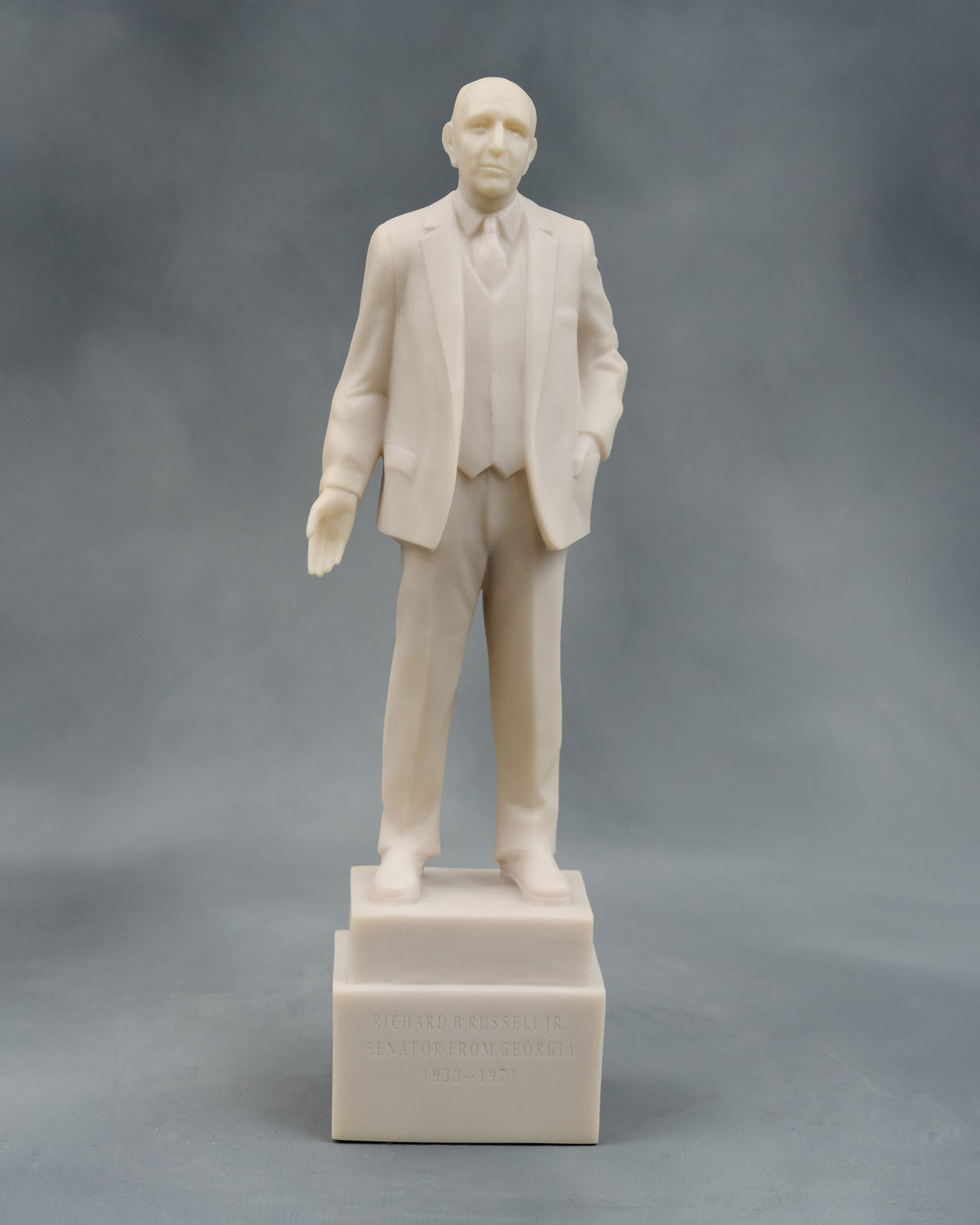
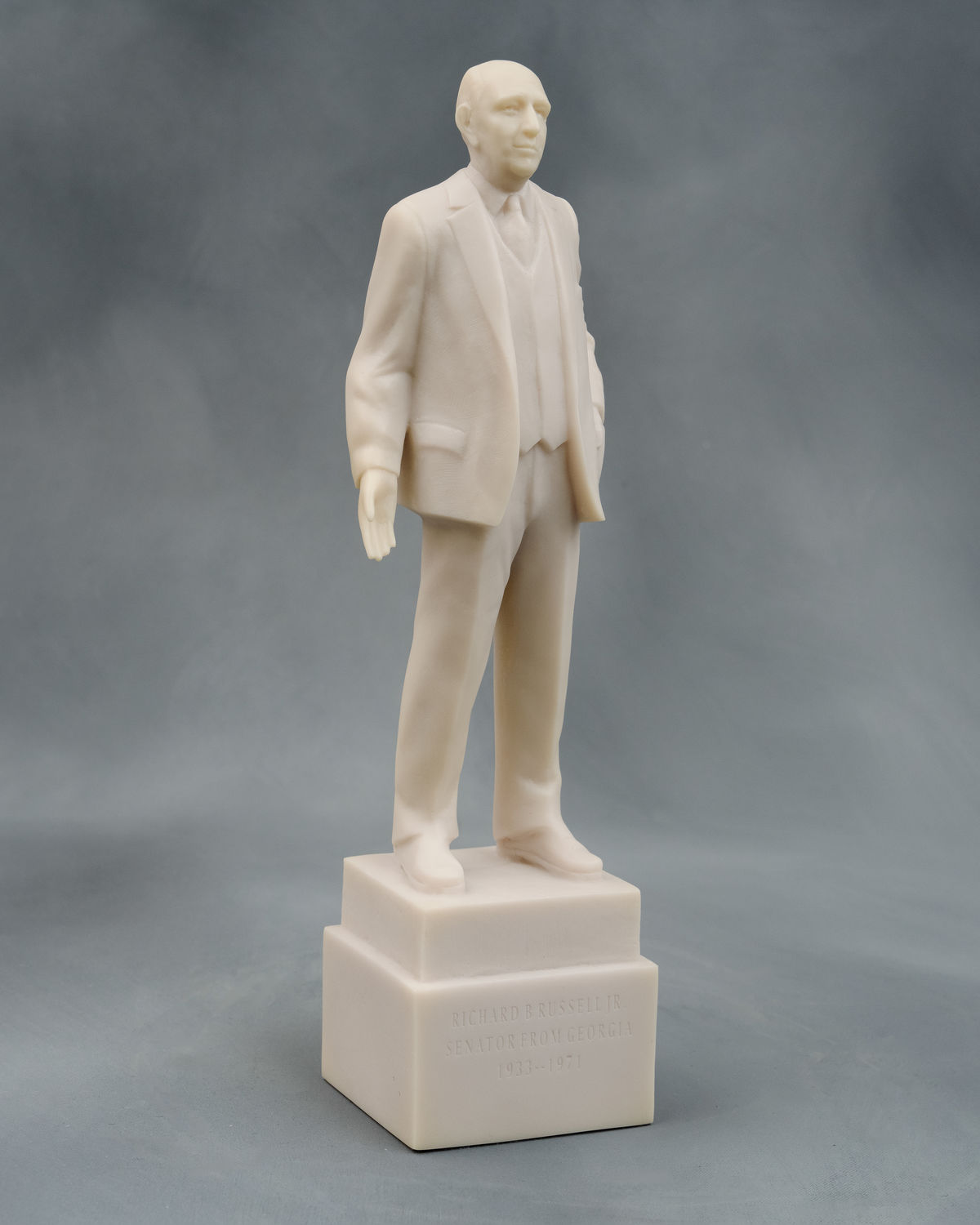
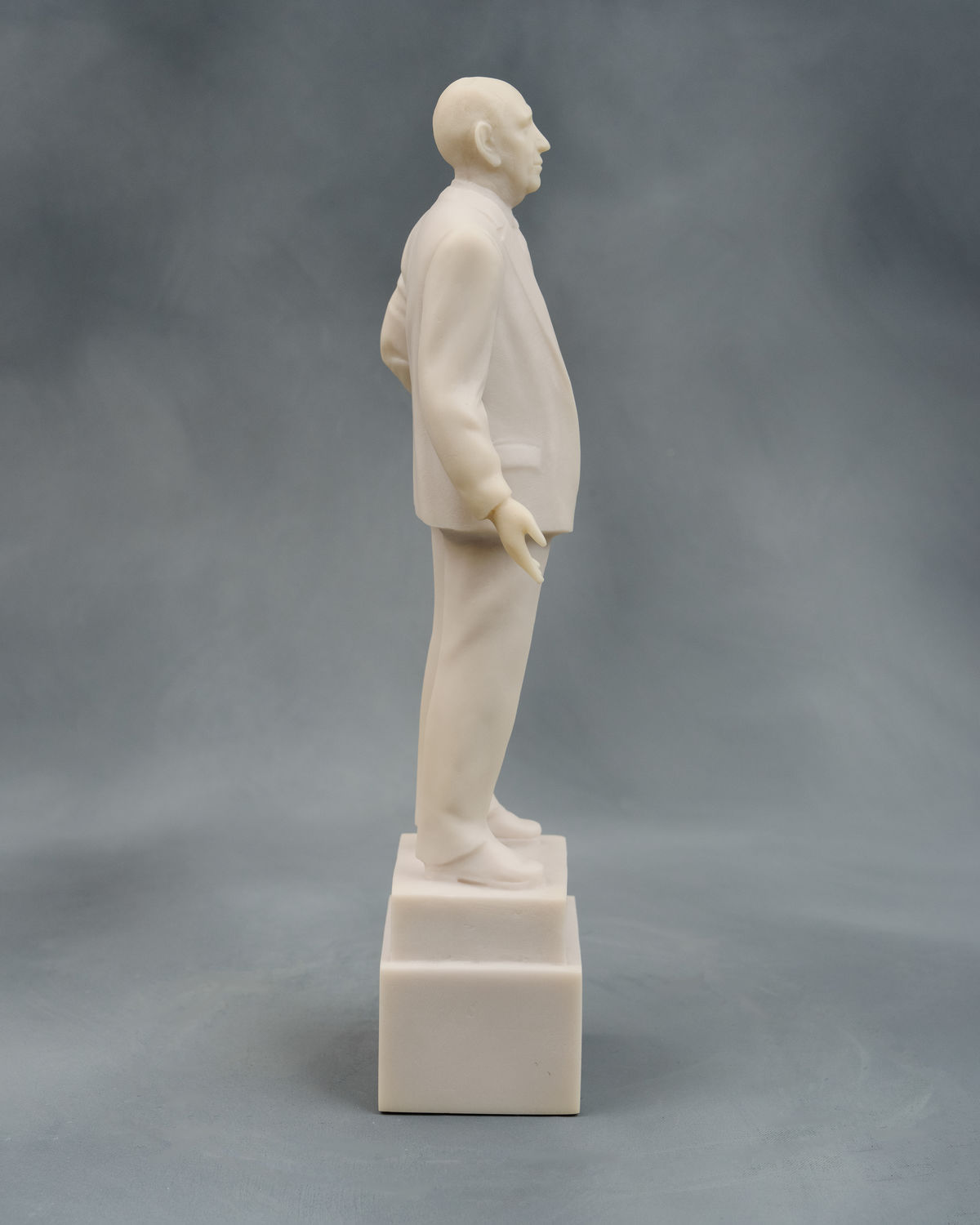
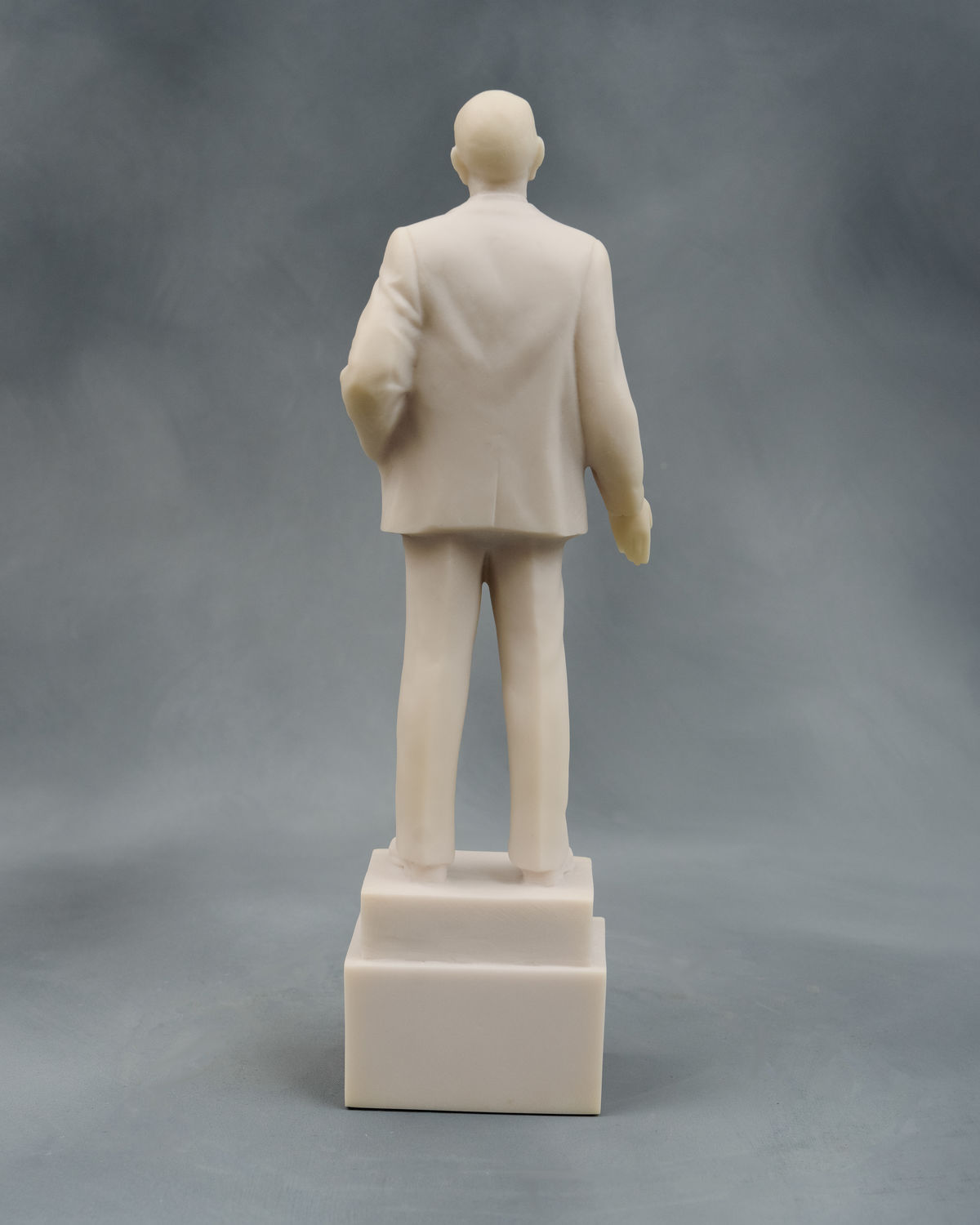
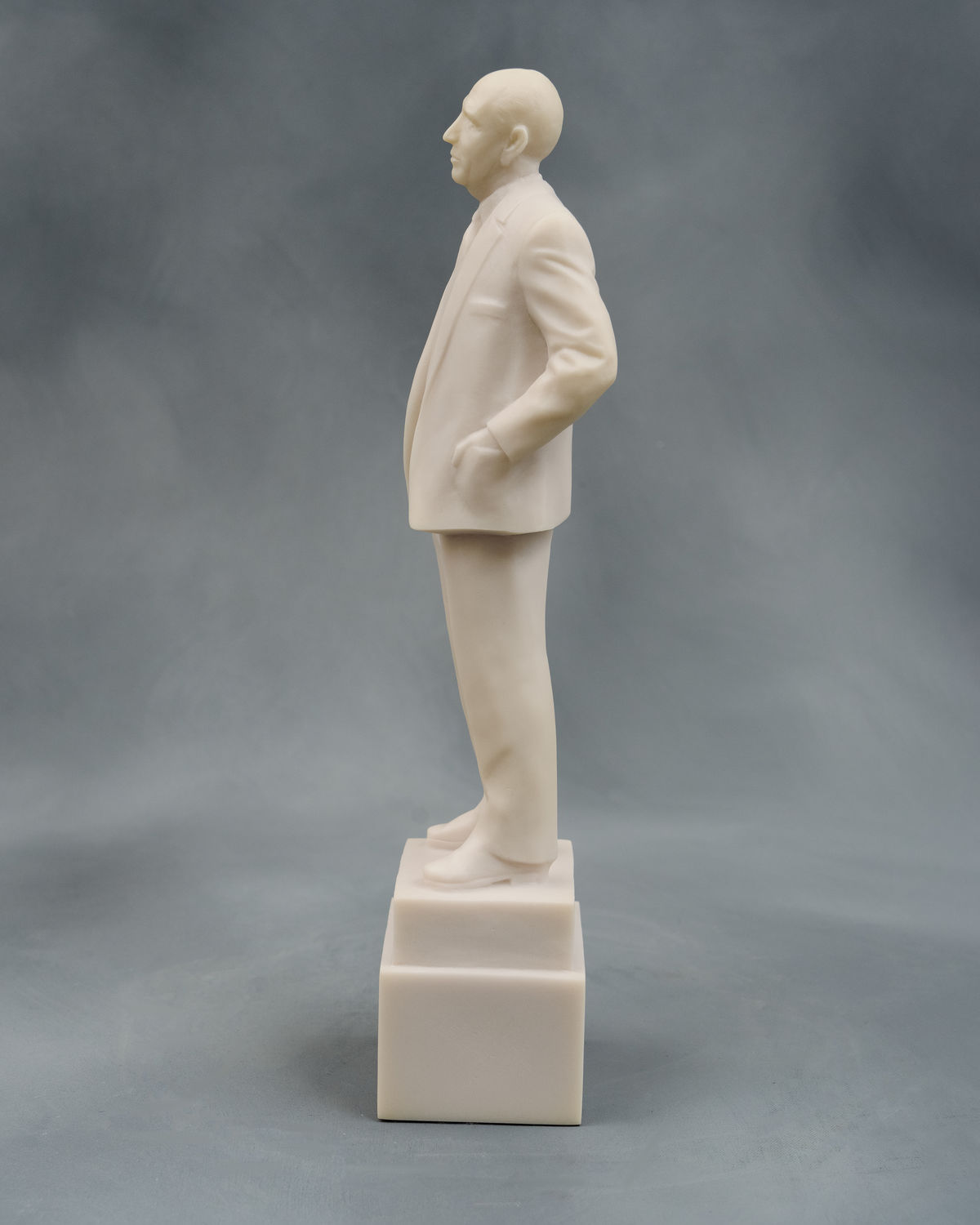
| Title | Richard B. Russell (miniature replica) |
| Artist/Maker | Colbar Art, Inc. |
| Date | 1996 |
| Medium | Powdered marble and polyester |
| Dimensions | h. 17 x w. 5.5 x d. 3.38 in. (h. 43.18 x w. 13.97 x d. 8.5852 cm) |
| Credit Line | U.S. Senate Collection |
| Accession Number | 25.00006.000 |
- Signatures, Inscriptions, and Markings
- Inscription
(on front of base): RICHARD B RUSSELL JR. / SENATOR FROM GEORGIA / 1933 - - 1971
- Sitter(s)
- Russell, Richard B., Jr.
Richard Brevard Russell, Jr., one of the leading statesmen and senators of the 20th century, was born in Winder, Georgia. Russell entered the United States Naval Reserve and later practiced law with his father. In 1920 he was elected as a Democrat to the state house of representatives, where he rose quickly to become its Speaker. At the age of 33, he was elected governor of Georgia, and in 1932 he successfully ran for the U.S. Senate. For 38 years Russell served in the Senate, where he developed a reputation for intelligence, independence, and loyalty.
Russell first gained national prominence when the Senate chose him to preside over hearings on President Harry S. Truman's dismissal of General Douglas MacArthur during the Korean War. Russell's evenhanded management of the hearings helped diffuse a national crisis. During his Senate years, Russell held key committee posts, influencing major policy decisions for the nation. He was on the Appropriations Committee during his first term and later served on the Armed Services Committee, of which he was chairman for 16 years. Russell became the Senate's leading authority on military matters, advocating a strong national defense. He also focused on national issues, such as school lunch programs and farm assistance. He was, however, at odds with mainstream America on the issue of civil rights; Russell actively defended the Southern position on segregation and argued that states' rights should prevail in the matter of race relations.
A master parliamentarian who was well versed in Senate rules and practices, Russell preferred to work behind the scenes to influence legislation. In 1963 a reporter for Newsweek magazine described him as: “Modest, even shy, in manner, devastatingly skilled in debate, he has a brilliant mind, encyclopedic learning, unrivaled access to pressure points of senatorial power and a gift for using them. He is a senator's senator, the head of the Senate establishment, the most influential member of the United States Senate.” [1]
When Lyndon Johnson was majority leader, he observed that in a Senate composed of “whales” and “minnows,” Russell was “the principal whale.” [2] During his career, Russell advised six presidents, especially on issues of national security. His health began to decline in the mid-1960s, though he remained in the Senate until his death in 1971.
1. Congressional Record (1 February 1988) vol. 126, pt. 2: 499.2. Bob Dole, Historical Almanac of the United States Senate: A Series of ???Bicentennial Minutes??? Presented to the Senate during the One Hundredth Congress, edited by Wendy Wolff and Richard A. Baker (Washington, D.C.: Government Printing Office, 1989), 282.
- Related Objects
- Related Links
-
Richard Russell: A Featured Biography
(Featured Biographies)
- Rights and Reproduction
- Policies, Permissions, and Copyright