

Senate Stories | Edward Brooke of Massachusetts—The Bridge Builder

U.S. Mint
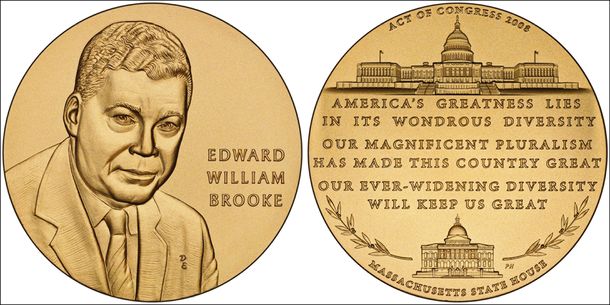
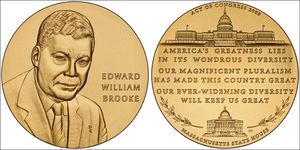
On October 28, 2009, former Senator Edward Brooke of Massachusetts, the first popularly elected African American senator, stood in the U.S. Capitol Rotunda to receive the Congressional Gold Medal. It was fitting that President Barack Obama, the first African American elected to the presidency, presented the medal to Brooke. Obama highlighted the improbability of a Black, Protestant Republican winning office in a state known for being white, Catholic, and Democratic. As Obama recalled, Brooke “ran for office, as he put it, to bring people together who had never been together before, and that he did.” As the only African American to serve in the Senate during the civil rights era, Brooke brought a unique set of experiences and perspectives to bear on some of the most politically charged issues of his time.1
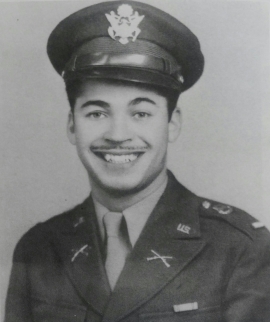
Edward Brooke was born in the District of Columbia in 1919, to Helen, a homemaker, and Edward Jr., a lawyer with the U.S. Veteran’s Administration. Brooke grew up in the Brookland neighborhood of northeastern D.C., at a time when the city’s schools and public accommodations were segregated. He attended Dunbar High School, one of the best performing public high schools for African American students in the country. Following in his father’s footsteps, Brooke enrolled at Howard University, where he served in the school’s ROTC program, graduating in June 1941. Brooke entered the U.S. Army as a second lieutenant with the segregated, all-Black 366th Combat Infantry Regiment stationed at Fort Devens in Ayer, Massachusetts, on December 7, the day Japan attacked Pearl Harbor. 2
U.S. Army Photo, in Bridging the Divide: My Life by Edward W. Brooke (Rutgers University Press, 2006)
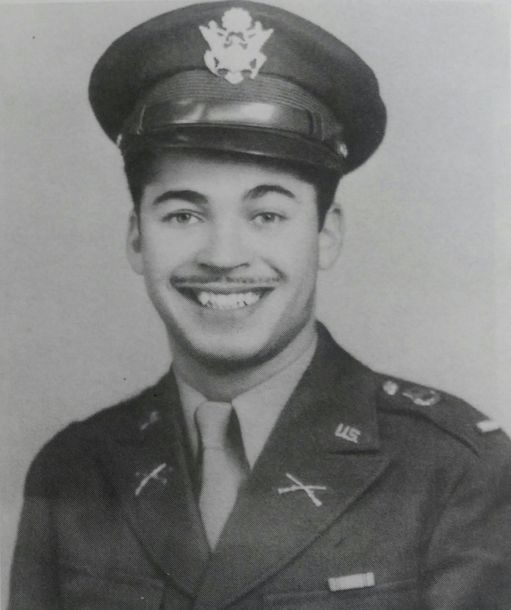
Brooke’s army service was an eye-opening, transformative experience. On the army base in Massachusetts, African American men were denied access to the pools, the exchange, and the officers’ club. “We were treated as second-class soldiers,” Brooke later recalled. Despite lacking any legal training, Brooke successfully defended Black enlisted men in military court—an experience that later led him to law school. In 1944 he sailed with his unit to Europe where he served in North Africa and in the campaign to liberate Italy. Brooke continued to encounter discrimination on base, this time in the form of racist tirades from his commanding officers. With some basic language training, Brooke quickly developed a fluency in Italian, a skill that proved useful in reconnaissance missions with Italian partisans. “My principal job,” he later explained, “was to map mine fields, supply roads, ammunition dumps, to locate concentration camps, and take prisoners for interrogation.” He never forgot the contrast between the freedom and dignity he felt when off base and the racism he experienced on base. Despite the challenges, Brooke earned the rank of captain and was awarded a Bronze Star in 1943 for “heroic or meritorious achievement or service.” While stationed in Italy, he met Remigia Ferrari-Scacco and the two were married in Boston in June 1947.3
Upon his return stateside, Brooke enrolled in Boston University School of Law, earning both a bachelor and a master of laws degree in 1948 and 1950, respectively. He built his own firm in Roxbury, a predominantly African American Boston neighborhood. Encouraged by friends to run for a seat in the Massachusetts House of Representatives, the political neophyte (he did not cast his first vote until age 30) entered both the Republican and Democratic primaries for the house seat in 1950. He won the G.O.P. nomination but lost the general election. He ran again in 1952, with the same result. Stinging from two successive electoral defeats, Brooke continued to practice law while volunteering with various civic organizations, including the National Association for the Advancement of Colored People.4
Library of Congress
In 1960 state Republicans urged Brooke to run for secretary of the Commonwealth. He lost the race by a narrow margin to Democrat Kevin White, whose barely disguised racially charged slogan was, “Vote White.” Impressed by Brooke’s strong showing, Republican Governor John Volpe invited him to join his staff. Brooke declined but asked to be appointed chair of the Boston Finance Commission, a municipal watchdog. Volpe obliged, and Brooke transformed the moribund commission into an anti-corruption force, overseeing dozens of investigations, some of which resulted in the resignation of city officials. His oversight work helped him win election as state attorney general in 1962, flipping the office for the GOP. His victory made him the first African American attorney general in the nation and the highest-ranking African American in any state government at the time.5
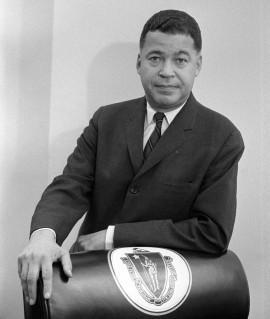
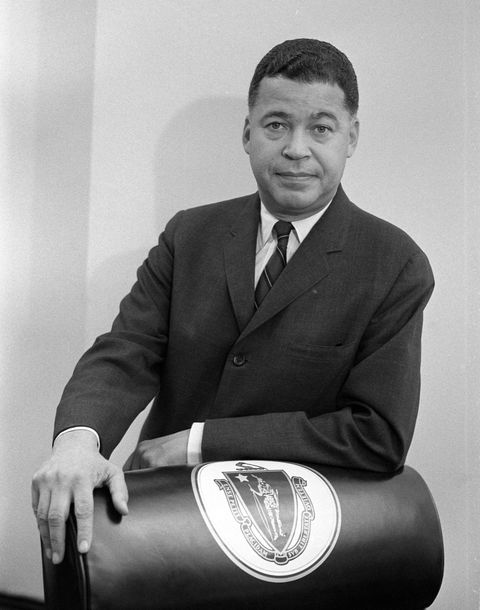
Three years later, Brooke set his sights on national office. When Republican Senator Leverett Saltonstall announced his retirement in December 1965, Brooke jumped into the race for the open seat. His opponent was former Governor Endicott Peabody, who enjoyed the endorsement of Massachusetts’s popular senator, Democrat Edward “Ted” Kennedy. Brooke won handily, claiming 60 percent of votes cast. Members of the Black press hailed this historic victory as “the most exciting step forward for the Negro in politics” since Reconstruction.6
U.S. Senate Historical Office
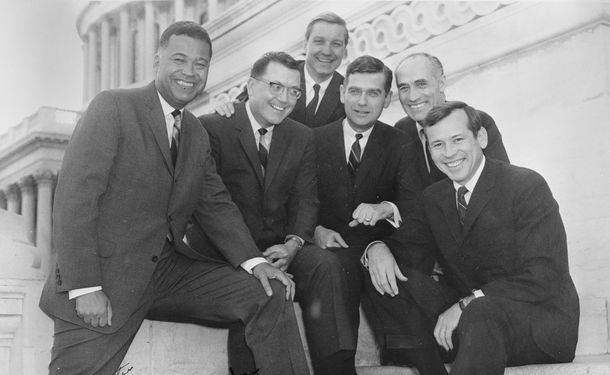
As an elected official in Massachusetts, Brooke had always been mindful that fewer than 10 percent of his constituents were Black. As attorney general, he had once declared, “I am not a civil rights leader and I don’t profess to be one. I can’t just serve the Negro cause. I’ve got to serve all the people of Massachusetts.” Even so, as the Senate’s only Black member during the peak of the civil rights movement, Brooke was committed to combating racial discrimination, noting in February 1967, “It’s not purely a Negro problem. It’s a social and economic problem—an American problem.”7
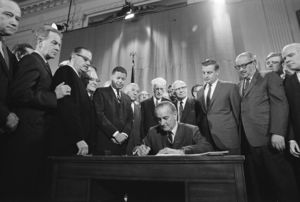
To tackle this problem, Brooke worked across party lines. He co-sponsored the Fair Housing Act with Democratic Senator Walter Mondale of Minnesota. Informed by Brooke’s work on the President’s Commission on Civil Disorders, the bill would prohibit housing discrimination in the sale, rental, or financing of housing nationwide. This would become the key provision of the Civil Rights Act of 1968. Passing this ambitious civil rights bill, which faced strong opposition from southern senators, required patience and political acumen. At a time when it took two-thirds of senators present and voting to invoke cloture and overcome a filibuster, Brooke and Mondale painstakingly built a bipartisan coalition to pass the bill. After weeks of debate, and three failed cloture motions, the Senate finally invoked cloture and approved the bill. Brooke stood by the side of President Lyndon B. Johnson on April 11, 1968, as he signed it into law.8
LBJ Presidential Library

Senator Brooke’s pragmatic approach to politics did not change after Republican Richard Nixon gained the presidency in 1969. While Brooke often supported the administration’s policies, including official recognition of China and nuclear arms limitation, he did not refrain from expressing his differences. He opposed three of the president’s six Supreme Court nominees, citing concerns over their stances on segregation. In November 1973, after the Senate Watergate Committee revealed that the Nixon administration had orchestrated a cover-up of its illegal campaign activities, Brooke became the first Republican senator to publicly call for the president’s resignation. “It has been like a nightmare,” Brooke said. “He might not be guilty of any impeachable offense…[but] because he has lost the confidence of the people of the country…he should step down, should, tender his resignation.”9
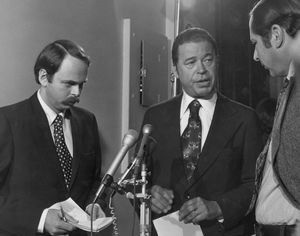
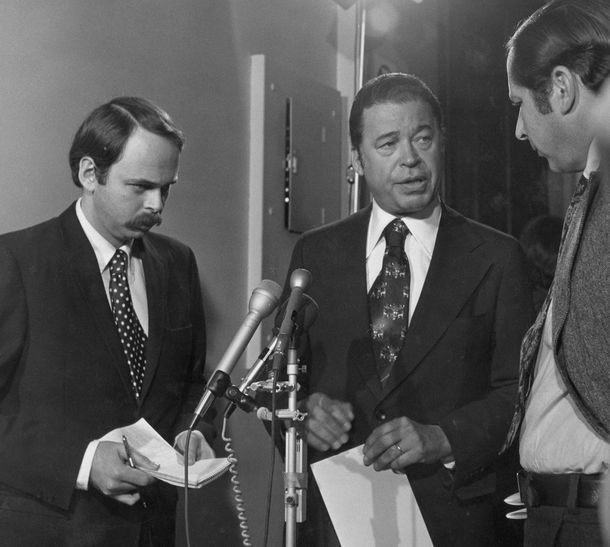
During the 1970s, much of Brooke’s legislative attention turned to protecting school desegregation efforts. Stating on national television that he was “deeply concerned about the lack of commitment to equal opportunities for all people,” Brooke charged that the White House neglected Black communities by failing to enforce school integration. Brooke was also central in defeating several antibusing bills initially passed by the House. In 1974 he successfully defeated the Holt amendment to an appropriations bill, introduced by Maryland Representative Marjorie Sewell Holt, that would have effectively ended the federal government’s role in school desegregation. That same year, Brooke helped quash an amendment introduced by Senator Edward Gurney (R-FL) that similarly would have ended busing. In 1975 Brooke reaffirmed his support for busing programs despite the political risk. “It’s not popular—certainly among my constituents. I know that,” he explained. “But, you know, I’ve always believed that those of us who serve in public life have a responsibility to inform and provide leadership for our constituents.”10
U.S. Senate Historical Office
Brooke focused on other legislative initiatives as well, including regulating the tobacco industry, providing funding for cancer research programs, investigating connections between civil unrest and poverty, and advocating for a woman’s right to choose to have an abortion.11
Brooke easily won reelection in 1972 but faced a serious primary challenge in 1978, narrowly defeating conservative radio host and political newcomer Avi Nelson. Politically damaged by charges of financial improprieties, he was ultimately defeated by Democrat Paul Tsongas in the general election. Brooke retired from politics to practice law in Washington, D.C. In 2004 President George W. Bush awarded Brooke the Presidential Medal of Freedom, the nation’s highest civilian honor. Four years later, Congress awarded him the Congressional Gold Medal, making him just the seventh senator to receive the award at the time. He died in January 2015.12
Edward Brooke did not define himself as a civil rights leader, but as a self-professed “creative Republican” and the Senate’s lone Black member, he sought ways to fight racial discrimination and improve opportunities for African Americans. Brooke was a pragmatic lawmaker, building bridges across party and racial lines to chart a course out of the nation’s segregated past, earning his place in the ranks of civil rights pioneers.13
Notes
1. Martin Kady II, “Brooke gets Congressional Gold Medal,” Politico, October 29, 2009, https://www.politico.com/story/2009/10/brooke-gets-congressional-gold-medal-028864.
3. Edward Brooke, Bridging the Divide (Rutgers University Press, 2007), 22.; John Henry Cutler, Ed Brooke; Biography of a Senator (Bobs Merrill, 1972), 27; “An Individual,” Time; “BROOKE, Edward William, III,” History, Art & Archives, U.S. House of Representatives, accessed February 3, 2026, https://history.house.gov/People/Listing/B/BROOKE,-Edward-William,-III-(B000871)/.
6. Edward W. Brooke, The Challenge of Change: Crisis in Our Two-Party System (Boston: Little, Brown, 1966); David S. Broder special, “Saltonstall is Quitting Senate,” New York Times, December 30, 1965; “Brooke Takes Office as Mass. Attorney General,” Chicago Defender, January 17, 1963, 4; “Brooke Takes a Giant Step into National Prominence,” Boston Globe, November 11, 1966, 18; “An Individual,” Time.
7. “Edward W. Brooke, Former U.S. Senator, Oaks Bluff Resident, Dies at 95,” Martha’s Vineyard Times, January 3, 2015, https://www.mvtimes.com/2015/01/03/edward-w-brooke-former-u-s-senator-oak-bluffs-resident-dies-95/; “An Individual,” Time.
8. Rigel C. Oliveri, “The Legislative Battle for the Fair Housing Act (1966–1968),” in Gregory D. Squires, ed., The Fight for Fair Housing: Causes, Consequences and Future Implications of the 1968 Federal Fair Housing Act (New York: Routledge, 2017); “Congress Passes Rights Bill: Bars Bias in 80% of Housing,” Boston Globe, April 11, 1968, 1; “President Signs Civil Rights Bill: Pleads for Calm,” New York Times, April 12, 1968, 1; Civil Rights Act of 1968, Title VIII, Fair Housing, Public Law 90-284, 82 Stat. 73 (1968).
9. Brooke, Bridging, 191, 202, 203–4; “A Portrait of Racism,” Boston Globe, February 8, 1970, A25; “Brooke to Vote Against Nominee,” Hartford Courant, February 26, 1970, 5; “GOP Senator Brooke Asks Nixon to Quit,” Atlanta Constitution, November 5, 1973, 1A; “Carswell Disavows ’48 Speech Backing White Supremacy,” New York Times, January 22, 1970.
10. “Brooke Says Nixon Shuns Black Needs,” New York Times, March 12, 1970; “BROOKE,” History, Art & Archives; Richard D. Lyons, “Busing of Pupils Upheld in a Senate Vote of 47-46,” New York Times, May 16, 1974; Jason Sokol, “How a Young Joe Biden Turned Liberals Against Integration,” Politico, August 4, 2015, https://www.politico.com/magazine/story/2015/08/04/joe-biden-integration-school-busing-120968/.
12. Dane Morris Netherton, “Paul Tsongas and the Battles Over Energy and the Environment, 1974-80,” Ph.D. diss., Washington State University (May 2004): 130, 144.; “U.S. Senators Awarded the Congressional Gold Medal,” United States Senate, accessed February 3, 2026, https://www.senate.gov/senators/Senators_Congressional_Gold_Medal.htm.
13. Gary Orfield, “Senator Edward Brooke: A Personal Reflection,” The Civil Rights Project, accessed January 8, 2015, https://civilrightsproject.ucla.edu/senator-edward-brooke-a-personal-reflection-by-gary-orfield/; Sally Jacobs, “The Unfinished Chapter,” Globe Magazine, March 5, 2000, https://cache.boston.com/globe/magazine/2000/3-5/featurestory2.shtml.