
States in the Senate | California Timeline
1849
November 13
Voters ratified California's new state constitution, paving the way for statehood a year later.
1850
September 9
As part of the bargains established by the Compromise of 1850, California entered the Union as the 31st state, free of slavery.
1850

September 10
John C. Frémont and William M. Gwin, both of San Francisco, presented their credentials and took the oath of office, becoming California's first two United States senators. The senators then drew lots to determine their class assignments. Senator Frémont drew Class 1, with a term to expire on March 3, 1851. Senator Gwin drew Class 3, with a term to expire March 3, 1855.
1855

December 13
John B. Weller of San Francisco became chairman of the Senate Committee on Military Affairs (now the Armed Services Committee), a position he held from 1855 to 1857.
1856
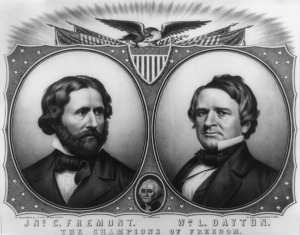
November 4
Former senator John C. Frémont was the first ever presidential nominee of the new Republican Party. An unsuccessful candidate, Frémont ran on a ticket with former New Jersey senator William L. Dayton. They lost to another pair of former senators, Pennsylvania's James Buchanan and Kentucky's John C. Breckinridge.
1863
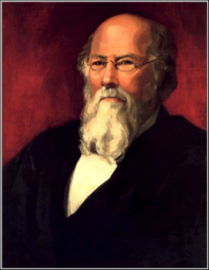
March 10
The Senate confirmed the nomination of Stephen J. Field as the 34th associate justice of the Supreme Court.
1868
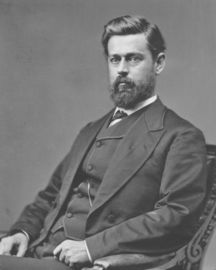
June 6
The Senate elected George C. Gorham as secretary of the Senate. Born in New York, Gorham moved to California amidst the 1849 gold rush. Quickly tiring of the hunt for gold, he became law clerk to Stephen J. Field, edited newspapers, and became an owner of the Central Pacific Railroad.
1871

March 10
Cornelius Cole of San Francisco became chairman of the Senate Committee on Appropriations, a position he held from 1871 to 1873.
1878

Albert Bierstadt's painting, "Entrance into Monterey," was purchased for the Capitol art collection. It now hangs in the House wing, west corridor, by the members' private staircase.
1883

December 10
John F. Miller of San Francisco became chairman of the Senate Committee on Foreign Relations, a position he held from 1883 to 1886.
1898
January 21
The Senate confirmed the nomination of Joseph McKenna of Suisun as the 50th associate justice of the Supreme Court.
1905

February 22
Senator George C. Perkins of Oakland read George Washington's 1796 Farewell Address on the floor of the Senate Chamber, an annual tradition dating to 1862.
1912

November 5
California governor and future senator Hiram W. Johnson of San Francisco ran unsuccessfully for vice president of the United States on the Progressive ticket with Theodore Roosevelt, losing the election to Woodrow Wilson and Thomas R. Marshall.
1915

March 5
James D. Phelan of San Francisco became California's first directly elected senator following the adoption of the Seventeenth Amendment in 1913.
1914

November 3
The Senate confirmed the nomination of William G. McAdoo of Los Angeles as secretary of treasury. McAdoo served in the administration of President Woodrow Wilson from March 6, 1913, to December 15, 1918. In 1932 he was elected to the U.S. Senate and served from March 4, 1933, to November 8, 1938.
1917

February 22
Senator John D. Works of Los Angeles read George Washington's 1796 Farewell Address on the floor of the Senate Chamber, an annual tradition dating to 1862.
1930
January 6
Hiram W. Johnson became chairman of the Senate Committee on Commerce (today's Committee on Commerce, Science, and Transportation), a position he held from 1930 to 1933.
1931
March 1
Congress officially unveiled statues of Thomas Starr King by artist Alexander Doyle and Father Junipero Serra by artist Ettore Cadorin, as California's contributions to the National Statuary Hall Collection. King's statue was replaced in 2009 by a statue of Ronald Reagan.
1945
August 6
Senator Hiram W. Johnson died while in office. With more than 28 years of service, Johnson was California's longest-serving senator until 2021, when he was surpassed by Senator Dianne Feinstein.
1950

December 1
Richard M. Nixon of Whittier began service in the United States Senate. Elected to the Senate on November 7, 1950, for the term beginning January 3, 1951, Nixon was subsequently appointed to fill the vacancy caused by the resignation of Sheridan Downey and served from December 1, 1950, until his resignation January 1, 1953, to become vice president.
1952
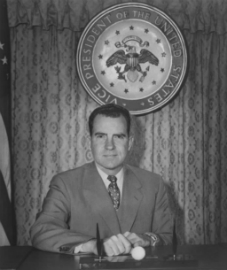
November 4
Senator Richard M. Nixon was elected vice president of the United States on the Republican ticket with Dwight E. Eisenhower. Nixon and Eisenhower were reelected in 1956, and Nixon served as vice president until January 20, 1961.
1953

January 2
Senator William F. Knowland of Piedmont became chairman of the Republican Policy Committee and served in that position until August 4, 1953, when he became Republican floor leader.
1953
August 4
Senator William F. Knowland was elected Republican floor leader at age 45, becoming the youngest Senate majority leader in Senate history. He served as Republican leader until his retirement from the Senate on January 3, 1959.
1954
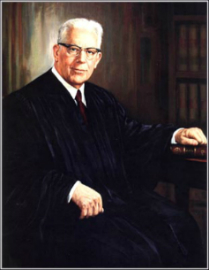
March 1
The Senate confirmed the nomination of California native Earl Warren as the 14th chief justice of the United States. Warren had received a recess appointment from President Dwight D. Eisenhower on October 2, 1953.
1959

January 7
Senator Thomas H. Kuchel of Anaheim was elected Republican whip (or assistant floor leader). He served as whip for 10 years, until his retirement from the Senate on January 3, 1969. Kuchel co-managed the Civil Rights Act on the floor of the Senate in 1964.
1959

October 1
Future senator Pierre E. G. Salinger of San Francisco joined the staff of Massachusetts senator John F. Kennedy. In 1960 Salinger became Kennedy's press officer during the presidential campaign. When Kennedy became president in January of 1961, Salinger became his press secretary. He was appointed to the Senate to fill the vacancy caused by the death of Clair Engle of Red Bluff and served from August 4, 1964, to December 31, 1964.
1964

June 10
The Senate voted to end debate on the Civil Rights Act—the first time the Senate had ever invoked cloture on civil rights legislation. Clair Engle, suffering from advanced brain cancer, was brought from the hospital to the Senate Chamber in a wheelchair. He dramatically cast his "aye" vote by pointing to his right eye. The Civil Rights Act was eventually passed on June 19, 1964.
1966
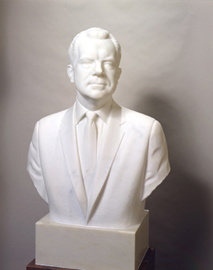
January
The Senate acquired a marble bust of former vice president Richard M. Nixon, for the Senate's Vice Presidential Bust Collection. The marble bust was carved by Gualberto Rocchi.
1968
November 5
Former senator and vice president Richard M. Nixon was elected as the 37th president of the United States. Nixon was sworn into office on January 20, 1969, was reelected in 1972, and remained in office until his resignation on August 9, 1974.
1977

January 4
Senator Alan M. Cranston of Los Angeles was elected Democratic whip, serving until 1991.
1977
January 10
Alan M. Cranston became chairman of the Senate Committee on Veterans' Affairs, a position he held from 1977 to 1981, and again from 1987 to 1993.
1977

February 21
Senator Samuel I. Hayakawa of Mill Valley read George Washington's 1796 Farewell Address on the floor of the Senate Chamber, an annual tradition dating to 1862.
1982
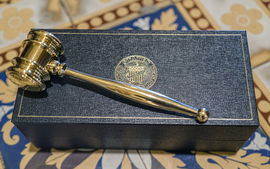
December 10
Senator Samuel I. Hayakawa received the Golden Gavel Award for presiding over the Senate for 100 hours in a single session.
1988
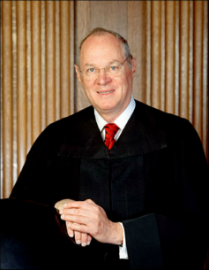
February 3
The Senate confirmed the nomination of Anthony M. Kennedy of Sacramento as the 93rd associate justice of the Supreme Court.
1992
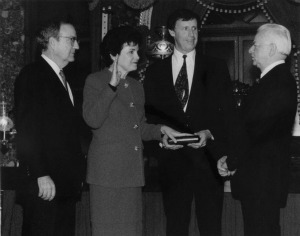
November 3
Dianne Feinstein of San Francisco was elected in a special election to fill the seat left vacant by the resignation of Pete Wilson of San Diego. She took the oath of office on November 10, 1992, becoming the first woman to represent California in the U.S. Senate.
1993
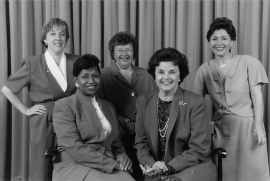
January 3
Barbara Boxer of Greenbrae became a U.S. senator. Joining sitting senator Dianne Feinstein, Boxer's election marked the first time that a state was represented simultaneously by two women in the U.S. Senate.
1994
October 18
John C. Frémont, one of California's first two senators, was featured on a U.S. postage stamp, one of the "Great Americans" series.
1995
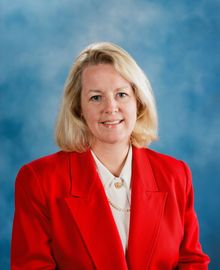
January 4
The Senate elected Sheila P. Burke, a native of San Francisco, as the secretary of the Senate. Burke had served as chief of staff to Senate Majority Leader Robert J. Dole from 1986 until her election as one of the Senate's officers.
2007

January 3
Dianne Feinstein of San Francisco became the first woman to chair the Senate Committee on Rules and Administration. She held this position until 2009, when she became the first woman to chair the Senate Select Committee on Intelligence, a position she held until 2015.
2007

January 3
Barbara Boxer of Greenbrae became the first woman to chair the Senate Committee on Environment and Public Works, a position she held until 2015.
2009
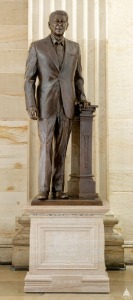
June 3
A statue of Ronald Reagan was unveiled in the Capitol as part of the National Statuary Hall Collection. Reagan's statue replaced one of Thomas Starr King that had been unveiled in 1931.

2021
January 20
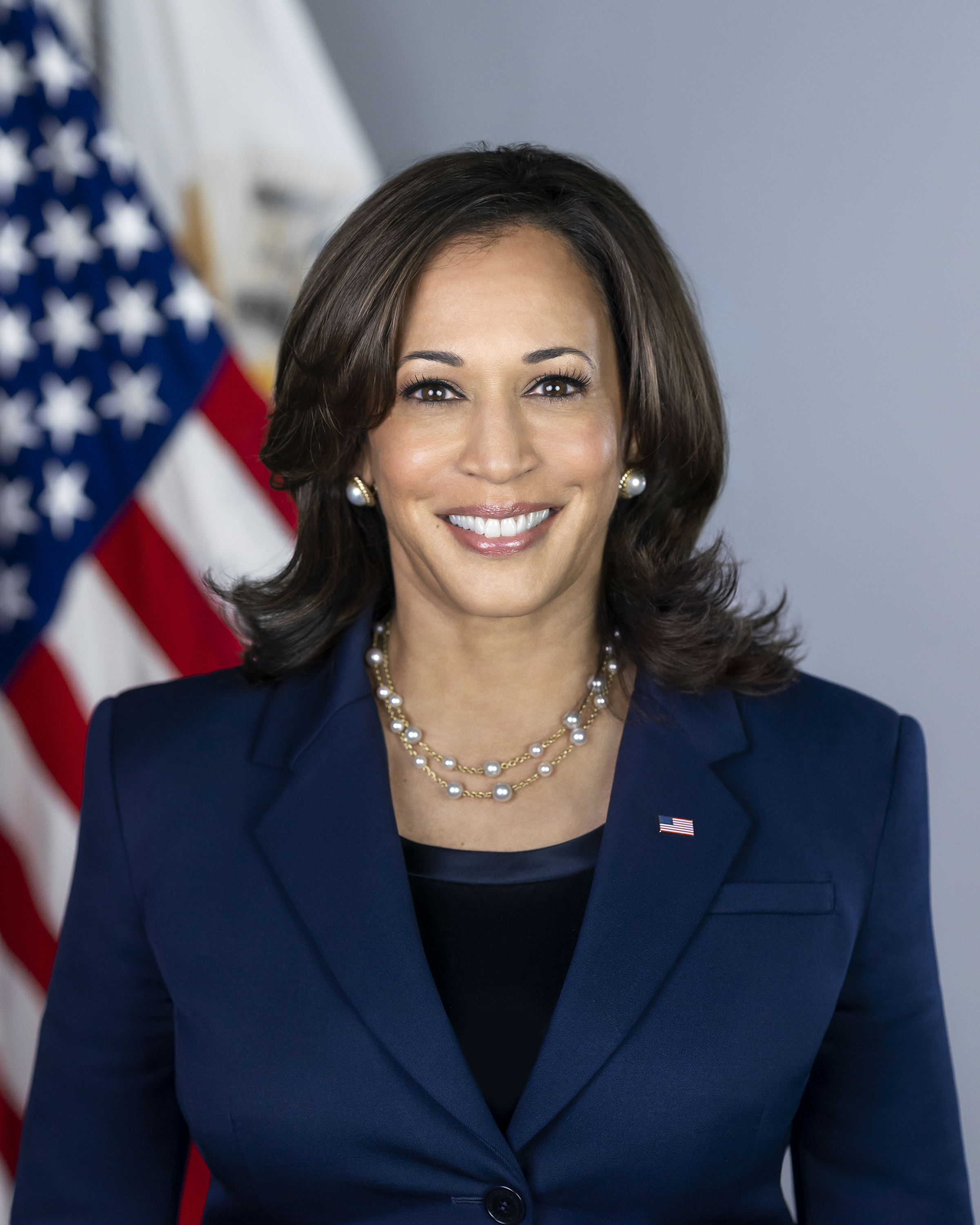
Kamala Harris of Los Angeles became the first woman and the first African American and Asian American to serve as vice president of the United States and president of the U.S. Senate, a position she held until January 20, 2025.
2021
March 28
Dianne Feinstein became California's longest-serving senator, surpassing the record of 28 years, 4 months, and 24 days established by Hiram Johnson in 1945. She went on to serve a total of 30 years, 10 months, and 25 days before her death on September 29, 2023.
2024
August 22
Vice President Kamala Harris won the Democratic Party nomination for president of the United States but lost in the November election to Donald Trump.