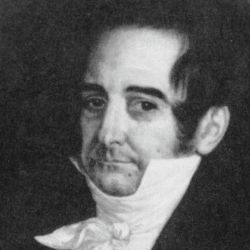
 | 202610 02Charles Dominique Bouligny: First Hispanic Senator
October 02, 2026
For decades, congressional historians have recognized Octaviano Larrazolo of New Mexico as the first Hispanic American to serve in the U.S. Senate. Historians often revisit long-standing narratives and consider new evidence. A recent re-examination of available sources by Senate historians complicates this long-standing account.
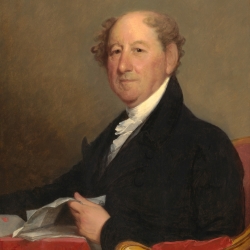
For decades, congressional historians have recognized Octaviano Larrazolo of New Mexico as the first Hispanic American to serve in the U.S. Senate. Historians often revisit long-standing narratives and consider new evidence. A recent re-examination of available sources by Senate historians complicates this long-standing account. More than a century before Larrazolo’s election in 1928, Louisiana elected Charles Dominique Bouligny to a vacant Senate seat. Bouligny was born a Spanish citizen in New Orleans in 1773 when the Crescent City was part of Spain’s North American empire, making him the first Hispanic senator. During his five years of Senate service, from 1824 to 1829, Bouligny worked to protect the interests of Louisiana’s slaveholders and sugar industry.1
Charles Dominique Bouligny (who went by Dominique) was the second child and first son of Francisco Bouligny and Marie Louise Le Sénéchal D’Auberville. Born in Spain, Francisco had trained in the Royal Regiment of Spanish Guards before being assigned to Havana, Cuba, and later stationed in New Orleans. Bouligny’s mother, Marie Louise, was born in New Orleans to a wealthy French political family and brought a considerable dowry, including property, to the union.2
Francisco Bouligny played a prominent role in Spain’s newly established North American empire. He promoted Spanish settlements and commerce. Fluent in French and Spanish, he negotiated the peaceful transfer of New Orleans to Spanish possession in 1769, earning him a military promotion and appointment in the new Louisiana Battalion. He helped to protect Spanish settlements from encroachment by other colonial powers and led successful military expeditions against British settlements in West Florida. In 1777 Francisco Bouligny was named lieutenant governor of the territory and promoted to brevet lieutenant colonel.3
Dominique grew up on his parents’ sugarcane plantation along the Mississippi River and in a second residence they owned in the city. When he was 12 years old, his father appointed him as a cadet in the Spanish military, launching a long and successful military career. In part as recognition for his service, territorial governors provided Dominique with two separate land grants, one in 1796 and a second in 1798. He became the head of the household when Francisco died in 1800, and soon after, he began to chart his political fortunes. Using family connections, he purchased membership in the cabildo, the political governing body of New Orleans in which positions were then bought and sold. In 1803 Dominique married Doña Anna Le Blanc, a wealthy orphan living as her uncle’s ward, and they had 15 children. At the time of their marriage, the Boulignys managed extensive properties, including sugarcane plantations and the enslaved people who worked them.4
Just as the couple embarked upon a new life together, the world they had known changed dramatically. In 1800 Spain had quietly agreed to transfer Louisiana, and New Orleans, to France. And, in April 1803, the United States purchased the Louisiana Territory from France. The Senate finalized the Louisiana Purchase six months later in October. When the cabildo met on June 4, 1804, those loyal to the Spanish crown were encouraged to relocate to other parts of the Spanish empire, including Mexico. Bouligny chose to remain in New Orleans, retiring as a lieutenant in Spain’s Louisiana Fixed Regiment.5
Over the next few years, Bouligny navigated the political, social, and economic shifts that accompanied the territory’s transition to American control. The terms of the Louisiana Purchase Treaty conferred citizenship to all the territory’s inhabitants. Now an American, Bouligny entered elective politics, winning a seat in the territorial house where he served from 1805 to 1809. During his tenure, he helped to develop the territory’s judicial system.6
On April 30, 1812, Congress admitted Louisiana to the Union as the 18th state. Less than two months later, on June 17, Congress declared war with Britain. The French Revolution of 1789 had sparked ongoing conflict between France, Great Britain, and other European powers, and although the United States had maintained a careful neutrality, continuing to trade with belligerents, Congress ultimately declared war after the British Navy began stopping and searching American merchant ships for deserters, seizing American property, and impressing American sailors into British service. The city of New Orleans, situated at the mouth of the Mississippi River, became a principal target of British forces. In 1814 city officials appointed Bouligny to the committee on public defense, which organized volunteer forces in the region. These volunteers assisted in the campaign of Major General Andrew Jackson, whose defeat of the British at the Battle of New Orleans on January 8, 1815, marked the end of local hostilities. The Senate approved the Treaty of Ghent unanimously on February 16, 1815, formally ending hostilities.7
After the war, Bouligny continued to manage his sugarcane plantation and other investments even while he accepted appointment in 1819 to a committee to review the personal archive of Carlos Trudeau, the Spanish royal surveyor from 1786 until 1805. The state of Louisiana had purchased the unique collection of land surveys and ownership records to help resolve disputed land claims. Perhaps because of his prominence in the community, and a lifetime in public service, on November 19, 1824, the Louisiana legislature elected Bouligny to fill a vacant U.S. Senate seat following the resignation of Henry Johnson.8
Bouligny took the oath of office on December 21, 1824. Later that day, he voted for a bill to provide a gift of money and land to the Marquis de Lafayette, hero of the American Revolution who had fought alongside General George Washington. This gesture served as an expression of Congress’s gratitude for Lafayette’s help to secure American independence and coincided with Lafayette’s visit to commemorate the approaching 50th anniversary of the Revolution. Two weeks after the vote, Bouligny was named to the Joint Committee on General Lafayette, which presented a letter to the war hero explaining that the gift was to “reimburse a portion” of what “your long and arduous devotion to the cause of freedom has cost you.”9
Bouligny joined the Senate during a time of bitter factional disputes. Just weeks before his swearing in, the 1824 presidential election between Andrew Jackson, John Quincy Adams, Henry Clay, William Crawford, and John C. Calhoun had failed to produce a clear winner. Jackson won a plurality but not a majority of the popular and electoral votes. When the election moved to the U.S. House of Representatives in early 1825, lawmakers elected Adams as president. Adams later nominated Clay as U.S. secretary of state, causing his opponents to accuse Adams and Clay of engaging in a “corrupt bargain” to secure Adams’s selection. Bouligny aligned himself with the Adams-Clay Republicans, voting to confirm Clay as secretary of state when his nomination went before the Senate in March 1825.10
In the Senate, Bouligny helped to protect the interests of Louisiana slaveholders. In January 1825, he introduced a bill to permit a woman named Anna Dubord to bring into Louisiana 13 enslaved people she had previously brought to Cuba in 1819. The private bill, which did not become law, would have allowed Dubord to legally import slaves from a foreign country, which Congress had outlawed with the Slave Trade Act of 1807. In 1828 he joined with Georgia Senator John E. Frost to request the extension of a commission to review claims made under the terms of the Treaty of Ghent. Claimants whose property had been seized by the British after the treaty’s ratification could petition for compensation for their losses. In backing the measure, Bouligny was serving the interests of Louisiana enslavers who sought compensation for human property “carried off” from American vessels by the British. Congress did extend the term of the commission, though it remains unclear if Bouligny’s constituents’ claims were approved for payment.11
Congressional debates in 1828 over a controversial tariff bill dominated Bouligny’s final year in the Senate. The battle began when the Adams administration presented a tariff bill to Congress that sharply raised import duties on certain products by as much as 50 percent to protect domestic industries in the Northeast, Mid-Atlantic, and Western regions from overseas competition. Southern planters who depended on trade with Great Britain, however, roundly opposed the measure and worried it would lead to retaliatory tariffs on American goods. They labeled it “The Tariff of Abominations.” Hoping to limit Adams’s re-election potential that fall, Jackson supporters in Congress, led by Senator Martin Van Buren of New York, worked to “neutralize” provisions in the bill that they worried would help Adams’s electoral chances. The bill that emerged from the amendment process was designed to deliver support to Jackson at the expense of Adams’s New England by raising duties on imported raw materials needed by northeastern manufacturers.12
On May 13, 1828, Bouligny was the only Southern senator to vote for the tariff. Back home, major sugar interests in Louisiana largely supported high tariffs and the protection import fees provided from competition from Cuban sugar. In Washington, however, the Tariff of 1828 provoked harsh recriminations between regional factions in Congress. As the tariff issue roiled the 1828 presidential election—as well as Bouligny’s re-election chances—Jackson swept the South. On January 12, 1829, the Louisiana legislature elected Edward Livingston, a Jackson ally who had opposed the tariff while serving in the House, to replace Bouligny in the Senate.13
Bouligny cast one of his final Senate votes in defense of Congress’s constitutional prerogative to control federal spending, the so-called “power of the purse.” The Adams administration presented Congress with a request for appropriations to support an exploratory mission to the Pacific Ocean and South Seas. The Senate had previously defeated a bill to provide the funds, while the House had approved it with carefully defined stipulations. The administration had begun to outfit naval vessels for the expedition, incurring expenses in the process without Congress’s express approval. When the Senate took up a new bill to fulfill Adams’s request, a frustrated Senator Robert Hayne of South Carolina objected that it retroactively authorized the administration’s spending despite lawmakers having already set clear parameters. The Senate ultimately blocked the bill, with Bouligny joining in that effort.14
After his Senate service concluded on March 3, 1829, Bouligny returned to Louisiana and retreated to private life. He died on March 5, 1833, at the age of 60. Today, after long overlooking his heritage, Senate historians recognize Charles Dominique Bouligny as the Senate’s first Hispanic member.15
Notes
1. The term “Hispanic” identifies people who trace their origins to Spanish-speaking countries or regions, including Spain.
2. Fontaine Martin, A History of the Bouligny Family and Allied Families (Lafayette, LA: University of Southwestern Louisiana, 1990), 81–85, 148.
3. Martin, 148–55, 177–80; Sylvia L. Hilton, “Spanish Louisiana in Atlantic Contexts: Nexus of Imperial Transactions and International Relations,” in Louisiana: Crossroads of the Atlantic World, ed. Cecile Vidal (Philadelphia: University of Pennsylvania Press, 2014), 80–81.
4. Martin, 183, 205, 209, 218, 234; Gilbert C. Din, Francisco Bouligny: A Bourbon Soldier in Spanish Louisiana (Baton Rouge: Louisiana State University Press, 1993), 159–60.
5. Martin, 208–9.
6. Martin, 210–12; Edward F. Haas, ed., Louisiana’s Legal Heritage (Pensacola: The Perdido Bay Press, 1983), 4.
7. Martin, 212–13.
8. Edward F. Haas, “Odyssey of a Manuscript Collection: Records of the Surveyor General of Antebellum Louisiana,” Louisiana History: The Journal of the Louisiana Historical Association 27, no. 1 (Winter 1986), 6, 16–17; Martin, 215.
9. “Senate,” Daily National Journal, December 22, 1824, 3; Register of Debates, 18th Cong., 2nd sess., December 21, 1824, 28–34; Register of Debates, 18th Cong. 2nd sess., January 3, 1825, 110–11.
10. Donald Ratciffe, The One Party Presidential Contest: Adams, Jackson, and 1824’s Five-Horse Race (Lawrence: University Press of Kansas, 2015); “Washington,” Daily National Journal, March 9, 1825, 3.
11. To permit Anna Dubord to bring certain Slaves into the State of Louisiana, S. 31, 18th Cong., 2nd sess., 1825; Memorial of D. Bouligny and John E. Frost, H. Doc. 20-242, 20th Congs., 1st sess., April 12, 1828.
12. Robert V. Remini, Henry Clay: Statesman for the Union (New York: W.W. Norton & Co., 1991), 329–30; Daniel Walker Howe, What Hath God Wrought: The Transformation of America, 1815–1848 (New York: Oxford University Press, 2007), 273–5; Robert V. Remini, Martin Van Buren and the Making of the Democratic Party (New York: Columbia University Press, 1951), 183.
13. Howe, 273; Joel Sturgeon, “Edward Livingston, Nullification, and Louisiana’s Political Transformation,” Journal of the Early Republic 43 (Fall 2023), 455–89; Govtrack.us, "Roll Call Vote 140 on May 13, 1828, 'To Pass Tariff Bill,'" https://www.govtrack.us/congress/votes/20-1/s140, accessed September 30, 2026; Official Journal of the Senate of the State of Louisiana, 9th legislature, 1st sess., January 12, 1829, 50–51, https://digitalcollections.crl.edu/record/302306?ln=en&v=uv#?xywh=55%2C37%2C1116%2C756&cv=41, accessed September 30, 2026.
14. Register of Debates, 20th Cong., 2nd sess., February 5, 1829, 51; Mary W. M. Hargreaves, The Presidency of John Quincy Adams (Lawrence: University Press of Kansas, 1985), 170–71.
15. Carolyn E. De Latte, “Bouligny, Dominique (23 Aug. 1773–5 Mar. 1833)” in American National Biography (London: Oxford University Press, 1999), 248–49.
|
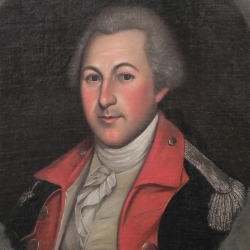 | 202607 02Senators of the Revolutionary Generation
July 02, 2026
Dozens of the nation’s earliest U.S. senators had contributed to the fight for independence. Their Revolutionary Era service provided them with invaluable experience. Having earned the confidence and admiration of their contemporaries, they were entrusted with the role of senator as the fledgling country implemented its new constitutional republic. In celebration of the semiquincentennial of the Declaration of Independence, we recognize these Revolutionary Era leaders for providing legitimacy, stability, and continuity to the young nation, helping to ensure its longevity.
Two hundred and fifty years ago, in the spring of 1776, John Adams emerged as a leading voice for independence in the Second Continental Congress. Representing Massachusetts, an embattled colony hardened by a year-long British siege, Adams urged the colonies to sever bonds with the British Crown—a bold effort that reached its peak with the adoption of the Declaration of Independence on July 4, 1776. In signing this Declaration, the delegates from 13 individual states united in their revolutionary cause. They asserted that “Governments are instituted among Men, deriving their just powers from the consent of the governed” and claimed that “it is the Right of the People…to institute new Government, laying its foundation on such principles and organizing its powers in such form, as to them shall seem most likely to effect their Safety and Happiness.”
Thirteen difficult and transformative years later, on April 21, 1789, Vice President Adams stood before the newly formed United States Senate and addressed the body as its presiding officer for the first time. Observing the group before him, he acknowledged how important it was that they had answered the call to service under the new constitutional system of government that they had instituted. “At this time…the prosperity of the country, and the liberties of the people, require…the attention of those who possess any share of the public confidence,” Adams insisted. He lauded the senators—his fellow revolutionaries and founders—as “celebrated defenders of the liberties of this country…intrepid asserters of the rights of mankind, whose philosophy and policy have enlightened the world…more than it was ever before enlightened in many centuries.”1
Adams’s observation rang true throughout the Early Republic (1789–1830s), as the Senate included many individuals who had contributed to the revolutionary cause. Several had signed the Declaration of Independence. Many had served courageously in a military capacity during the war. Some had offered political leadership, provided diplomatic service, or rendered financial assistance to the Revolution. “At the Philadelphia [Constitutional] Convention, delegates had discussed the Senate in terms of ‘wise elders,’ ‘defenders of property,’ men of experience, responsibility, stability,” reflected historian Roy Swanstrom. “While wisdom or intelligence are difficult to measure and compare, one other quality can be measured with a fair degree of accuracy—experience,” he noted. “On this test the first Senators rated very high.” As Swanstrom explained, “The Revolution itself, the Congress of the Confederation with its vexing problems, local legislatures and executive branches in the transition from colony to statehood, State constitutional conventions, the Philadelphia Convention and subsequent ratifying conventions—these all provided experiences in statecraft that few other periods have offered.” Noting that nearly all of those who served in the early Senate held at least one of these credentials, he concluded, “The Senate in this early period consisted of a group of men who would have done credit to any legislative body anywhere.”2
Six signers of the Declaration of Independence went on to serve in the Senate. Richard Henry Lee of Virginia, Charles Carroll of Maryland, Robert Morris of Pennsylvania, and George Read of Delaware were among the first senators in 1789. Roger Sherman of Connecticut and George Walton of Georgia served in subsequent Congresses. The political experiences of each of these signers during the Revolutionary Era earned them a large measure of public confidence by the dawn of the Early Republic.3
As a delegate in the Second Continental Congress, Richard Henry Lee (one of Virginia’s first senators) had introduced the resolution proposing independence for the American colonies on June 7, 1776. In addition to declaring "that these united colonies are and of right ought to be free and independent states," the Lee Resolution also called for the states to “plan for a confederation” and form foreign alliances. Before joining the Continental Congress, Lee had served in the Virginia House of Burgesses where he joined in opposition to the policies of the British government. He also helped develop committees of correspondence, the important temporary state governments and colonial communication networks employed throughout the Revolution. After resigning his seat in the Continental Congress in 1779, Lee served as a colonel of the Westmoreland County Militia. Following the British surrender, he became a delegate in the Confederation Congress (the unicameral legislature that was the governing body under the Articles of Confederation), serving as its president for a year. An antifederalist who feared a powerful federal government, Lee favored amending the new Constitution to protect individual liberties. Despite being aged and in ill health, he agreed to join the Senate to ensure that a Bill of Rights was adopted. “[T]o secure civil liberty…was, I assure you, the sole reason that could have influenced me to come here,” Senator Lee wrote to his friend and fellow revolutionary Patrick Henry in May 1789.4
Like Lee, Charles Carroll (who styled himself “of Carrolton” to distinguish him from his father) contributed to the committees of correspondence prior to his service in the Second Continental Congress. Born to a wealthy Irish Catholic family in Annapolis, Maryland, Carroll received extensive formal education in Europe as a young man, returning to Maryland in 1765. A Maryland colonial law prohibiting Roman Catholics from holding office barred him from entering politics. However, writing in the Maryland Gazette under the pseudonym "First Citizen," he became a leading voice for colonial rights, defending independent legislatures and government based upon the consent of the governed. In 1774 the Continental Congress selected him to join a diplomatic mission to Canada to seek aid. During the war, he served in the Maryland Senate, helped draft Maryland’s constitution, and served on the Board of War. The last surviving signer of the Declaration of Independence, he died on November 14, 1832.5
Philadelphia merchant Robert Morris is often referred to as “the financier of the American Revolution” due to his critical role in securing money and supplies to aid in the revolutionary cause. He later served as superintendent of finance under the Confederation Congress. In response to the Stamp Act in 1765, Morris joined with other merchants to boycott British imports. Though he believed independence to be premature in July 1776, he did not attend the vote on the Lee Resolution, thus allowing the Pennsylvania delegation to support passage, and he ultimately signed the Declaration. As a delegate to the Continental Congress, Morris led several important committees related to foreign affairs and securing supplies for the war effort. In addition to providing financial leadership during the Revolutionary Era, Morris also served in the Pennsylvania Assembly, represented his state at the Constitutional Convention in 1787, and signed the Constitution. Morris became one of the first two United States senators (along with William Maclay) when Pennsylvania became the first state to elect its senators in 1788.6
As a Delaware assemblyman in the 1760s, George Read had participated in the colonial resistance efforts, including boycotts and committees of correspondence. He nevertheless hesitated to support independence, hoping to peaceably reconcile with Britain. On July 2, 1776, Read voted against the Lee Resolution. Following its adoption, however, he willingly joined with his fellow delegates in signing the document. He is the only signatory who voted against it. In 1776 Read was also deeply engaged in the organizational matters of his state, drafting Delaware’s constitution and presiding over its constitutional convention. After the British captured Delaware’s president during the Revolutionary War, Read—then vice president of Delaware—barely evaded capture himself when he returned from the Continental Congress in Philadelphia to assume the state presidency. Following the war, he served again as a state legislator and as judge of the court of appeals in admiralty cases. In 1786 Read joined representatives from five states to revise the flawed Articles of Confederation at the Annapolis Convention. One year later, he attended the Constitutional Convention, representing the interests of the small states and favoring a strong central government. He signed the Constitution, and thanks largely to his efforts, Delaware became the first state to ratify it in December 1787.7
When Roger Sherman of Connecticut took his Senate seat in 1791 at the age of 70, he was preeminent even among his experienced contemporaries. He is the only person to have signed the Articles of Association of 1774, the Declaration of Independence, the Articles of Confederation, and the Constitution. Self-educated and a cobbler by trade, he was first elected to the Connecticut Assembly in 1755 and went on to serve as a state senator and a state superior court judge. He attended the First Continental Congress in 1774 and the Second Continental Congress in 1775, serving on the "Committee of Five" appointed to draft the Declaration, alongside Thomas Jefferson, John Adams, Benjamin Franklin, and Robert R. Livingston. During the Revolutionary War, he helped stockpile munitions and other provisions as a member of Connecticut’s council of safety. At the Constitutional Convention, it was Sherman who crafted (with the support of his Connecticut colleague—also a future senator—Oliver Ellsworth) the so-called Great Compromise (or Connecticut Compromise), which provided for equal representation of the states in the Senate and proportional representation in the House of Representatives. Sherman had first proposed the idea of a bicameral legislature with mixed representation in 1776, during the Continental Congress debates over a national government framework. “Everything depended on this,” Sherman argued in 1787. “The smaller States would never agree to the plan on any other principle than an equality of suffrage” in the Senate.8
George Walton of Georgia, the last signer of the Declaration to serve in the Senate, filled a Senate vacancy by appointment in 1795. Orphaned as a young child, Walton developed a love of learning and studied law. He became a leader in Georgia’s revolutionary movement, helping to organize the colony’s Provincial Congress and serving as its secretary. He served as president of Georgia’s Council of Safety (a wartime executive body) before his selection as a delegate to the Second Continental Congress. Walton arrived just one day before the vote on the Lee Resolution, in time to hear John Adam’s final impassioned speech in favor of independence. He was the youngest signer of the Declaration of Independence. During the war, as a colonel in the Georgia Militia, he was wounded in the leg and subsequently captured by the British during the siege of Savannah in 1778. A year later, the British released him in a prisoner exchange. He then briefly served as governor of Georgia in 1779 (a position he would hold again in 1789). After the war, he became chief justice of Georgia. Elected as a delegate to the Constitutional Convention in 1787, he declined to attend.9
The senators who had signed the Declaration, and many other senators from the Revolutionary generation, garnered extensive political experience throughout the period. More than 70 of these senators also gained valuable experience through their contributions to the war effort. Some demonstrated extraordinary valor as battlefield soldiers. Some were commissioned officers and ranked among the military leadership. Richard Bassett of Delaware was a captain of a cavalry regiment in the state militia. James Gunn of Georgia served as a captain of dragoons, a mounted regiment. Philip John Schuyler of New York, a former officer in the British army during the Seven Years’ War, was commissioned one of four major generals in the Continental Army. Rhode Island’s Joseph Stanton, Jr., served as a colonel in the state militia. Appointed captain at the age of 23 in 1776, Maryland’s John Eager Howard rose to the rank of colonel by the war’s end. The Confederation Congress awarded him a silver medal for his gallantry in leading a decisive bayonet charge at the Battle of Cowpens in 1781.10
At age 17, future senator and president James Monroe of Virginia left the College of William and Mary to enlist in the Continental Army. As a lieutenant in the Third Virginia Regiment, he crossed the icy Delaware River with General George Washington’s troops and was severely wounded during the Battle of Trenton. He recovered and fought in numerous other engagements during the war. Though just a young boy, future senator and president Andrew Jackson of Tennessee participated as a courier in the battle of Hanging Rock during the Revolution. While engaged in battles near his home in the Waxhaw Settlement in South Carolina, he was captured and wounded by a British officer after defying the officer’s order to polish his boots.11
John Condit of New Jersey and Michael Leib of Pennsylvania were surgeons during the war, as was Delaware’s Henry Latimer, who served in a mobile surgical unit known as the “flying hospital.” John Laurance of New York, who had immigrated to America in 1767, attained the rank of colonel as a commissioned officer. As judge advocate general, Laurance prosecuted the 1779 court martial of Major General Benedict Arnold for misconduct and the trial of Major John André, the British army officer who was sentenced to death for conspiring with an embittered Arnold for the surrender of West Point.12
Several future senators held administrative posts in the Continental Army. Colonel Timothy Pickering of Massachusetts was adjutant general and quartermaster general. William Maclay of Pennsylvania (remembered for the revealing diary he kept during the First Congress) served as a commissary. Connecticut’s Jonathan Trumbull, Jr., was a paymaster general for the northern region and earned the rank of lieutenant colonel before his appointment as military secretary to General Washington in 1781. Future Virginia Senators William Grayson, John Walker, and Stevens Thomson Mason all served as aides-de-camp to Washington, a fellow Virginian. Rufus King of New York was aide-de-camp to General John Glover. Benjamin Hawkins of North Carolina served as an interpreter for Washington.13
Robert Morris was not alone in helping to finance the Revolution. New Hampshire’s John Langdon (the Senate’s first president pro tempore) secured military supplies, oversaw the building of several war ships, and staked his personal fortune to equip General John Stark’s pivotal expedition against British General John Burgoyne. Ralph Izard of South Carolina pledged his large estate to pay for warships.14
Dozens of the nation’s earliest U.S. senators had contributed to the fight for independence. Their Revolutionary Era service provided them with invaluable experience. Having earned the confidence and admiration of their contemporaries, they were entrusted with the role of senator as the fledgling country implemented its new constitutional republic. In celebration of the semiquincentennial of the Declaration of Independence, we recognize these Revolutionary Era leaders for providing legitimacy, stability, and continuity to the young nation, helping to ensure its longevity.
Notes
1. Senate Journal, 1st Cong., 1st sess., April 21, 1789, 14.
2. Roy Swanstrom, The United States Senate 1787–1801: A Dissertation on the First Fourteen Years of the Upper Legislative Body, reprinted as S. Doc. 100-31, 100th Cong., 1st sess. (Washington, DC: Government Printing Office, 1988), 36.
3. Biographical information referenced throughout this essay can be found in the individual entries of these senators in the online Biographical Directory of the United States Congress, https://bioguide.congress.gov/.
4. Adoption of the Resolution Calling for Independence from England; 7/2/1776; Reports on Administrative Affairs of the Congress; Papers of the Continental Congress, 1774–11789; Records of the Continental and Confederation Congresses and the Constitutional Convention, Record Group 360; National Archives Building, Washington, DC, accessed June 16, 2026, https://www.archives.gov/milestone-documents/lee-resolution; Dictionary of American Biography, s.v. “Lee, Richard Henry (Jan. 20, 1732-June 19, 1794)”; James Curtis Ballagh, ed., The Letters of Richard Henry Lee (New York: The Macmillan Company, 1914), 2: viii, 488.
5. “Charles Carroll Statue,” Architect of the Capitol, accessed June 15, 2026, https://www.aoc.gov/explore-capitol-campus/art/charles-carroll-statue.
6. "Meet the Framers of the Constitution," National Archives, accessed June 15, 2026, https://www.archives.gov/founding-docs/founding-fathers.
7. Dictionary of American Biography, s.v. “Read, George (Sept. 18, 1733-Sept. 21, 1798).”
8. "Meet the Framers of the Constitution," National Archives, accessed June 15, 2026, https://www.archives.gov/founding-docs/founding-fathers; “Roger Sherman Statue,” Architect of the Capitol, accessed June 15, 2026, www.aoc.gov/explore-capitol-campus/art/roger-sherman-statue; "Madison Debates, June 11, 1787," The Avalon Project, accessed June 15, 2026, https://avalon.law.yale.edu/18th_century/debates_611.asp.
9. Edwin Clifford Bridges, "George Walton: A Political Biography." Ph.D. dissertation, University of Chicago, 1981; Josephine Mellichamp, Senators from Georgia (Huntsville, Alabama: The Strode Publishers, Inc., 1976), 37–142.
10. Dictionary of American Biography, s.v. “Schuyler, Philip John (Nov. 20, 1733-Nov. 18, 1804)”; “Meet the Framers of the Constitution,” National Archives, accessed June 15, 2026, https://www.archives.gov/founding-docs/founding-fathers.
11. “Monroe, James (1758–11831),” in The American Revolution, 1775-1783: An Encyclopedia, eds., Richard L. Blanco and Paul J. Sanborn (New York: Garland Publishing, 1993), 1088–190; Robert V. Remini, Andrew Jackson and the Course of American Empire, 1767-1820 (New York: Harper & Row, 1977), 17–122.
12. Swanstrom, The United States Senate, 39; Keith Marshall Jones III, John Laurance: The Immigrant Founding Father America Never Knew (Philadelphia: American Philosophical Society Press, 2019), 71–173. American National Biography, s.v. “Laurance, John (1750-11 Nov. 1810).”
13. Robert Ernst, Rufus King: American Federalist (Chapel Hill: Published for the Institute of Early American History and Culture at Williamsburg, Va., by University of North Carolina Press, 1968), 25.
14. Swanstrom, The United States Senate, 39.
|
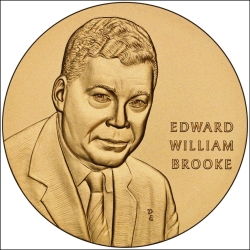 | 202602 12Edward Brooke of Massachusetts—The Bridge Builder
February 12, 2026
In 2009 former Senator Edward Brooke of Massachusetts, the first popularly elected African American senator, received the Congressional Gold Medal in recognition of his “pioneering accomplishments” in public service. During his two Senate terms, Brooke had been a pragmatic lawmaker, building bridges across party and racial lines to chart a course out of the nation’s segregated past, earning his place in the ranks of civil rights pioneers.
On October 28, 2009, former Senator Edward Brooke of Massachusetts, the first popularly elected African American senator, stood in the U.S. Capitol Rotunda to receive the Congressional Gold Medal. It was fitting that President Barack Obama, the first African American elected to the presidency, presented the medal to Brooke. Obama highlighted the improbability of a Black, Protestant Republican winning office in a state known for being white, Catholic, and Democratic. As Obama recalled, Brooke “ran for office, as he put it, to bring people together who had never been together before, and that he did.” As the only African American to serve in the Senate during the civil rights era, Brooke brought a unique set of experiences and perspectives to bear on some of the most politically charged issues of his time.1
Edward Brooke was born in the District of Columbia in 1919, to Helen, a homemaker, and Edward Jr., a lawyer with the U.S. Veteran’s Administration. Brooke grew up in the Brookland neighborhood of northeastern D.C., at a time when the city’s schools and public accommodations were segregated. He attended Dunbar High School, one of the best performing public high schools for African American students in the country. Following in his father’s footsteps, Brooke enrolled at Howard University, where he served in the school’s ROTC program, graduating in June 1941. Brooke entered the U.S. Army as a second lieutenant with the segregated, all-Black 366th Combat Infantry Regiment stationed at Fort Devens in Ayer, Massachusetts, on December 7, the day Japan attacked Pearl Harbor. 2
Brooke’s army service was an eye-opening, transformative experience. On the army base in Massachusetts, African American men were denied access to the pools, the exchange, and the officers’ club. “We were treated as second-class soldiers,” Brooke later recalled. Despite lacking any legal training, Brooke successfully defended Black enlisted men in military court—an experience that later led him to law school. In 1944 he sailed with his unit to Europe where he served in North Africa and in the campaign to liberate Italy. Brooke continued to encounter discrimination on base, this time in the form of racist tirades from his commanding officers. With some basic language training, Brooke quickly developed a fluency in Italian, a skill that proved useful in reconnaissance missions with Italian partisans. “My principal job,” he later explained, “was to map mine fields, supply roads, ammunition dumps, to locate concentration camps, and take prisoners for interrogation.” He never forgot the contrast between the freedom and dignity he felt when off base and the racism he experienced on base. Despite the challenges, Brooke earned the rank of captain and was awarded a Bronze Star in 1943 for “heroic or meritorious achievement or service.” While stationed in Italy, he met Remigia Ferrari-Scacco and the two were married in Boston in June 1947.3
Upon his return stateside, Brooke enrolled in Boston University School of Law, earning both a bachelor and a master of laws degree in 1948 and 1950, respectively. He built his own firm in Roxbury, a predominantly African American Boston neighborhood. Encouraged by friends to run for a seat in the Massachusetts House of Representatives, the political neophyte (he did not cast his first vote until age 30) entered both the Republican and Democratic primaries for the house seat in 1950. He won the G.O.P. nomination but lost the general election. He ran again in 1952, with the same result. Stinging from two successive electoral defeats, Brooke continued to practice law while volunteering with various civic organizations, including the National Association for the Advancement of Colored People.4
In 1960 state Republicans urged Brooke to run for secretary of the Commonwealth. He lost the race by a narrow margin to Democrat Kevin White, whose barely disguised racially charged slogan was, “Vote White.” Impressed by Brooke’s strong showing, Republican Governor John Volpe invited him to join his staff. Brooke declined but asked to be appointed chair of the Boston Finance Commission, a municipal watchdog. Volpe obliged, and Brooke transformed the moribund commission into an anti-corruption force, overseeing dozens of investigations, some of which resulted in the resignation of city officials. His oversight work helped him win election as state attorney general in 1962, flipping the office for the GOP. His victory made him the first African American attorney general in the nation and the highest-ranking African American in any state government at the time.5
Three years later, Brooke set his sights on national office. When Republican Senator Leverett Saltonstall announced his retirement in December 1965, Brooke jumped into the race for the open seat. His opponent was former Governor Endicott Peabody, who enjoyed the endorsement of Massachusetts’s popular senator, Democrat Edward “Ted” Kennedy. Brooke won handily, claiming 60 percent of votes cast. Members of the Black press hailed this historic victory as “the most exciting step forward for the Negro in politics” since Reconstruction.6
As an elected official in Massachusetts, Brooke had always been mindful that fewer than 10 percent of his constituents were Black. As attorney general, he had once declared, “I am not a civil rights leader and I don’t profess to be one. I can’t just serve the Negro cause. I’ve got to serve all the people of Massachusetts.” Even so, as the Senate’s only Black member during the peak of the civil rights movement, Brooke was committed to combating racial discrimination, noting in February 1967, “It’s not purely a Negro problem. It’s a social and economic problem—an American problem.”7
To tackle this problem, Brooke worked across party lines. He co-sponsored the Fair Housing Act with Democratic Senator Walter Mondale of Minnesota. Informed by Brooke’s work on the President’s Commission on Civil Disorders, the bill would prohibit housing discrimination in the sale, rental, or financing of housing nationwide. This would become the key provision of the Civil Rights Act of 1968. Passing this ambitious civil rights bill, which faced strong opposition from southern senators, required patience and political acumen. At a time when it took two-thirds of senators present and voting to invoke cloture and overcome a filibuster, Brooke and Mondale painstakingly built a bipartisan coalition to pass the bill. After weeks of debate, and three failed cloture motions, the Senate finally invoked cloture and approved the bill. Brooke stood by the side of President Lyndon B. Johnson on April 11, 1968, as he signed it into law.8
Senator Brooke’s pragmatic approach to politics did not change after Republican Richard Nixon gained the presidency in 1969. While Brooke often supported the administration’s policies, including official recognition of China and nuclear arms limitation, he did not refrain from expressing his differences. He opposed three of the president’s six Supreme Court nominees, citing concerns over their stances on segregation. In November 1973, after the Senate Watergate Committee revealed that the Nixon administration had orchestrated a cover-up of its illegal campaign activities, Brooke became the first Republican senator to publicly call for the president’s resignation. “It has been like a nightmare,” Brooke said. “He might not be guilty of any impeachable offense…[but] because he has lost the confidence of the people of the country…he should step down, should, tender his resignation.”9
During the 1970s, much of Brooke’s legislative attention turned to protecting school desegregation efforts. Stating on national television that he was “deeply concerned about the lack of commitment to equal opportunities for all people,” Brooke charged that the White House neglected Black communities by failing to enforce school integration. Brooke was also central in defeating several antibusing bills initially passed by the House. In 1974 he successfully defeated the Holt amendment to an appropriations bill, introduced by Maryland Representative Marjorie Sewell Holt, that would have effectively ended the federal government’s role in school desegregation. That same year, Brooke helped quash an amendment introduced by Senator Edward Gurney (R-FL) that similarly would have ended busing. In 1975 Brooke reaffirmed his support for busing programs despite the political risk. “It’s not popular—certainly among my constituents. I know that,” he explained. “But, you know, I’ve always believed that those of us who serve in public life have a responsibility to inform and provide leadership for our constituents.”10
Brooke focused on other legislative initiatives as well, including regulating the tobacco industry, providing funding for cancer research programs, investigating connections between civil unrest and poverty, and advocating for a woman’s right to choose to have an abortion.11
Brooke easily won reelection in 1972 but faced a serious primary challenge in 1978, narrowly defeating conservative radio host and political newcomer Avi Nelson. Politically damaged by charges of financial improprieties, he was ultimately defeated by Democrat Paul Tsongas in the general election. Brooke retired from politics to practice law in Washington, D.C. In 2004 President George W. Bush awarded Brooke the Presidential Medal of Freedom, the nation’s highest civilian honor. Four years later, Congress awarded him the Congressional Gold Medal, making him just the seventh senator to receive the award at the time. He died in January 2015.12
Edward Brooke did not define himself as a civil rights leader, but as a self-professed “creative Republican” and the Senate’s lone Black member, he sought ways to fight racial discrimination and improve opportunities for African Americans. Brooke was a pragmatic lawmaker, building bridges across party and racial lines to chart a course out of the nation’s segregated past, earning his place in the ranks of civil rights pioneers.13
Notes
1. Martin Kady II, “Brooke gets Congressional Gold Medal,” Politico, October 29, 2009, https://www.politico.com/story/2009/10/brooke-gets-congressional-gold-medal-028864.
2. “An Individual Who Happens to be a Negro,” Time, February 17, 1967.
3. Edward Brooke, Bridging the Divide (Rutgers University Press, 2007), 22.; John Henry Cutler, Ed Brooke; Biography of a Senator (Bobs Merrill, 1972), 27; “An Individual,” Time; “BROOKE, Edward William, III,” History, Art & Archives, U.S. House of Representatives, accessed February 3, 2026, https://history.house.gov/People/Listing/B/BROOKE,-Edward-William,-III-(B000871)/.
4. “An Individual,” Time; “BROOKE,” History, Art & Archives; Brooke, Bridging, 64.
5. “An Individual,” Time; “BROOKE,” History, Art & Archives.
6. Edward W. Brooke, The Challenge of Change: Crisis in Our Two-Party System (Boston: Little, Brown, 1966); David S. Broder special, “Saltonstall is Quitting Senate,” New York Times, December 30, 1965; “Brooke Takes Office as Mass. Attorney General,” Chicago Defender, January 17, 1963, 4; “Brooke Takes a Giant Step into National Prominence,” Boston Globe, November 11, 1966, 18; “An Individual,” Time.
7. “Edward W. Brooke, Former U.S. Senator, Oaks Bluff Resident, Dies at 95,” Martha’s Vineyard Times, January 3, 2015, https://www.mvtimes.com/2015/01/03/edward-w-brooke-former-u-s-senator-oak-bluffs-resident-dies-95/; “An Individual,” Time.
8. Rigel C. Oliveri, “The Legislative Battle for the Fair Housing Act (1966–1968),” in Gregory D. Squires, ed., The Fight for Fair Housing: Causes, Consequences and Future Implications of the 1968 Federal Fair Housing Act (New York: Routledge, 2017); “Congress Passes Rights Bill: Bars Bias in 80% of Housing,” Boston Globe, April 11, 1968, 1; “President Signs Civil Rights Bill: Pleads for Calm,” New York Times, April 12, 1968, 1; Civil Rights Act of 1968, Title VIII, Fair Housing, Public Law 90-284, 82 Stat. 73 (1968).
9. Brooke, Bridging, 191, 202, 203–4; “A Portrait of Racism,” Boston Globe, February 8, 1970, A25; “Brooke to Vote Against Nominee,” Hartford Courant, February 26, 1970, 5; “GOP Senator Brooke Asks Nixon to Quit,” Atlanta Constitution, November 5, 1973, 1A; “Carswell Disavows ’48 Speech Backing White Supremacy,” New York Times, January 22, 1970.
10. “Brooke Says Nixon Shuns Black Needs,” New York Times, March 12, 1970; “BROOKE,” History, Art & Archives; Richard D. Lyons, “Busing of Pupils Upheld in a Senate Vote of 47-46,” New York Times, May 16, 1974; Jason Sokol, “How a Young Joe Biden Turned Liberals Against Integration,” Politico, August 4, 2015, https://www.politico.com/magazine/story/2015/08/04/joe-biden-integration-school-busing-120968/.
11. Brooke, Bridging, 186, 216–7, 220.
12. Dane Morris Netherton, “Paul Tsongas and the Battles Over Energy and the Environment, 1974-80,” Ph.D. diss., Washington State University (May 2004): 130, 144.; “U.S. Senators Awarded the Congressional Gold Medal,” United States Senate, accessed February 3, 2026, https://www.senate.gov/senators/Senators_Congressional_Gold_Medal.htm.
13. Gary Orfield, “Senator Edward Brooke: A Personal Reflection,” The Civil Rights Project, accessed January 8, 2015, https://civilrightsproject.ucla.edu/senator-edward-brooke-a-personal-reflection-by-gary-orfield/; Sally Jacobs, “The Unfinished Chapter,” Globe Magazine, March 5, 2000, https://cache.boston.com/globe/magazine/2000/3-5/featurestory2.shtml.
|
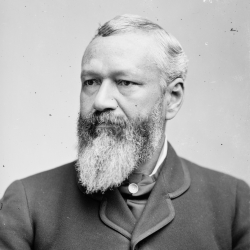 | 202502 26Reconstruction Louisiana and the Case of PBS Pinchback
February 26, 2025
In February 1870, Hiram Revels of Mississippi made history as the first Black American to be elected to the United States Senate. Revels served only 13 months, but five years later the Mississippi legislature, still under the control of Republicans who were swept into office as part of post-Civil War Reconstruction, elected Blanche K. Bruce, making him the first Black American elected to a full Senate term. Often forgotten, however, is another pioneering Black politician, Pinckney Benton Stewart Pinchback of Louisiana, who was elected to the Senate in 1873 but never allowed to take his seat.
In February 1870, Hiram Revels of Mississippi made history as the first Black American to be elected to the United States Senate. Revels served only 13 months, but five years later the Mississippi legislature, still under the control of Republicans who were swept into office as part of post-Civil War Reconstruction, elected Blanche K. Bruce, making him the first Black American elected to a full Senate term. Often forgotten, however, is another pioneering Black politician, Pinckney Benton Stewart Pinchback of Louisiana, who was elected to the Senate in 1873 but never allowed to take his seat.
Pinchback’s story offers a window into an era of political upheaval in the United States, when Black Americans fought to exercise their newly won political and civil rights in the South, and former Confederates sought, often violently, to reclaim power from Republican-dominated Reconstruction governments in which a large number of African Americans held office. Throughout the 1870s, members of the Senate and House of Representatives debated the power of Congress to ensure fair elections in the South and enforce protections enshrined in the Fourteenth and Fifteenth Amendments to the Constitution.1
Pinchback, who went by the initials PBS but was “Pinch” to his friends, was born in 1837 to a formerly enslaved mother, Eliza Stewart, and her white enslaver, Major William Pinchback. Major Pinchback had freed and married Stewart and moved the family to Mississippi. When Major Pinchback died in 1848, Stewart, denied the Pinchback estate by Mississippi courts and fearing re-enslavement by Major Pinchback's family, moved with her children to Cincinnati, Ohio, where PBS Pinchback was already attending boarding school. At 12 years old, Pinchback ended his formal education and went to work on Mississippi river boats, eventually falling in with a gambler who instructed him in the art of dice and card games.2
When the Civil War erupted in 1861, Pinchback made his way to Union-occupied New Orleans where he enlisted with the Union army. He was tasked by General Benjamin Butler with recruiting a company of Black soldiers and was commissioned as the company’s captain. He resigned in September 1863 after enduring poor treatment from white troops and officers. A gifted orator, Pinchback went north after the war to promote Black suffrage in the South and later settled in Alabama to help freedmen organize for their political rights.3
After the Radical Republicans in Congress passed the first Reconstruction Act in 1867 to remove former Confederates from power and protect Black rights, Pinchback returned to New Orleans to work with Republican officials in the city. A speech he delivered at the Republican state party convention in defense of Black civil rights led to Pinchback’s appointment to the party’s executive committee, followed by his election to the state constitutional convention in 1867. When the constitutional convention first met in 1866, a white mob had disrupted the proceedings and sparked what came to be known as the Mechanics Institute Massacre (the Institute was being used as the State House at the time), which left 46 African Americans dead and another 60 injured. At the 1867 constitutional convention, undeterred by the threat of violence, Pinchback led the drafting of a civil rights article for the new constitution that granted Blacks the right to vote and disenfranchised former Confederates.4
Impressed with his performance at the convention, Louisiana Republicans floated Pinchback as the party’s nominee for governor, but he demurred and supported a young white attorney from Illinois, Henry Clay Warmoth, who won election in April 1868 along with other Radical Republicans, despite widespread violence and intimidation against Black voters. Meanwhile, Pinchback won election to the state senate, but only after a state committee on elections determined there had been fraud in the balloting and awarded him the seat.5
In the years that followed, Republicans in Louisiana and Washington split into contending factions over the future of Reconstruction, forcing Pinchback to negotiate a rapidly shifting political landscape. The state’s Black Republicans grew frustrated with Governor Warmoth as he failed to support strong civil rights legislation and curried favor with white Democrats by, among other things, appointing former Confederates to state office. Pinchback initially continued to support Warmoth and was rewarded with election as president of the Senate, a post that carried with it duties as acting lieutenant governor. But in 1872, when Warmoth announced his support for presidential candidate Horace Greeley, a Democrat backed by the new Liberal Republican Party who came to oppose Radical Reconstruction in favor of reconciliation with former Confederates, Pinchback broke with his political patron. Back in the good graces of the state’s regular Republicans, Pinchback campaigned for President Ulysses S. Grant and for continued federal support for Black civil rights in the South. In the race for Louisiana governor, Pinchback stumped for U.S. Senator William Pitt Kellogg against Democrat John McEnery, who ran with the support of Warmoth and the state’s Liberal Republicans.6
The 1872 elections left Louisiana in political chaos. McEnery and his coalition of Democrats and Liberal Republicans declared themselves the victors, while the state’s Republicans charged that they would have won if not for widespread fraud and violence against Black voters. When Governor Warmoth took control of the state’s election board to certify the Democratic victory in violation of a federal court order, the district judge intervened, and federal troops took control of the State House. On December 9, 1872, the Republicans passed articles of impeachment against Warmoth, which under Louisiana law suspended him from office pending trial. As a result, Pinchback became the acting governor, the first Black governor of a state in the nation’s history. When the newly elected government was to meet on January 14, both sides organized rival governments, each claiming to be the legitimate representatives of the people. Backed by the federal courts, the Republicans gathered in the State House and inaugurated Kellogg as governor, while the Democrats organized their own legislature at City Hall and swore in McEnery.7
Louisiana’s political troubles soon reached the U.S. Senate, with Pinchback at the center. When Kellogg resigned his Senate seat to take over as governor, the competing legislatures each elected a replacement to complete the final weeks of Kellogg’s term. Both Democrat William McMillen and Republican John Ray presented their credentials—one signed by McEnery and the other by Kellogg, respectively—to the Senate. At the same time, the Republican legislature elected Pinchback to the Senate for the full term beginning on March 4, 1873, and the Democratic coalition legislature elected McMillen for the seat.
A Senate increasingly divided over Reconstruction policies and the role of the federal government in enforcing Black political rights in the South took up the question of who held rightful claim to Louisiana’s Senate seat. The Senate Committee on Privileges and Elections, chaired by Radical Republican leader Oliver Morton of Indiana, launched an investigation into “whether there is any existing State government in Louisiana” that could name a senator. After a month of examination, the committee recommended rejecting both sets of credentials and offered a bill to mandate new elections in the state. A committee majority—which included Republicans Matthew Carpenter of Wisconsin, John Logan of Illinois, James Alcorn of Mississippi, and Henry Anthony of Rhode Island—concluded that if the election had “been fairly conducted and returned, Kellogg … and a legislature composed of the same political party, would have been elected,” and that recognizing the McEnery government without scrutinizing the election returns “would be recognizing a government based upon fraud, in defiance of the wishes and intention of the voters of that State.” But the majority also charged that the Republican legislature in Louisiana had no legal authority, strongly condemned the intervention of the federal courts, and concluded that the Republicans had “usurped” the government by tossing out the Democratic victory. In the minority, Democrats on the committee called for McMillen to be seated, arguing that Congress had no role to play in state elections and could not throw out the Democrats’ “official” results. Only Chairman Morton made the case that the Republicans were entitled to the seat unconditionally. The full Senate took no action, however, and the seat remained vacant.8
When new senators were sworn in at the start of the 43rd Congress on March 4, 1873, the Senate did not address the Louisiana seat. That spring, white paramilitary groups continued a campaign of violence against Black Louisianans, including the infamous Colfax Massacre in April when 80 to 100 African Americans were killed. Despite the ongoing political violence, a growing number of senators began to question federal intervention in the South. When the Senate convened for the first regular session in December 1873, the Committee on Privileges and Elections took up Pinchback’s case but reported that they were “evenly divided” and “beg[ed] leave to be discharged from further consideration.” Pinchback faced yet another setback in January 1874 when his champion in the Senate, Oliver Morton, heard rumors that Pinchback had secured his election through bribes and wavered in his commitment to the case. When Morton moved for a new investigation into Pinchback’s personal conduct by the Committee on Privileges and Elections, Matthew Carpenter instead introduced a resolution calling for new elections in Louisiana. Neither resolution was put to a vote, the case languished for the remainder of 1874, and the seat remained vacant.9
Pinchback’s case received new life in January 1875 when, after another contested election in 1874, Louisiana’s Republican legislature again elected him to the Senate “in order that all doubts or questioning of the title … be entirely silenced.” Morton set his qualms aside and threw himself once again behind securing Pinchback his seat. Senate Democrats refused to concede the fight and launched a filibuster that kept the Senate in session all night on February 17. They had the support of a number of Republicans, such as George Edmunds of Vermont, who had become highly critical of Reconstruction policy and the federal government’s role in supporting Black voters in the South. The debate continued on and off for weeks, with Republicans railing against the frauds and intimidation that had allowed McEnery and the Democrats to claim victory in the 1872 elections, and Democrats dismissing Kellogg as a “usurper.” By the end of the session, Republicans had still failed to get a vote on the Pinchback resolution.10
Meanwhile, in December 1874, responding to a plea from President Grant, the House of Representatives had created a committee to investigate Louisiana’s 1874 elections and resolve the political deadlock. New York Representative and future Vice President William Wheeler produced a plan, later known as the Wheeler Compromise, whereby the Democrats would accept Kellogg’s position as governor and be granted a majority of seats in the state assembly, and the Republicans would be given control of the state senate. Kellogg and both parties accepted the plan in April 1875, and in January 1876 this newly constituted Louisiana legislature declared the Senate seat vacant and elected a new senator, James B. Eustis, a Democrat. A trio of Republican Louisiana state senators submitted a statement to the Senate lamenting “being unable … to elect a gentleman strictly of our own party faith” but defending Eustis’s election as “an act in the interests of peace and prosperity, and a healthy and lasting good-will among all here at home.” This willingness by Republicans to compromise at the expense of Black voters signaled the beginning of the end of Reconstruction in Louisiana.11
Morton refused to accept that the Louisiana seat was vacant for Eustis to claim and in February 1876 put Pinchback’s case before the Senate one last time. Blanche Bruce of Mississippi, who had entered the Senate the previous year, used the occasion to deliver his maiden speech. Bruce told his Republican colleagues that to reject Pinchback amounted to the federal government turning its back on Louisiana and its Black citizens. In a closed executive session, Bruce was even more forceful. “If when the Louisiana case is again called, it be not settled,” he stated, “I will resign my seat in a body which presents this spectacle of asinine conduct.”12
The Senate did settle the case, and Bruce did not resign. On March 8, 1876, more than three years after Pinchback had arrived in Washington to take the oath of office, the Senate rejected his claim to the seat. Seated at the back of the Chamber while the final debate and vote took place, Pinchback reportedly “acted as one relieved, and who felt the great strain was over.” As a consolation, the Senate awarded him $16,000, approximately what he would have earned as a senator during those three years.13
Pinchback returned to New Orleans where he remained an important political figure for a time, even as Democratic lawmakers consolidated their power in the former Confederate states under Jim Crow laws. In a letter to Blanche Bruce, he called himself “the liveliest corpse in the dead South.” Pinchback settled back in Washington in the 1890s and remained a presence at banquets and parties but increasingly seemed a relic of a bygone political era, when Black southerners had won election to federal office. Pinchback died in 1921 at the age of 84. After Blanche K. Bruce left the Senate in 1881, more than 80 years passed before another African American—Edward Brooke of Massachusetts—won election to the Senate.14
Notes
1. History, Art & Archives, U.S. House of Representatives, Office of the Historian, Black Americans in Congress, 1870–2007, “’The Fifteenth Amendment in Flesh and Blood:’ 1870–1901,” accessed February 18, 2025, https://history.house.gov/Exhibitions-and-Publications/BAIC/Historical-Essays/Fifteenth-Amendment/Introduction/.
2. Philip Dray, Capitol Men: The Epic Story of Reconstruction Through the Lives of the First Black Congressmen (Houghton Mifflin, 2008), 103; George H. Devol, Forty Years a Gambler on the Mississippi, (Home Book Co., 1894), 216–17.
3. Charles Vincent, Black Legislators in Louisiana During Reconstruction (Southern Illinois University Press, 2011), 8–10; James Haskins, The First Black Governor: Pinkney Benton Stewart Pinchback (MacMillan, 1973; African World Press, 1996), 24–25, 38–45.
4. Haskins, First Black Governor, 47–54, 56–60; Dray, Capitol Men, 28–32, 106.
5. Dray, Capitol Men, 107.
6. Dray, Capitol Men, 109–110, 117–118, 124–127; Haskins, First Black Governor, 82–83, 100–102; “New Orleans,” New York Times, January 21, 1872, 1.
7. Dray, Capitol Men, 134. For the most complete details of the events surrounding the elections, see Senate Committee on Privileges and Elections, Louisiana Investigation, S. Rpt. 457, 42nd Cong., 3rd sess., February 20, 1873.
8. S. Rpt. 457, XLIV.
9. Congressional Record, 43rd Cong., 1st sess., December 15, 1873, 188; January 30, 1874, 1036–58; March 3, 1874, 1926–27; Haskins, First Black Governor, 196–99, 202–4; Dray, Capitol Men, 224–25. In the meantime, Pinchback had been on the ballot for a seat in the House of Representatives in 1872, but the election was contested and remained unresolved for much of the 43rd Congress. He pleaded his case to the House of Representatives in June 1874 to obtain the at-large seat, but the House awarded the seat to his Democratic opponent.
10. “In Louisiana,” Chicago Daily Tribune, January 13, 1875, 1; Resolution that Senate recognize validity of credentials of P. B. S. Pinchback, S. Mis. Doc. 16, 43rd Cong., 2nd sess., December 23, 1874; Senate Committee on Privileges and Elections, Credentials of P. B. S. Pinchback, for seat in Senate from Louisiana, S. Rpt. 626, 43rd Cong., 2nd sess., February 8, 1875.
11. James T. Otten, “The Wheeler Adjustment in Louisiana: National Republicans Begin to Reappraise Their Reconstruction Policy,” Louisiana History: The Journal of the Louisiana Historical Association 13, no. 4 (1972): 349–67; Views of certain State senators on election of Hon. J. B. Eustis as United States Senator from Louisiana, S. Mis. Doc. 41, 44th Cong, 1st sess., January 26, 1876.
12. New Orleans Times, February 17, 1876, quoted in Sadie Daniel St. Clair, The National Career of Blanche Kelso Bruce (Ph.D. diss., New York University, 1947), 96–97.
13. Congressional Record, 44th Cong., 1st sess., March 8, 1876, 1557–58; New Orleans Republican, March 14, 1876, quoted in Haskins, 221; Senate Committee on Privileges and Elections, Question of allowance proper to be made to P. B. S. Pinchback, late contestant for seat in Senate from Louisiana, S. Rpt. 274, 44th Cong., 1st sess., April 17, 1876.
14. Haskins, First Black Governor, 241; “Pinchback, Louisiana Governor in 1872, Dead,” Washington Post, December 22, 1921, 10.
|
 | 202309 15Constitution Day 2023: The Senate’s Last Framer—Rufus King
September 15, 2023
Of the 55 delegates who attended the Constitutional Convention in Philadelphia during the summer of 1787, 19 later served in the U.S. Senate, including New York senator Rufus King. Like other consequential individuals whose participation in America’s founding crossed over into the new federal republic, King’s experience as a framer later informed his efforts to implement the Constitution as a member of Congress. King served in the Senate longer than any other delegate to the Philadelphia convention—the Senate’s last framer—and became a respected and often outspoken elder statesman.
Of the 55 delegates who attended the Constitutional Convention in Philadelphia during the summer of 1787, 19 of those constitutional framers later served in the U.S. Senate, including New York senator Rufus King. Like other consequential individuals whose participation in America’s founding crossed over into the new federal republic, King’s experience as a framer later informed his efforts to implement the Constitution as a member of Congress, bringing knowledge, continuity, and stability to the new government. A member of the Massachusetts delegation to the Constitutional Convention, King subsequently moved to New York and became one of the first two senators to represent that state in 1789. He went on to serve in the Senate longer than any other delegate to the Philadelphia convention—the Senate’s last framer—and became a respected and often outspoken elder statesman.
As historians have explained, the individuals chosen to attend the federal convention that resulted in the creation of a “partly federal and partly national” constitutional system “were not mere ‘theoretical’ politicians who were engaging in government for the first time.” They “were experienced veterans, many of whom had already been able to see the variants of democracy play out within their own states,” while others “knew firsthand the frustrations of governing” under the Articles of Confederation that preceded the constitutional government. This was certainly true of Rufus King.1
Just 32 years old when he attended the Constitutional Convention in 1787, King was already considered, as described by fellow delegate William Pierce of Georgia, a “man much distinguished for his eloquence and great parliamentary talents,” who “ranked among the Luminaries of the present Age.” Trained as a lawyer, he entered Massachusetts politics with service in the state’s general assembly before becoming a delegate to the Continental Congress. Taking leave of his post to attend the Philadelphia convention, King was present at every session and took notes—a valuable resource for historians. Considered “among the most capable orators” at the convention, his contributions were significant. He served on several major committees, including the important Committee on Postponed Matters and Committee of Style, which were charged with finalizing the document as the convention was ending. As historian Richard Welch concluded, King was “surely one of the most prominent members of the Convention at large.”2
After the ratification of the Constitution, when the First Congress convened in 1789, the 34-year-old King became the youngest senator of the time. King “came to the Senate with a record of solid achievement,” historian Roy Swanstrom explained, and he “was consistently among the most active Senators in committee work.” During his first Senate term, King played a key role in the creation and approval of the Jay Treaty, co-authoring with Secretary of the Treasury Alexander Hamilton and Chief Justice of the United States John Jay a series of published essays in defense of the controversial treaty with Great Britain. He also proved influential in establishing the First Bank of the United States and was elected one of the first 25 directors of the bank in 1791.3
In 1796 President George Washington appointed King to be minister to Great Britain, a position he held until 1803. Upon his return to the United States, King spent a decade out of public office before again being elected to the Senate in 1813. By this time, King was the “only senator who had sat in the body while Washington was President,” and was one of only two framers still serving in the Senate—along with New Hampshire’s Nicolas Gilman. When Gilman died in 1814, King became the last framer of the Constitution still serving in the Senate.4
Specializing in matters of finance and foreign relations, as well as maritime law, commerce, and public lands, King’s expertise was widely respected by his contemporaries. His skillful oratory often impressed his congressional colleagues, including a young, newly elected New Hampshire representative named Daniel Webster, who hailed King’s speaking ability as “unequalled.” When the Senate established its standing committee system in 1816, King was assigned to two of the most important panels—Foreign Relations and Finance. “In the years to come he would apply his knowledge and experience” to that committee work, noted a biographer, and “in debates and roll calls on the Senate floor, he was a watchdog, sniffling out signs of wastefulness and partisan aims.”5
By the time the Senate tackled the difficult issue of the Missouri crisis in 1819 and 1820, King was a respected elder statesman. His status was tested, however, when the question of expanding slavery in new western states threatened to disrupt the delicate balance between slave states and free states, especially in the Senate, where states were given equal representation. King insisted that Congress had a right to exclude slavery from new states. This position alienated colleagues of slaveholding states but bolstered support in the northern states. King’s speeches rallied opposition to the proposed compromise that sought to admit Missouri as a slave state and Maine as a free state while prohibiting slavery in the territories north of the 36º 30' parallel.
King had consistently opposed the expansion of slavery throughout his career. While serving in the Continental Congress in the 1780s, he had introduced a resolution providing that there should be neither "slavery nor involuntary servitude" in the Northwest Territory, language that was ultimately incorporated into the Northwest Ordinance of 1787. During the Constitutional Convention, foreseeing the growing divide between slave and free states, he had expressed doubts about the three-fifths compromise that determined the method by which enslaved Americans were to be counted for purposes of taxation and representation. Although King had accepted the three-fifths compromise as a necessary concession to slaveholding states in order to gain adoption of the Constitution, by 1803, when the purchase of the vast Louisiana Territory raised new possibilities for the expansion of slavery, he believed that the three-fifths provision was one of the “greatest blemishes” on the Constitution.6
In 1819, as senators debated the issue of expanding slavery into Missouri and other western states, King stood in opposition, drawing on his participation in the constitutional debate over the three-fifths compromise to frame his argument. “The equality of rights, which includes an equality of burdens, is a vital principle in our theory of government,” he explained, “and its jealous preservation is the best security of public and individual freedom.” He maintained that “the departure from this principle in the disproportionate power and influence, allowed to the slave holding states” through the three-fifths compromise, “was a necessary sacrifice to the establishment of the constitution,” but such a compromise was no longer acceptable. “The effect of this concession has been obvious in the preponderance which it has given to the slave holding states over the other states.” He continued:
Nevertheless it is an ancient settlement, and faith and honour stand pledged not to disturb it. But the extension of this disproportionate power to the new states would be unjust and odious. The states whose power would be abridged, and whose burdens would be increased by the measure, cannot be expected to consent to it; and we may hope that the other states are too magnanimous to insist on it.7
King’s Senate speeches were printed and distributed as a pamphlet, fueling the already heated debate over slavery’s possible westward expansion. Given King’s status as a veteran statesman, the publication received much attention. According to historian Robert Ernst, “The speeches became a center of acrimonious controversy.” The pamphlet “has largely contributed to kindle the flame now raging throughout the Union on that question, and which threatens its dissolution,” John Quincy Adams (then serving as Secretary of State) wrote in his diary. “A whirlwind of anti-Missouri feeling swept over the North,” noted historian Homer Hockett. “Mass meetings were held and resolutions passed in open opposition to the extension of slavery into the new states,” commented historian Joseph L. Arbena, who wrote that “King appeared to be the source of much of this agitation.” His speeches and “ideas formed the bases for many of the essays, memorials, and speeches presented in support of his stand.” Observing King’s influence over the Missouri debate, Boston journalist and author William Tudor wrote to King in February 1820: “I have been convinced that it is chiefly owing to you that the nation has been awakened to examine its consequences.” Describing King’s fervor in the Missouri debate, Adams concluded, “King has made a desperate plunge into it, and has thrown his last stake upon the card.”8
While King’s speeches strengthened the opposition to the Missouri Compromise, they also stirred suspicions about the veteran senator’s motives. Critics, particularly those in favor of the compromise, accused King of using the crisis for his own political gain and to realign the parties around the issue and establish himself as a leader of a new party. Adams rejected such notions, arguing, “There is not a man in the Union of purer integrity than Rufus King.” Historians have tended to agree with Adams. “Although he would have welcomed a new political alignment of northern Republicans and the few remaining Federalists,” wrote Ernst, “there is no credible evidence that he plotted to bring this about, nor was he motivated by personal ambition for power.” Nevertheless, the suspicions cast upon King’s motives aided in diminishing the effectiveness of his influence upon the debate, contributing to the ultimate failure of his position.9
Despite the controversies of the Missouri crisis, King remained a respected and trusted public figure. In 1821 the Senate elected him as chairman of the influential Foreign Relations Committee—despite the fact that he was in the minority party, one of only four remaining Federalists in the Senate. Even those who had been disappointed by King’s position in the Missouri debate continued to hold him in high esteem. One admirer, Virginia representative John Randolph, remarked, “Ah, sir! only for that unfortunate vote on the Missouri Question, he would be our man for the Presidency. He is, Sir, a genuine English gentleman of the old school, just the right man for these degenerate times; but, alas! it cannot be.”10
King was both an ardent Federalist and an esteemed national leader whose link with the past, and particularly to his role as constitutional framer, garnered an admiration that eclipsed partisanship. “A venerable Senator, he was a sort of ‘Mr. Federalist,’" Ernst observed. Even as the Federalist influence declined, Ernst continued, “Rufus King's reputation as an elder statesman brightened.” His service in the Senate, which continued until 1825, extended well beyond any of the other 19 delegates to the Constitutional Convention who later became senators. A Massachusetts colleague, Harrison G. Otis, assessed the importance of King’s continuing service. “You prevent a great deal of mischief and keep in check the framers of crude projects and cunning devices,” Otis stated to King in 1823, adding, “whoever writes your epitaph…may be able to say that you continued many years at your post, the last of the Romans.” Rufus King, elder statesman, was the Senate’s last framer.11
Notes
1. John R. Vile, The Men Who Made the Constitution: Lives of the Delegates to the Constitutional Convention of 1787 (Lanham: Scarecrow Press, Inc., 2013), xx; David O. Stewart, The Summer of 1787: The Men Who Invented the Constitution (New York: Simon & Schuster, 2007), 25.
2. “Notes of Major William Pierce on the Federal Convention of 1787,” The American Historical Review 3, no. 2 (January 1898): 325; National Park Service, Signers of the Constitution: Historic Places Commemorating the Signing of the Constitution (Washington, DC: U.S. Government Printing Office, 1976), 180–81; Richard E. Welch, Jr., “Rufus King of Newburyport: The Formative Years (1767–1788),” Essex Institute Historical Collections 96, no. 4 (October 1960): 267.
3. Roy Swanstrom, The United States Senate 1787–1801: A Dissertation on the First Fourteen Years of the Upper Legislative Body, reprinted as S. Doc. 99-19, 99th Cong., 1st sess. (Washington, DC: Government Printing Office, 1985), 45, 271–72.
4. Robert Ernst, Rufus King: American Federalist (Chapel Hill: University of North Carolina Press, 1968), 322.
5. Ernst, Rufus King, 327, 353.
6. Welch, Jr., “Rufus King of Newburyport,” 248; Joseph L. Arbena, “Politics or Principle? Rufus King and the Opposition to Slavery, 1785–1825,” Essex Institute Historical Collections 101, no. 1 (January 1965): 64–65; Robert Ernst, “Rufus King, Slavery, and the Missouri Crisis,” The New York Historical Society Quarterly 46, no. 4 (October 1962): 364.
7. Rufus King, The Substance of Two Speeches, Delivered in the Senate of the United States, on the Subject of the Missouri Bill, (Philadelphia: Clark & Raser, printers, 1819), 6–7, Library of Congress collection, accessed on August 29, 2023, https://www.loc.gov/item/09020866/.
8. Ernst, “Rufus King, Slavery, and the Missouri Crisis,” 367; Charles F. Adams, ed., Memoirs of John Quincy Adams, Comprising Portions of His Diary from 1795 to 1848 (Philadelphia: J.B. Lippincott & Co., 1875), vol. 4, 517, 526; Homer C. Hockett, "Rufus King and the Missouri Compromise,'' Missouri Historical Review 2 (April 1908): 216; Arbena, “Politics or Principle?” 72; Charles R. King, ed., The Life and Correspondence of Rufus King: Comprising His Letters, Private and Official, His Public Documents and His Speeches (New York: G.P. Putnam’s Sons, 1900), vol. 6, 272.
9. Adams, Memoirs of John Quincy Adams, vol. 5, 13; Ernst, “Rufus King, Slavery, and the Missouri Crisis,” 382.
10. Ernst, Rufus King, 384–85; William Cabell Bruce, John Randolph of Roanoke, 1773–1833: A Biography Based Largely on New Material (New York: G.P. Putnam’s Sons, 1922), 612.
11. Ernst, “Rufus King, Slavery, and the Missouri Crisis,” 373–74; Ernst, Rufus King, 407–9.
|
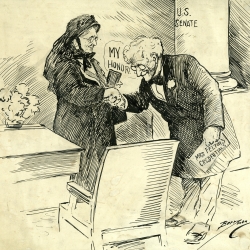 | 202211 21Rebecca Felton and One Hundred Years of Women Senators
November 21, 2022
On November 21, 1922, Rebecca Felton of Georgia took the oath of office, becoming the first woman to serve in the U.S. Senate. Though her legacy has been tarnished by her racism, the significance of this milestone—now 100 years old—remains. Felton’s historic appointment opened the door for other women senators to follow. One hundred years later, 59 women have been elected or appointed to the Senate, and many more women have supported Senate operations as elected officers and staff.
On November 21, 1922, Rebecca Felton of Georgia took the oath of office, becoming the first woman to serve in the U.S. Senate. Though her legacy has been tarnished by her racism, the significance of this milestone—now 100 years old—remains. Felton’s historic appointment opened the door for other women senators to follow. One hundred years later, 59 women have been elected or appointed to the Senate, and many more women have supported Senate operations as elected officers and staff.
Appointed to fill a vacant seat on October 3, 1922, Felton formally took the oath of office in the Senate Chamber on November 21 and served only 24 hours while the Senate was in session. For Felton, that historic day marked the culmination of a lifetime of political activism as a feminist, journalist, and suffragist. Like many of her contemporaries, however, Felton was also a white supremacist whose views on race both reflected and reinforced racial inequality for generations. Her complicated legacy sheds light on both the progressive and the reactionary politics that she influenced in the late 19th and early 20th centuries.
Born Rebecca Latimer in 1835, she was the daughter of a wealthy Georgia planter. She married Dr. William Felton in 1853, moving to his home near Cartersville. Although the state of Georgia prohibited women from owning property at that time, as the mistress of her husband’s plantation, Felton managed a household that included 50 enslaved people.
In 1860, as Civil War approached, the Feltons initially opposed the secession of Southern states from the Union, but like other white Southerners of their social class, they supported the Confederacy during the war to protect their “ownership of African slaves.” Felton later explained, “All I owned was invested in slaves.” She joined the local Ladies Aid Society to support the Confederate army. A physician and a preacher, William Felton tended Confederate soldiers at a nearby military camp, frequently leaving Rebecca alone to defend their property. Physical assault by marauding soldiers was a common wartime experience for rural women like Felton, and their trauma informed Felton’s political advocacy as she later fought for financial security and protection from sexual violence for all women.1
When the war concluded, the Feltons were emotionally depressed and financially destitute. They lost their farm and livelihood during the war and suffered the loss of two young children to wartime diseases. They founded a school, but politics soon came calling. After a report of the brutal sexual assault of a Black girl in a chain gang, Rebecca petitioned the Georgia state legislature to enhance protections for all female labor convicts—Black and white—and she would fight for prison reform for the remainder of her life. William pursued electoral politics, serving in the U.S. House of Representatives and the Georgia state legislature. Felton participated in all aspects of her husband’s career, serving as his campaign manager and speechwriter, atypical roles for a woman in the 19th century. Political opponents criticized their unusual partnership. “We sincerely trust that the example set by Mrs. Felton will not be followed by southern ladies,” complained the Thomasville Times. “Let the dirty work in politics be confined to men.” By serving as her husband’s partner, and at times as his political surrogate, Felton helped to redefine the “traditional” role of southern white women.2
In the 1880s, Rebecca Felton broadened her activism, joining the temperance movement and emerging as a prominent and dynamic public speaker for the rights of poor, rural white women. A prolific and engaging writer, she co-founded a small newspaper in 1885 and later wrote a semi-weekly column for the Atlanta Journal. By the 1890s, Felton had emerged as a prominent public figure whose rousing speeches drew large crowds and whose columns and letters to the editor were widely distributed and debated nationwide. Felton used her influence to push for progressive policy reforms on behalf of white women and children, including universal public education, prison reform, better employment opportunities for women, and female suffrage.3
Felton’s views on race, however, were far from progressive, and throughout her life she held and perpetuated racist attitudes about African Americans. Decades after the Civil War, she continued to promote the myth of the happy enslaved person. She dehumanized Black men, calling them “debased, lustful brutes.” In her memoirs, published in 1919, Felton acknowledged that white supremacy served as an organizing principle for white southerners during and after the war. “The dread of negro insurrection and social equality with negroes at the ballot box held the Southern whites together in war or peace.” By the 1890s, many former Confederate states had adopted new constitutions to restrict African Americans’ civil rights, particularly voting rights. Prominent political figures, including Felton, inflamed racial tensions by promoting unfounded allegations of Black men assaulting white women. Such allegations fueled the heinous practice of lynching.4
In a widely reported speech in 1897, Felton criticized white men for their indifference to women’s rights and their failure to protect white women from assault, promoting her vision of equality for farm women. In the final moments of the speech, however, she pivoted to reactionary race politics: “As long as your politicians take the colored man into their embrace on election day…so long will lynching prevail.…If it needs lynching to protect woman’s dearest possession from the ravening human beasts,” she said, “then I say lynch, a thousand times a week if necessary.” Although the purpose of her speech had been to promote the empowerment of white rural women, in the weeks and months that followed, it was Felton’s virulent support for lynching that was widely reported and used as justification for this barbaric practice.5
Shortly after her husband’s death in 1909, Felton joined the suffrage movement and canvassed the state to promote voting rights for women. Racism played a prominent role here as well, with many leading white suffragists insisting that extending voting rights to white women would help to dilute the voting power of Black men. When Felton testified before the all-male Georgia state legislature in 1914, for example, she asked: “Why can’t [women] help you make the laws the same as they help you run your homes and churches? I do not want to see a negro man walk to the polls and vote … while I myself [cannot].” In 1920 Felton and fellow suffragists celebrated the ratification of the Nineteenth Amendment, which extended voting rights to many, though not all, women. Her suffrage work enhanced her popularity among newly enfranchised women voters in Georgia and beyond.6
In September 1922, when Georgia senator Thomas Watson died in office, he left a vacancy to be filled by gubernatorial appointment until the upcoming special election. Georgia governor (and former senator) Thomas Hardwick planned to appoint a “place-holder” and then run for that seat himself. Because he had opposed the Nineteenth Amendment, Hardwick feared newly enfranchised women would deny him the coveted Senate seat. On October 3, 1922, hoping to quell their opposition, Hardwick chose 87-year old Rebecca Latimer Felton of Cartersville for the historic appointment.
Hardwick ceremonially presented Felton with her appointment at Bartow County Courthouse on October 6. Women packed the courthouse, eager to show their support for the first woman senator. Because the Senate had adjourned sine die until December, and her replacement would be elected on November 7, Hardwick’s action was viewed as a symbolic attempt to gain women’s votes. Though Felton would receive a Senate salary and the administrative support of a secretary, as one newspaper reported, it was “only remotely possible” that she would appear on the Senate floor.7
Not content with a remote possibility, Felton’s allies launched an effort to have her seated in the Senate. Helen Longstreet, the widow of Georgia’s Confederate general James Longstreet, petitioned President Warren G. Harding in person on October 5, requesting that he call a special session before the November election so that Felton could be sworn in. Others followed Longstreet’s lead. “I voice the desire of multitudes of women voters,” explained one prominent suffragist in a letter to Harding, “who will shortly be approaching the polls.” Harding ignored the political pressure for a time, resisting calls for a special session. Meanwhile, on October 17, Governor Hardwick lost the Democratic primary to Judge Walter George, who won the general election on November 7. Felton now had an elected successor, but that didn’t halt the pressure to provide her the opportunity to take a Senate seat. Felton lobbied Harding to call Congress back for a special session as many of her supporters petitioned the president for action. On November 9, the president relented, announcing a special session to begin November 20 to consider several Republican legislative priorities. Attention again turned to Felton. Would she be seated?8
Less than a week before the special session was scheduled to convene, Georgia secretary of state S. G. McLendon, Felton’s political ally, declared that Walter George’s election likely would not be certified before the special session began. The ballots of 14 Georgia counties remained to be counted, he explained, and the state canvassing board had yet to be called to certify those results. According to state law, only the governor had the authority to convene the canvassing board, and Governor Hardwick was vacationing in New York. To resolve the situation, Hardwick returned to Georgia and convened the board, which promptly certified the election results. When the Senate convened on November 20, Senator-elect Walter George would be certified and ready to present his credentials. To many, Felton’s chances of taking the oath of office in an open session seemed to be dwindling.9
Undeterred, Felton personally asked George to delay presenting his credentials to the Senate. “I have no objections to interpose,” George astutely proclaimed at a press conference after their meeting. “The Senate is the exclusive judge of the eligibility of its members.… I will be glad to see the distinction come to [Felton], if the Senate can and will find a way to make this legally possible.” After George’s public announcement, Felton’s goal seemed within reach. She packed her bags and boarded a train to Washington, D.C. Both she and George would be present when the Senate convened for the special session. The Senate would decide her fate.10
On Monday, November 20, Felton arrived at the Senate early, her credentials tucked under her arm. Escorted into the Chamber by former Georgia senator Hoke Smith, she took a seat at an empty desk. Senators surrounded her, extending her a warm welcome. When the Senate convened at noon, it approved a resolution recognizing the death of her predecessor Thomas Watson and then—as was Senate custom—adjourned for the day. The question of Felton taking the oath would have to wait another 24 hours.
Felton again arrived early on November 21 and received a raucous ovation from visitors in the galleries as she took a seat at Watson’s vacant desk. After recessing for a joint session, the Senate reconvened, accepted the credentials of two new members, and then turned to deciding Felton’s case. Thomas Walsh of Montana addressed the chair. First describing the law that seemed to prevent Felton from being seated, Walsh then provided precedents in her favor. “I did not like to have it appear, if the lady is sworn in—as I have no doubt she is entitled to be sworn in—that the Senate … extend[ed] so grave a right to her as a favor, or as a mere matter of courtesy, or being moved by a spirit of gallantry,” he said, “but rather that the Senate, being fully advised about it, decided that she was entitled to take the oath.” Without objection, the clerk proceeded to read the certificate as presented by Felton, and Vice President Calvin Coolidge administered the oath of office shortly after noon.11
As a duly sworn senator, Felton answered one roll call and delivered a single speech. "When the women of the country come in and sit with you,” she told her Senate colleagues, “...you will get ability, you will get integrity..., you will get exalted patriotism, and you will get unstinted usefulness." She served for 24 hours before relinquishing the seat to Senator-elect Walter George. A gallery full of women erupted into cheers and applause as Senator Felton bade farewell.12
Following her appointment, Felton had predicted that women’s era had dawned, but women’s time in the Senate had begun to dawn even before Felton’s historic appointment. The Senate had already benefitted from a small but talented group of pioneering female staff, including Leona Wells, who joined the Senate's clerical staff in 1901 and became one of the first women to serve as lead clerk on a committee. By the early 1920s, women held half of the Senate’s committee staff positions. Today, women hold many of the most important and influential posts in the Senate, including secretary of the Senate and sergeant at arms.13
As Felton predicted, however, her historic appointment did pave the way for other trailblazing women senators. Hattie Caraway of Arkansas became the first woman to win election to the Senate in 1932 and subsequently the first to chair a committee. In 1938 Senator Gladys Pyle of South Dakota became the first Republican woman to serve in the Senate. Margaret Chase Smith of Maine took the oath of office in 1949, becoming the first woman to serve in both the House of Representatives and the Senate. Carol Moseley Braun of Illinois, having prevailed in the general election of 1992, was the first African American woman senator. In 1995 Barbara Mikulski of Maryland set a milestone by becoming the first woman elected to Democratic Party leadership, and in 2000 Senator Kay Bailey Hutchison of Texas achieved that goal for the Republican Party. Other milestones followed. In 2013 Mazie Hirono of Hawaii became the first Asian and Pacific Islander woman to take the oath, while Tammy Baldwin of Wisconsin became the first openly gay senator. The first Latina, Catherine Cortez Masto, joined the Senate in 2017. When Vice President Kamala Harris took the oath of office in 2021, she became the first woman to serve as president of the Senate and the first Asian American and African American to hold that position. On November 5, 2022, Senator Dianne Feinstein of California became the longest serving woman senator, with more than 30 years of Senate service. To date, 59 women have followed the trail blazed by Felton in 1922, with 24 serving in the 117th Congress. While historians continue to reckon with the troubling aspects of Felton’s life and career, her legacy as the first woman senator remains a significant milestone—now 100 years old—in the history of the Senate.
Notes
1. Rebecca Latimer Felton, Country Life in Georgia in the Days of My Youth (Atlanta, GA: Index Printing Co., 1919), 80, 86; Crystal N. Feimster, Southern Horrors: Women and the Politics of Rape and Lynching (Cambridge: Harvard University Press, 2009), 7–36.
2. John E. Talmadge, Rebecca Latimer Felton: Nine Stormy Decades (Athens, GA: University of Georgia Press, 1960), 79; Feimster, Southern Horrors, 34–35.
3. Talmadge, Rebecca Latimer Felton, 125; LeeAnn Whites, “Rebecca Latimer Felton and the Wife’s Farm: The Class and Racial Politics of Gender Reform,” Georgia Historical Quarterly 76, No. 2 (Summer 1992): 372.
4. Felton, Country Life in Georgia, 87; Leon F. Litwack, Trouble in Mind: Black Southerners in the Age of Jim Crow (New York: Vintage Books, 1999), 197, 213; Rebecca Felton to the Editor, Boston Transcript, “Mrs. Felton Not for Lynching,” Atlanta Constitution, August 20, 1897, 4.
5. “Woman Advocates Lynching: Sensational Speech by the Wife of ex-Congressman Felton,” Washington Post, August 14, 1897, 6; Felton, Country Life in Georgia, 87; Feimster, Southern Horrors, 126–28, 133–35.
6. Feimster, Southern Horrors, 200–201.
7. “Commission Given Mrs. W.H. Felton by the Governor,” Atlanta Constitution, October 7, 1922, 3; Talmadge, Rebecca Latimer Felton, 140–42; “Mrs. W.H. Felton Named Senator; Hardwick in Race,” Atlanta Constitution, October 4, 1922, 1.
8. “Ask Special Session to Seat Senator Felton,” Baltimore Sun, October 13, 1922, 1.
9. Talmadge, Rebecca Latimer Felton, 143; “George’s Commission Held Up,” Baltimore Sun, November 16, 1922, 1; “George has time to be Qualified for Senate Seat,” Atlanta Constitution, November 18, 1922; 1.
10. “Judge W. F. George and Mrs. Felton to Confer Today,” Atlanta Constitution, November 17, 1922, 1.
11. “Senate to Decide Today on Seating Woman Senator,” Atlanta Constitution, November 21, 1922, 1; Congressional Record, 67th Cong., 3rd sess., November 21, 1922, 14.
12. Congressional Record, November 22, 1922, 23; “Mrs. Felton to Tax Senate Gallantry,” Baltimore Sun, November 19, 1922, 9.
13. “Women of the Senate,” United States Senate, accessed November 7, 2022, https://www.senate.gov/about/women-of-the-senate.htm
|
 | 202106 01Shaving and Saving: The Story of Bishop Sims
June 01, 2021
As a child, having been born into slavery in 1843, John Sims was forced to train the bloodhounds his master used to track runaway slaves. When the Civil War began in 1861, the teenaged Sims escaped bondage and fled north. When he died 73 years later, Sims was a beloved and well-known figure on Capitol Hill, a friend and confidant of some of the most powerful men in Washington. He is largely forgotten today, because John Sims wasn’t a powerful senator or a high-profile member of Capitol Hill staff—he was the Senate’s barber.
As a child, having been born into slavery in 1843, John Sims was forced to train the bloodhounds his master used to track runaway slaves. When the Civil War began in 1861, the teenaged Sims escaped bondage in his native South Carolina and fled north. When he died 73 years later, Sims was a beloved and well-known figure on Capitol Hill, a friend and confidant of some of the most powerful men in Washington. Despite his impressive rise from the bonds of slavery to the corridors of power, he is largely forgotten today. That’s because John Sims wasn’t a powerful senator or a high-profile member of Capitol Hill staff—he was the Senate’s barber.1
Sims’s dangerous flight to freedom landed him in the town of Oskaloosa in southeast Iowa. He arrived with no funds and no marketable skills, but he managed to find work in a barbershop. An apprenticeship followed and soon he was earning a living as a skilled barber. Then, in the mid-1880s, came the first of two fateful senatorial encounters—when Iowa senator William Boyd Allison got a haircut.
Throughout the 19th century and well into the 20th century, many Senate jobs were filled through patronage. Senator Allison, who chaired the Appropriations Committee, had plenty of patronage to give. He brought Sims to the Senate, where the barber’s tonsorial talents gained recognition. Sims “knows the whims [and] the vanities” of the Senate, reported the New York Times. His skill with shears and razor kept him employed long after his patron was gone, but it was Sims’s weekend job and a second notable encounter that brought him to public attention.2
John Sims moonlighted as a preacher at the Universal Church of Holiness in Washington, D.C. One day in 1916, Ohio senator (and future president) Warren G. Harding sat in the barber’s chair. “Sims,” he said, “I’m coming down next Sunday to hear you preach.” A few days later, to the surprise of the entirely African American congregation, Senator Harding attended the service. “He walked in by himself,” Sims recalled, “and took a seat near the middle of the church and waited until I was through.” When the service ended, Harding thanked Sims and returned to the Capitol to spread the news of the preaching talents of the Senate barber.
A week later, Harding returned to the Universal Church of Holiness and brought several of his colleagues with him. As the years passed, more and more senators appeared. Vice Presidents Calvin Coolidge and Charles Dawes also attended. “From the North, from the South, from the East and the West they have come to hear me,” Sims explained. “And to think that I have come up from a lowly place of humility . . . to where I have the honor of preaching to those who are high in the nation’s affairs!” Sims insisted that he owed it all to Harding. “He started it all—and the Senators have been coming to hear me ever since.”
The preaching barber became known as the “Bishop of the Senate.” His prayers, noteworthy for both length and fervor, also enlivened his official Senate duties. “[If] he thought the occasion required [it],” commented a reporter, Sims would “drop to his knees . . . in the midst of . . . a shave and pray with all his heart” for the senator sitting in his chair. In 1921, as the Senate prepared to vote for its next official chaplain, Senator Bert Fernald of Maine asked, “Can we vote for anybody who has not been placed in nomination?” With an affirmative answer to his question, he cast his vote for John Sims, although the post went to the Reverend Joseph J. Muir.3
Bishop Sims was strictly nonpartisan and loyally supported all of his patrons at election time. When two of his favorite Senate clients—Democrat Joseph T. Robinson of Arkansas and Kansas Republican Charles Curtis—competed for the vice presidency in 1928, Sims fervently prayed for each to win their party’s nomination. His prayers were answered. The two men faced each other in the general election. “Who are you for [now],” Robinson asked the barber, “myself or Senator Curtis?” “I prayed for your nominations,” Sims replied diplomatically, but now “you gotta hustle for yourself.”
John Sims achieved success, as barber and as preacher, but one cherished goal remained elusive—to pray in an open session of the Senate. “Sims cannot die happy unless he has had at least one chance to shrive the Senate,” reported the Baltimore Sun in 1928. “For many years he has been longing to be allowed to open one of the Senate sessions with a prayer.” That year, it looked as if the 85-year-old preacher’s wish would finally come true. With the second session of the 70th Congress set to convene in December, a senator pledged to invite him to give the daily prayer, but no record of such an occasion has been found. It seems that wish remained unfulfilled.4
Rising from slavery to become friend and confidant of senators, vice presidents, and presidents, John Sims remained on duty in the Senate barbershop until his death at age 91. Even after he retired from active barbering and served only as supervisor, he reported to work every day, preaching to the Senate community. Eventually, age and illness took their toll and kept Sims away from the Capitol, prompting senators to visit him at his home where they could still count on his advice and encouragement. “Don’t you worry,” Sims reassured Minnesota senator Henrik Shipstead during one of his visits to the sickbed, “I will be back in the barbershop in a couple of days.” When Sims passed away on March 29, 1934, Shipstead echoed many of his colleagues when he described the preaching barber as “the most beloved and popular man on Capitol Hill.”5
A reporter once asked Sims to explain the secret of his popularity among senators. I’m just “shaving and saving,” Sims responded. Give a good shave, and always preach salvation.6
Notes
1. “Senate Barber Preaches: Sermons of John Sims, Once a Slave, Are Heard by Many of His Tonsorial Patrons,” New York Times, September 5, 1926, 10.
2. “Rev. John Sims Has Shaved Four Decades of Senators,” New York Times, April 21, 1929, 150.
3. “Senate Barber Preaches: Sermons of John Sims, Once a Slave, Are Heard by Many of His Tonsorial Patrons,” 10; “Fernald Votes for Negro for Chaplain of Senate,” Boston Daily Globe, January 22, 1921, 12; “Odd Items from Everywhere,” Boston Daily Globe, December 14, 1923, 32.
4. “A Strange Ambition,” Baltimore Sun, July 2, 1928, 8; “Senate May Hear Negro Barber Pray at Session,” Washington Post, July 1, 1928, A10; “Aged Barber to Officiate over Senate,” Chicago Defender, July 21, 1928, A1; “Rev. John Sims Has Shaved Four Decades of Senators.”
5. “Bishop Sims,” South Carolina Genealogy Trails, accessed April 26, 2021, http://genealogytrails.com/scar/bio_bishop_sims.htm.
6. “Negro Barber’s Wish to Pray in U.S. Senate to Be Fulfilled,” Baltimore Sun, July 1, 1928, 13.
|
 | 202103 01Breaching a Masculine Precinct: Women Pioneers on Senate Staff
March 01, 2021
By the time the Senate welcomed the first female senator in 1922, women were already playing a groundbreaking role on Senate staff. Women began working on Senate staff, typically in custodial positions, as early as the 1850s, but by the dawn of the 20th century they were assuming increasingly important roles in senators’ offices and committees. These pioneering women challenged gender stereotypes, overcame societal and institutional obstacles, and opened doors for others to follow. Each and every one of them had a hand in shaping the history of the Senate and the nation.
By the time the Senate welcomed the first female senator in 1922, women were already playing a groundbreaking role on Senate staff. Women began working on Senate staff, typically in custodial positions, as early as the 1850s, but by the dawn of the 20th century they were assuming increasingly important roles in senators’ offices and committees. These pioneering women challenged gender stereotypes, overcame societal and institutional obstacles, and opened doors for others to follow. Each and every one of them had a hand in shaping the history of the Senate and the nation.
Among the earliest pioneers was Leona Wells, who joined Senate staff in 1901 and remained on the payroll for the next 25 years. Born in Illinois around 1878, Wells moved to Wyoming when she turned 21 (because this young suffragist could cast a vote in Wyoming). There she met Senator Francis E. Warren, whose patronage brought her to Washington, D.C. She served as messenger and assistant clerk to several committees. When Senator Warren became chairman of the Committee on Appropriations in 1911, he assigned to Wells the management of all committee business, although she never gained the official title of clerk—forerunner to today’s chief clerk position. Wells wasn’t the first woman to hold a clerical position for a Senate committee, nor the first to be lead clerk, but she was the first to assume that responsibility for such a powerful committee as Appropriations.1
At the time, Leona Wells was unusual—a well-paid professional woman on Capitol Hill. In fact, she was so unusual that she attracted media attention. Leona Wells “is probably the most envied woman in government service,” reported the Boston Globe in 1911. Not only did she earn a good salary, the Globe noted, but she is “placed in charge of the affairs of a big committee.” Wells scouted new territory for female staff, but one area remained off-limits—the Senate Chamber. When Chairman Warren was on the floor handling committee business, Wells had to wait outside. Male committee clerks freely entered the Chamber, but the Senate was not yet ready to admit a female staffer to its inner sanctum. Instead, as the Globe reported, Wells waited “just outside the swing doors of the senate chamber . . . and kept the door an inch or two ajar that she might hear everything that went on inside.”2
Soon, other women set their own milestones. By 1917 five women served as top clerk on Senate committees, including Jessie L. Simpson, clerk for the Committee on Foreign Relations. Raised in St. Louis, Simpson actively participated in the presidential campaign for Woodrow Wilson in 1912, where she caught the attention of Missouri senator William Stone. Simpson joined the Senate staff that year through Stone’s patronage, serving as messenger and clerk to several committees before joining the staff of the Foreign Relations Committee in 1914. Having served as assistant clerk, Simpson gained the top committee job in 1917 with an annual salary of $3,000. (At that time, senators received a salary of $7,500.)
News reporters took note of the accomplishment, but they often commented not on Simpson’s abilities but on her fitness for such a sensitive job. “It’s an old story that a woman can not keep a secret,” commented one, “but here is one who must keep many,” who must “go through what is described as an ordeal for her sex” to keep diplomatic secrets. Despite the attention, Simpson took it in stride. “I can’t see why all this fuss about my being appointed to the clerkship,” she stated. “I’ve been acting clerk for months. It’s merely a question of my appointment being made permanent.” As the committee’s top clerk, the New York Times reported, Simpson took on tremendous responsibilities. “In her hands will be treaties with foreign Governments . . . and much other information of a delicate nature.” Like Leona Wells, Jessie Simpson proved that women in government service could tackle difficult jobs with great skill, but she didn’t stay in the position long. In November of 1917, Simpson relinquished her well-paying Senate job to “do her bit” for the war effort. She became a clerk for the U.S. Department of War in France.3
By this time, a growing number of women were taking jobs in the Senate. As early as 1904, news accounts had noted that some “of the best paid employees of our government are women.” Many came to Washington, D.C., during the First World War to fill jobs held by men who had joined the war effort, while others came seeking employment that would be long-lasting. “Is Washington in danger of being overrun by women?” asked a reporter for the Washington Post in 1917. By the 1920s, women filled a number of top positions in senators’ offices and in committees. In 1922 six Senate committees employed women as principal clerks, and many other women served as assistant clerks. In fact, that year, at least 82 of the Senate’s 154 committee clerks listed in the Congressional Directory—53 percent—were women. Four Senate committees were staffed entirely by women.4
Among those six chief clerks was Mabelle J. Talbert. Hired by Nebraska senator George Norris in 1915, Talbert moved with Norris through several committees. When he became chairman of the Committee on Agriculture in 1921, Talbert signed on as assistant clerk. A year later, she became clerk in charge of all committee operations, including management of investigative hearings into such issues as the meat-packing industry and shipment of “filled” or adulterated milk (declared illegal in 1923). Like a number of other top female staff at the time, Talbert served in dual roles in the Senate, as lead clerk to a committee and as secretary to the committee chairman. Norris once described his secretary as a “trusted lieutenant” who “knew the ground and understood the nature of the opposition forces and weapons.”5
Cora Rubin, in 1922 the clerk for the Education and Labor Committee and also secretary to Idaho senator William Borah, became a well-known figure on Capitol Hill. An Idaho native, Rubin first worked for Borah when he was a lawyer in their home state. When the state legislature elected Borah to the Senate in 1906, Rubin followed him to Washington to serve as his stenographer, then as secretary, and by 1920 also was in charge of a major committee. In her dual capacity, Rubin assumed so much responsibility that the press dubbed her “deputy senator.” One Borah biographer described her as the “Cerberus who guarded the office door.”
Regardless of her position and decades of service on Capitol Hill, Rubin still faced persistent institutional barriers, such as Chamber access. As committee clerk she held floor privileges but was wary of exercising them, as she explained, “because of the notoriety that would follow.” Although this has been difficult to document, Rubin most likely overcame that hesitation. “I have promised myself that before I leave here for good,” she told a reporter in 1922, “I am going to walk right in on the floor of the senate when it is in session and watch the grave and reverend senators fall over at such desecration!” It would take many years for the “masculine precinct” of the Senate Chamber, as the New York Times described it in 1929, to be fully breached by women staff.6
Another milestone came in 1926 when Mary Jean Simpson became the Senate’s first female bill clerk. Sponsored by Vermont senator Porter Dale, Simpson was no newcomer to politics and public service. She graduated Phi Beta Kappa in 1913 and became active in politics in her home state of Vermont. She participated in various wartime efforts and served in local and state elective offices. Serving as Senate bill clerk until 1933, Simpson later led Vermont’s emergency relief efforts during the Great Depression, directed the women’s division of the Vermont Works Progress Administration, and then became dean of women at the University of Vermont. Today, that university awards an annual prize in honor of this one-time Senate pioneer, the Mary Jean Simpson Award, to a female student “who best exemplifies the qualities of character, leadership, and scholarship.”7
As the role of women on Senate staff grew, Lola Williams took those trailblazing efforts a step further and made history in 1929. “For the first time,” reported the New York Times, “a woman is serving as secretary to the Vice President.” This long-time secretary to Senator Charles Curtis of Kansas achieved that milestone when Curtis took the oath of office as vice president on March 4, 1929, thereby becoming the constitutional president of the Senate. Curtis enthusiastically extolled Williams’s intelligence and experience, but press coverage of her groundbreaking move focused more on appearance than ability. “Miss Williams has one salient characteristic, essentially feminine,” remarked an Associated Press reporter, “for all her efficiency, she wears clothes well and is good to look upon.” As the vice president’s chief aide, Williams oversaw correspondence between Curtis and President Herbert Hoover and managed all official business while the vice president presided over the Senate. A woman had “never appeared in such an official capacity,” noted the Times.8
Earlene White was also a pioneer, although much of her story remains a puzzle. Born in Mississippi, White began her career as a newspaperwoman in Jackson and then went into public relations. It is unclear what brought White to the nation’s capital, but that move may have coincided with her becoming president of the National Federation of Business and Professional Women’s Clubs in 1937. By that year, she also served as a mail carrier in the Senate, and by the end of that decade news accounts consistently identified her as Senate postmaster. Senate employment records do not assign that title to her; rather, they list her as mail carrier throughout her Senate career.
Whether she enjoyed the title of postmaster or not, White was a powerhouse. In addition to her Senate duties, she continued to lead national women’s rights organizations. Advancement of the Equal Rights Amendment and equal opportunities in the workplace became her principal goals. “I ask each of you within sound of my voice,” White proclaimed to a large audience in 1938, “to take a pledge that we will not rest until the women of all the nations enjoy political opportunities. . . . We must think how best to advance women for high political and appointive office.” When White died in 1961, the Washington Post described her as “a fighter for the rights of women” and as the “former postmistress of the Senate.” Was Earlene White the de facto postmaster without a title, just as Leona Wells had been de facto lead clerk of a committee without that title? That remains a mystery, but there is no question that she was one of the Senate’s female pioneers.9
It took much longer for women of color to find their place on the Senate’s professional staff. Although African American women had been Senate employees for a century, not until the 1950s did they likely gain professional positions on committees or in senators’ offices. One of the earliest was Christine McCreary, who joined the staff of Missouri senator William Stuart Symington in 1953. When McCreary came to Capitol Hill, she not only faced lingering resistance to women in top staff positions, but also a racially segregated workplace. In an oral history interview with the Senate Historical Office, McCreary recalled the frightening experience of being among the first to challenge segregation in Senate spaces. “I didn’t know what to expect,” McCreary remembered, “because you see Washington was segregated and you had to deal with that.” Facing segregation in the Senate cafeteria, for example, McCreary courageously demanded to be served, and refused to give up. “I went back the next day, and the next day, until finally they got used to seeing me coming in there.” McCreary remained on Senate staff until 1998.10
For many years, scholars studying Congress paid scant attention to Capitol Hill staff, and those who did assumed that women played little or no role on Senate staff before the Second World War. As research continues, Senate historians are discovering that women held positions of influence, on committee staff and in senators’ offices, early in the 20th century. This important role of the “Women of the Senate” is not a recent phenomenon but a story encompassing more than a century of Senate history.
Notes
1. The title of chief clerk was adopted in 1947, following implementation of the Legislative Reorganization Act of 1946.
2. Annual Report of Charles G. Bennett, Secretary of the Senate, S. Doc. 57-1, 57th Cong., 2nd sess., December 2, 1902; Annual Report of the Secretary of the Senate, S. Doc. 62-954, 62nd Cong., 3rd sess. December 4, 1912; “Is Suffragette Uncle Sam’s Highest Salaried Woman,” Boston Daily Globe, August 6, 1911, SM11; “Is Best-Paid Woman,” Washington Post, May 28, 1911, M1; “Women Who Count,” Chicago Daily Tribune, September 24, 1911, J11.
3. Report of the Secretary of the Senate, S. Doc. 65-309, 65th Cong., 3rd sess., December 2, 1918; “Important Post for Woman: Miss Jessie L. Simpson Appointed Clerk to Senate Foreign Relations Committee,” New York Times, January 3, 1917, 10; “First Woman Secretary of Senate Committee,” Boston Daily Globe, January 3, 1917, 11; “Going to the Front,” Los Angeles Times, November 21, 1917, I1; “Drops Honor for War,” New York Times, November 13, 1917, 5; “Pretty Girl Custodian of Important Secrets,” Knoxville Sentinel, February 8, 1917, 9.
4. Congressional Directory, 67th Cong., 2nd sess., December 1921, 232–33; 67th Cong., 4th sess., December 1922, 234–35; “Women Crowding to Washington to Fill Government Jobs of Men Gone to Fight Nation’s Battles,” Washington Post, June 17, 1917, SM4; “Women. Government Employs a Large Number,” Boston Daily Globe, May 22, 1904, 55.
5. Richard Lowitt, George W. Norris: The Persistence of a Progressive, 1913–1933 (Urbana: University of Illinois Press, 1971), 273; “A Number of United States Senators Have Women Secretaries,” Chicago Daily Tribune, January 10, 1926, C8.
6. Marian C. McKenna, Borah (Ann Arbor: University of Michigan Press, 1961), 86, 372; Frances L. Garside, “Being Secretary to Busy Senator Big Job,” Hartford Courant, June 4, 1922, B6; “That Women Secretaries Sometimes Are Even More Efficient Than Men,” Washington Post, June 24, 1928, S2.
7. The Mary Jean Simpson archival collection is housed in Special Collections of the University of Vermont Libraries in Burlington, VT; “Grafton ‘Old Home’ Day,” Christian Science Monitor, August 21, 1925, 3; “Miss Mary Jean Simpson to Aid on Women’s Project,” Washington Post, October 4, 1936, M14; “WPA Consultant Accepts Deanship,” August 6, 1937, 3.
8. “Girl to Be Secretary to Vice-President Curtis,” Hartford Courant, February 24, 1929, D11; “Curtis Creates Precedent, Having a Woman Secretary,” New York Times, March 24, 1929, 156.
9. Report of the Secretary of the Senate, S. Doc. 76-136, 76th Cong., 3rd sess., January 11, 1940; “City Club Dinner Party Will Honor Miss White,” Washington Post, August 11, 1935, S7; “Senate Postmistress is Nominated for President of Professional Women’s National Federation,” Washington Post, July 23, 1937, 17; “Earlene White in 2d Address,” Washington Post, August 5, 1938, 15; “Guest Speaker,” Washington Post, September 13, 1938, 20; “Hill B. & P. W. Forms Branch,” Washington Post, August 2, 1939, 13; “Earlene White, Woman Leader,” Washington Post, February 23, 1961, B3; “Colonials Hear Earlene White,” Washington Post, April 18, 1941, 17.
10. "Christine S. McCreary, Staff of Senator Stuart Symington, 1953–1977 and Senator John Glenn, 1977–1998," Oral History Interviews, May 19, 1998, Senate Historical Office, Washington, D.C.
|
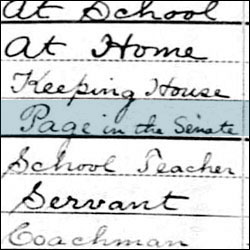 | 202102 08Andrew Slade: First African American Senate Page
February 08, 2021
In April 1965, Senator Jacob Javits of New York appointed Lawrence Bradford, Jr., to be a Senate page. In celebrating the appointment, Javits and journalists identified Bradford as the first African American to serve in the Senate’s historic page program. Bradford’s appointment was a milestone, but there’s one problem with this celebration—while Bradford was certainly a trailblazer in his time, he was not, in fact, the first African American page. That distinction belongs to Andrew Foote Slade, a young man who served as a page between 1869 and 1881.
In April 1965, Senator Jacob Javits of New York appointed Lawrence Bradford, Jr., to be a Senate page. In celebrating the appointment, Javits and journalists identified Bradford as the first African American to serve in the Senate’s historic page program. Bradford’s appointment was a milestone, but there’s one problem with this celebration—while Bradford was certainly a trailblazer in his time, he was not, in fact, the first African American page. That distinction belongs to Andrew Foote Slade, a young man who served as a page between 1869 and 1881. Slade’s story, forgotten in the Senate by the 1960s, offers a window not just into the Senate of the late 19th century, but into the history of Washington, D.C.’s, free Black community.1
Andrew Slade was born in 1857, the son of Josephine Parke and William Slade, a prominent free Black couple from the District of Columbia. Josephine, born as a free woman in 1818, was the daughter of a woman who had been enslaved by George Washington’s step-grandson, George Washington Parke Custis, on his Arlington, Virginia, estate. William was born free in 1814; his mother was formerly enslaved by the Foote family of Virginia. Henry Foote later represented Mississippi in the Senate. William believed, in fact, that his mother was Senator Foote’s half-sister.2
During the 1850s Andrew's father William was a porter at Brown’s Indian Queen Hotel, a posh establishment popular with Washington’s political elite. There he made connections that eventually took him to the White House. With a recommendation from Secretary of the Treasury Salmon P. Chase, William first took a job at the Treasury Department as a messenger in 1861. In 1862 he was appointed to Abraham Lincoln’s White House, where free people of color were integral to its daily operations.3 William’s title was “usher,” one of the highest posts in the Executive Mansion staff. Andrew's mother, Josephine, also periodically worked at the White House as a seamstress, alongside African American dressmaker Elizabeth Keckly. The couple’s children, including Andrew, often played with young Tad Lincoln, even hosting him at their home, the boardinghouse they owned and operated on Massachusetts Avenue.4
In the White House, William Slade was not just a servant but a confidante of the president, someone Lincoln turned to as he considered the weighty questions of emancipation and the fate of freed African Americans. The Slades were leading figures in the District’s free Black community. William was an elder of the Fifteenth Street Presbyterian Church. As freed African Americans flooded into the capital during the war, the Slades, along with friend and colleague Elizabeth Keckly, created the Contraband Relief Association to provide assistance and organized a school at the First Colored Baptist Church. William served as president of the Social, Civil, and Statistical Association, an organization dedicated to achieving Black citizenship following the war. Josephine was a leading organizer in the movement for universal suffrage.5
After the death of President Lincoln, William Slade continued to work at the White House under President Andrew Johnson, who appointed him steward in 1865. William died three years later at age 53. President Johnson paid his respects at the Slade home, and the funeral was officiated by Howard University president and former Senate chaplain Byron Sunderland, an abolitionist preacher. With William gone, Josephine Slade became the head of a household that included a son and daughter in their 20s and three younger children, including 11-year-old Andrew.6
Andrew Slade was appointed as a Senate page in December 1869. He had been educated in a school in the District of Columbia for Black children established by African American civil rights activist John F. Cook, Jr. Andrew owed his appointment to Sergeant at Arms John R. French, an opponent of slavery and supporter of Black rights who had been friends with his father William. The Baltimore Sun noted the appointment and described Andrew as “a bright mulatto boy, son of . . . the late colored steward of the White House.” The writer speculated that the boy would be assigned as a special page to Senator Charles Sumner, another defender of Black civil rights who had been acquainted with his father. Although Andrew had not yet worked in the Chamber, the article stated that he was “on duty in the corridors.” Another reporter commented on Andrew’s light complexion and suggested that “such is the prejudice against a color, even milk-and-molasses color, that it has been thought best to introduce him by degrees into the Senate Chamber, lest the Caucasian pages leave en masse.” As was the case with other pages, Andrew’s salary, $3 per day, was paid to his mother.7
Historians have long known that many page appointments were given to local orphans or children of widowed mothers. While this appeared to be a way for the Senate to provide benefits to families in need, Josephine was anything but destitute. William left her a sizeable estate of $100,000, including $14,000 in real estate. But Josephine was a widow, nevertheless.8
Andrew’s first stint as a page was a short one. In 1870 his sister Marie Louise, a copyist at the U.S. Pension Office, married a prominent Black Arkansas politician named James W. Mason. Andrew, his mother, and his siblings all moved with Marie and her new husband to Arkansas later that year. In 1872, Josephine Slade passed away, leaving Andrew an orphan. The next year, he enrolled at Oberlin College’s preparatory school in Ohio and attended for one year.9
Andrew returned to Washington in January 1874, now 16 years old, and was again appointed as a page. Senate records list him as the ward of longtime assistant doorkeeper James I. Christie. Later that year, his sister returned to Washington following the death of her husband and Andrew spent the rest of the decade living with her while working as a page. He served as a riding page delivering messages throughout the District and eventually became a mail carrier for the Senate Post Office. He also likely worked on the Chamber floor and was reportedly a favorite of Vice President Henry Wilson. Andrew, in fact, helped attend to Wilson as he lay dying in his office across the corridor from the Chamber in 1875. 10
The Senate had no maximum age for pages in the late 19th century, so Andrew continued as a page into November 1881, when he was 24 years old. In December he applied for a position at the Pension Commission, supported by a recommendation from Democratic senator George Pendleton of Ohio, famous for his 1883 Civil Service Reform Act. In 1882, while visiting or living in Warwick, New York, Andrew submitted an application for a position at the Department of the Interior, with recommendations from Garland, Senator Henry Teller of Colorado—who had recently left the Senate to serve as secretary of the department—and T. W. Ferry of the Senate Post Office.11
It is unknown whether Andrew gained another government position, but by 1886 he was living in Philadelphia and working at the Tribune newspaper, the city’s recently founded African American paper. A reporter from the Washington Bee, another African American paper, noted meeting Andrew on a visit to the Tribune’s offices and described him as a man with “a good heart and a mild disposition” who was “well known in Washington.” The historical record offers little information about how Andrew fared in Philadelphia. In 1899 he is listed in the city directory as a driver. He died that year, at the age of 42, leaving behind a wife, Laura.12
Andrew Slade’s story, incomplete though it may be, offers a glimpse into an era of dramatic social changes in and around the Capitol and the role played by this prominent Black family. Andrew's mother and father both walked the corridors of official Washington and used what power they had to fight for the rights of African Americans in an era when those rights were under constant siege. Their stature likely opened the doors of the Senate to their son at a time when others like him would have been denied the opportunity.
We are left wondering, however, what Andrew thought about his position in the Senate and how he was received by senators of the 1870s. What role did Andrew’s race play in his experiences in and around the Senate Chamber? How did senators view Andrew, especially those former Confederates who returned to Congress in the years after Reconstruction, dedicated to maintaining the racial caste system in their home states? Perhaps Andrew Slade’s very presence served as a reminder to senators of the insecure future of Black Americans outside the Capitol. All of these questions and more will fuel future research by Senate historians.
Notes
1. “Pioneer Senate Page: Lawrence Wallace Bradford, Jr.,” New York Times, April 14, 1965, 26; Marcie Sims, Capitol Hill Pages: Young Witnesses to 200 Years of History (Jefferson, NC: McFarland, Incorporated, 2018), 64–68.
2. Blake Wintory, “Biography of Josephine Lewis (Parke) Slade, 1818–1872,” Alexander Street, Biographical Database of Black Women Suffragists, accessed July 20, 2021, https://search.alexanderstreet.com/view/work/bibliographic_entity%7Cbibliographic_details%7C5075826?account_id=45340&usage_group_id=45068. The District of Columbia was a popular destination for formerly enslaved African Americans manumitted from the upper South, leading to a free population of over 11,000 by 1860, about 20 percent of the city’s population. Dorothy Provine, “The Economic Position of the Free Blacks in the District of Columbia, 1800–1860,” Journal of Negro History 58, no. 1 (January 1973): 61.
3. John E. Washington, They Knew Lincoln (Oxford University Press, 2018; originally published 1942); James B. Conroy, “Slavery’s Mark on Lincoln’s White House,” White House Historical Association, accessed July 20, 2021, https://www.whitehousehistory.org/slaverys-mark-on-lincolns-white-house.
4. Wintory, “Biography of Marie Louise (Slade) Mason, 1844–1919,” Biographical Database of Black Women Suffragists, Alexander Street, accessed July 20, 2021, https://search.alexanderstreet.com/view/work/bibliographic_entity%7Cbibliographic_details%7C4744667?account_id=45340&usage_group_id=45068; Conroy, “Slavery’s Mark on Lincoln’s White House.”
5. Natalie Sweet, “A Representative ‘of Our People’: The Agency of William Slade, Leader in the African American Community and Usher to Abraham Lincoln,” Journal of the Abraham Lincoln Association 34, no. 2 (Summer 2013): 21–41, accessed July 20, 2021, http://hdl.handle.net/2027/spo.2629860.0034.204; Diaries of Julia Wilbur, 1860–66, April 20, 1865, Haverford College, Quaker and Special Collections, Transcriptions by volunteers at Alexandria Archaeology, accessed July 20, 2021, https://www.alexandriava.gov/uploadedFiles/historic/info/civilwar/JuliaWilburDiary1860to1866.pdf. For more on Black organizations in the District of Columbia during the Civil War, see Kate Masur, An Example for All the Land: Emancipation and the Struggle Over Equality in Washington, D.C., (Chapel Hill: University of North Carolina Press, 2010).
6. Ancestry.com, 1870 Census, Washington Ward 4, Washington, District of Columbia, Roll: M593_124, 780A; Family History Library Film: 545623; Sweet, “A Representative ‘of Our People.’”
7. Receipts and Expenditures of Senate, 1870, S. Mis. Doc. 41-8, 41st Cong., 3rd sess., December 5, 1870, 2; Progressive American (NY), undated, in Isaac Bassett Papers, Box 34, Folder E, p. 130, Records of the U.S. Senate, Record Group 46, National Archives and Records Administration, Washington, D.C. [online version available through Archives Research Catalog (ARC Identifier 5423162, p. 2) at https://catalog.archives.gov/id/5423162]; “Colored Page in the Senate,” Baltimore Sun, December 16, 1869, 1; “The Alta on Our Colored Brother,” San Jose Mercury News, December 28, 1869, 3; Assistant Doorkeeper Isaac Bassett noted in his unpublished memoir Andrew’s appointment as the “first colored page,” Isaac Bassett Papers, Box 3, Folder A, p. 31 [(ARC Identifier 5423058, p. 36) https://catalog.archives.gov/id/5423058].
8. Wintory, “Josephine Lewis (Parke) Slade,” Biographical Database of Black Women Suffragists.
9. “Colored Female Clerks,” Washington Evening Star, March 27, 1869, 1; Catalogue of the Officers and Students of Oberlin College for the College Year 1873–74, (Cleveland, OH: Press of Fairbanks, Benedict, & Co., 1873), 29; Wintory, “Marie Louise (Slade) Mason,” Biographical Database of Black Women Suffragists.
10. Receipts and Expenditures of Senate, 1874, S. Mis. Doc. 43-74, 43rd Cong., 2nd sess., December 7, 1874, 10. Senator George Pendleton’s recommendation letter for Slade in 1881 indicated that he worked in the Senate Chamber. See Slade, Andrew F., File 2942, Appointments Division, Applications and Appointments 1881, Box no. 65, Department of the Interior, Record Group 48, National Archives and Records Administration, College Park, MD; Progressive American (NY), undated, in Isaac Bassett Papers.
11. Slade, Andrew F., File 2942, Appointments Division, Applications and Appointments 1881, Box no. 65, Department of the Interior, Record Group 48, National Archives and Records Administration, College Park, MD; Slade, Andrew F., Appointments Division, File 874, Applications and Appointments 1882, Box no. 72, Entry 27, Department of the Interior, Record Group 48, National Archives and Records Administration, College Park, MD. Special thanks to Blake Wintory for sharing his research.
12. “Our Visit to Philadelphia,” Washington Bee, November 13, 1886; "Andrew Slade," Washington Bee, August 26, 1899. We know much more about Slade’s sister Marie Louise, who moved to Montana in 1889 and became a leader in the movement for women’s suffrage. She later moved to Paris and then London with her daughter, who studied to be an artist. See Wintory, “Marie Louise (Slade) Mason,” Biographical Database of Black Women Suffragists. Slade’s sister Katherine Slade went on to become a teacher and was a key source for John Washington’s They Knew Lincoln.
|
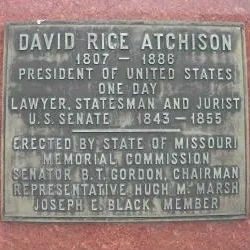 | 202011 13David Rice Atchison: (Not) President for a Day
November 13, 2020
A plaque affixed to a statue in Plattsburg, Missouri, reads, "David Rice Atchison, 1807–1886, President of United States One Day." The day of Atchison’s presumed presidency was March 4, 1849. Who was David Rice Atchison and on what basis could he claim to have been the president of the United States, even if for only one day?
A plaque affixed to a statue in Plattsburg, Missouri, reads, "David Rice Atchison, 1807–1886, President of United States One Day." The day of Atchison’s presumed presidency was March 4, 1849. Who was David Rice Atchison and on what basis could he claim to have been the president of the United States, even if for only one day?
David Rice Atchison was a Missouri Democrat who served in the U.S. Senate from 1843 to 1855. Raised and educated in Kentucky, he settled in Missouri and opened a law practice in Clay County in 1829. Atchison rose to prominence in Missouri when he served as legal counsel to members of Joseph Smith’s Church of Jesus Christ of Latter-day Saints, popularly known as the Mormons, who were being forcibly removed from Jackson County in 1833. Mormons living in his district helped to give Atchison his start in politics when they supported his successful candidacy for the state legislature in 1834. Atchison later served as brigadier general in the state militia and sought to maintain order as anti-Mormon violence ultimately drove them from the state. He went on to serve as a state court judge for two years before the governor appointed him to fill a vacant seat in the Senate in 1843.1
Unfortunately, Atchison’s support for Mormon rights did not extend to civil and human rights for others. In the Senate he was a staunch defender of slavery. He was a member of the so-called F Street Mess, a group of southern senators who successfully pushed for the repeal of the Missouri Compromise and passage of the 1854 Kansas-Nebraska Act, which allowed for the expansion of the institution into new western states and sparked outrage among opponents of slavery. Atchison joined other pro-slavery advocates and organized incursions into Kansas in 1854 to ensure that Kansas would become a slave state. He warned Senator Jefferson Davis of Mississippi that they would “be compelled to shoot, burn, and hang” to drive the “Abolitionists” out of Kansas. A group of pro-slavery settlers named their town Atchison in his honor, and the violence that engulfed Kansas marked another milestone on the road to civil war.2
Atchison’s actions in Kansas had lasting consequences, but today he is best remembered for the role he played—or didn’t play—in the presidential transition in 1849. Atchison was popular with his Senate colleagues, and they elected him president pro tempore on 13 separate occasions. In those days, the vice president regularly presided over Senate sessions, and the Senate chose a president pro tempore to preside in his place only during brief vice-presidential absences. On March 2, 1849, Vice President George M. Dallas took leave of the Senate for the remainder of the session and the Senate elected Atchison as president pro tempore.
Atchison’s position as president pro tempore combined with a fluke of the political calendar in 1849 to set the stage for his alleged one-day presidency.
Until the adoption of the Twentieth Amendment in 1933, presidential and congressional terms began and ended at noon on March 4. In 1849 March 4 fell on a Sunday. On the morning of March 4, President James Polk signed the last of the session’s legislation at the White House and at 6:30 a.m. recorded in his diary, “Thus closed my official term as President.” The Senate, having been in session all night, adjourned sine die at 7:00 a.m. President-elect Zachary Taylor, in observance of the Christian Sabbath, preferred not to conduct his inauguration on Sunday, March 4, and the ceremony was delayed until the next day. On Monday, March 5, Taylor took the oath of office on the Capitol’s east front portico and the transition of power was complete.3
But if President Polk’s term ended on March 4 at noon, and Zachary Taylor was not sworn in until noon on March 5, who was president on March 4? Under the Presidential Succession Act of 1792 the Senate president pro tempore immediately followed the vice president in the line of presidential succession. Had Atchison been president from noon on March 4 to noon on March 5?
Neither the Congressional Globe nor the Senate Journal included any suggestion that there was a vacancy in the presidency prior to Taylor’s inauguration on the 5th, yet the notion that Atchison had briefly ascended to the office of president of the United States began to circulate. The earliest public statement came in the March 12 edition of the Alexandria Gazette, which reported that Atchison “was on Sunday, by virtue of his office, President of the United States—for one day!” The “fact” was eventually included in profiles of Atchison, including his entry in an early version of the Biographical Directory of the American Congress. In 1907 a Philadelphia newspaper published a story about Atchison’s one-day presidency, which sparked further discussion in newspapers around the country. As often happens with a story like this, it became more elaborate with each retelling. “It was held by Congress,” the account stated, “that the functions of the President must devolve upon him from Sunday noon till Monday noon.” Atchison allegedly took the role so seriously, the story went, that he “signed one or two official papers as President.” Supposedly Atchison’s Democratic colleagues had playfully suggested that he could summon the army and prevent Taylor, a member of the rival Whig Party, from assuming the presidency altogether.4
Is there any truth to the idea that Atchison was the chief executive for a day? No. Atchison himself did not take the idea seriously. He wrote in 1880 that “I never for a moment acted as President of the U.S.” Congress did not make any determinations about who was president on March 4, and Atchison certainly did not sign official paperwork, but he did have some fun with it. He later joked that because of the long nights in session the previous days, he might have slept through his “term” except that his friends woke him to congratulate him and seek patronage jobs for their friends. “I recollect,” he said in 1889, “that Senator Mangum of North Carolina suggested that I make him secretary of state.” He liked to say that his presidency had been “the honestest administration this country ever had.”5
In 1925 historian George Haynes—an authority on the Senate—dismissed the claims of Atchison’s presidency. The clearest indication that Atchison was not president, he noted, was the fact that Atchison’s existing term as senator and, more importantly, as president pro tempore, had ended at noon on March 4. The position of president pro tempore was, in fact, vacant. Atchison was not elected to the position again until the Senate’s special session convened at noon on March 5. Minutes later the president and vice president took their oaths.6
If Atchison was not the president on March 4, who was? Atchison himself believed that the office was essentially vacant for that day. He could point to precedent on this point. Inauguration day similarly had fallen on a Sunday in 1821, the day on which President James Monroe was to take the oath for a second term. Monroe also chose to delay his oath until March 5, leading John Quincy Adams to write in his diary that the delay created “a sort of interregnum during which there was no qualified person to act as President.” Constitutional scholar Charles Warren concluded in 1925, however, that the Constitution only requires that the president take the oath “before he enter upon the execution of his office.” Zachary Taylor, Warren argued, was for all intents and purposes president the moment Polk’s term ended, since he could have taken the oath and executed his responsibilities at any time thereafter.7
Despite debunking by scholars, the myth of Atchison’s one-day presidency carried on, as evidenced by the plaque below his bronze statue unveiled in Plattsburg, Missouri, in 1928. Months later the Atchison “presidency” was highlighted in the widely syndicated “Ripley’s Believe It or Not” newspaper feature, and it has resurfaced periodically ever since.8
Regardless of whether the presidency fell to the Senate’s president pro tempore or the country actually lacked a president for a day in 1849, the next time inauguration day fell on a Sunday, the president-elect took steps to avoid the same confusion. On Saturday, March 3, 1877, two days before his public inaugural ceremony, Rutherford B. Hayes took the oath of office in a private ceremony at the White House to become the 19th president of the United States. Hayes’s oath raises another question, however, that has not attracted much attention. If outgoing president Ulysses S. Grant’s term did not end until March 4, did the United States have two presidents at the same time for one day?9
Notes
1. William E. Parrish, David Rice Atchison of Missouri: Border Politician (University of Missouri Press, 1961); Richard Lloyd Anderson, “Atchison’s Letters and the Causes of Mormon Expulsion from Missouri,” BYU Studies Quarterly 26, no. 3 (July 1986): 1–47.
2. Alice Elizabeth Malavasic, The F Street Mess: How Southern Senators Re-Wrote the Kansas-Nebraska Act (Chapel Hill: University of North Carolina Press, 2017); Parrish, David Rice Atchison, 164.
3. George Haynes, “President of the United States for a Single Day,” American Historical Review 30, no. 2 (January 1925): 309.
4. “News of the Day,” Alexandria Gazette, March 12, 1849; “Atchison Never President,” Washington Post, February 1, 1908, 14; John Wilson Townsend, “History of David Rice Atchison of Kentucky,” Register of Kentucky State Historical Society 8, no. 23 (May 1910): 39–44.
5. Atchison to Joseph Howarth, [c. 1880], Shapell Manuscript Foundation, accessed October 9, 2020, https://www.shapell.org/manuscript/david-rice-atchison-polk-fillmore-taylor-president-for-five-minutes/#transcripts; Walter B. Stevens, “A Day and Night with Old Davy: David R. Atchison,” Missouri Historical Review 31, no. 2 (January 1937): 129, 130–31.
6. Haynes, “President of the United States for a Single Day,” 308–10.
7. "John Quincy Adams diary 31, 1 January 1819–20 March 1821, 10 November 1824–6 December 1824, page 545" [electronic edition],The Diaries of John Quincy Adams: A Digital Collection, Massachusetts Historical Society, 2004, accessed October 7, 2020, http://www.masshist.org/jqadiaries/php/doc?id=jqad31_545; Haynes, “President of the United States for a Single Day,” 310.
8. “Memorial to Atchison: President for a Day,” New York Times, October 28, 1928, 52; “Ripley’s Believe It or Not,” Washington Post, November 21, 1928, 17.
9. “The Oath—Where and How It Was Taken,” Atlanta Constitution, March 8, 1877, 4.
|
 | 202010 16Senate Diaries
October 16, 2020
The stories that historians craft are only as good as the sources available. Historians of the Senate draw on a variety of records created by Congress, such as the Senate Journal, debates in the Congressional Record, and transcripts of committee hearings. The National Archives is filled with memos and reports. Senators establish archives of their personal papers in home-state repositories. There are also vast collections of newspaper articles, what many have called the “first draft of history.” Perhaps the greatest insight into the past comes from more personal musings—diaries kept by individuals.
The stories that historians craft are only as good as the sources available. Historians of the Senate can draw on a wide variety of published records created by Congress, such as the Senate Journal, speeches and debates in the Congressional Record, and committee hearings and reports. The National Archives is filled with memos, reports, and correspondence. Senators establish large archives of their personal papers in home-state libraries and universities. There are also vast collections of newspaper articles penned by Senate contemporaries, what many have called the “first draft of history.”
Perhaps the greatest insight into the past comes from more personal musings— diaries kept by individuals.
Consider the First Congress that met in New York City in 1789. That Congress created the first three executive departments, approved the Judiciary Act of 1789, and passed the Bill of Rights. It also established the permanent location of the federal capital, funded the Revolutionary War debts, and created the first national bank. The Senate’s doors were closed to the public during this precedent-setting period, but we have a key source that sheds light on what went on in the Chamber: the diary of Senator William Maclay of Pennsylvania.
Maclay’s diary is the lone insider account of Senate proceedings during his two-year tenure, 1789 to 1791. Maclay, who wrote every evening with the day’s events fresh in his mind, conveyed George Washington’s frustration during his visit to the Chamber to confer with senators about a treaty. He recorded colorful descriptions of individuals and remarked on what it was like to mingle with members from other parts of the country. He noted, for example, that New Englanders “dwell on trivial distinctions . . . and ceremony.” Vice President John Adams was the subject of Maclay’s ridicule for what the Pennsylvania senator perceived as Adams’s haughty attitude. “He . . . has a very silly kind of laugh,” wrote Maclay. He also noted that from the very first session some senators were already willing to use prolonged debate to delay action on a bill, a tactic later dubbed the filibuster. “The design of the Virginians and of the South Carolina gentlemen was to talk away the time, so that we could not get the bill passed,” Maclay wrote in 1789.
Maclay’s descendants kept the diary private for decades. Published by his family in abridged form in the 1880s, the full diary was commercially published in 1890. It has been an indispensable reference for historians ever since.1
John Quincy Adams kept a diary (masshist.org) throughout his life, including while he served a single term in the Senate from 1803 to 1809. Adams’s writings provide behind-the-scenes details of the Senate. For example, although the Senate Journal in 1803 attributed a three-day recess to necessary repairs for the Chamber's leaky roof, Adams records that "another motive, not mentioned, might be that the annual horse races of the city are held this week." Adams was critical of Vice President George Clinton for what he saw as poor judgment and ignorance of basic Senate procedure. The Massachusetts senator derided Clinton for asking senators to warn him when they planned to make a long speech so that he could turn over the duties of presiding to someone else and "take the opportunity to warm himself by the fire."2
As did Maclay and Adams, other senators have left records of their observations, interactions, and experiences. New Hampshire senator William Plumer first put quill to paper to start his diary on October 17, 1803. Decades before the Senate made any regular effort to report its proceedings verbatim, Plumer kept a complete record of Senate sessions until his term expired in 1807. His diary—he called it his “memorandum”—provides unique information on the Louisiana treaty debate, for example, including his outburst at President Thomas Jefferson for taking the Senate’s approval for granted. The president, by publicly supporting the treaty before the Senate had a chance to take it up, was, in Plumer's words, destroying the Senate's "freedom of opinion."3
Lawyer and publisher Horace Chilton of Texas is another senator who served for a brief time but left voluminous commentaries on the Senate. While sitting in the Chamber in the 1890s, Chilton would listen to speeches and jot down detailed descriptions of his colleagues. From Chilton we get a description of how senators of that era delivered speeches from their small desks: “His desk is arranged according to [a] custom very general in the Senate by putting six or eight large books on his desk building up a sort of pulpit twelve or fifteen inches high, and laying his notes on that pulpit or pile of books.” Chilton had intended to use his notes as the basis for a memoir and wanted to present his unvarnished assessments of colleagues. “I have concluded to note from time to time reflections concerning public men of my acquaintance,” he wrote. “The purpose will be to deal in candor. To avoid any mere gossip of evil, but to avoid equally the tone of adulation . . . which characterize[s] nearly all biography.” While listening to a speech by Senator William Chandler of New Hampshire on February 16, 1897, concerning the monetary question, Chilton wrote that Chandler “is a very prominent man in this country, [but] in the Senate not an influential man. Not a man on whose judgment people will rely. But active, always throwing himself into debate.”4
As anyone who has tried keeping a diary knows, it takes discipline. Ten years later, Chilton looked back on his notes and lamented, “What a small amount of matter of the kind intended to be recorded was actually put down.” He never published his memoir.
Two senators from Vermont brought the habit of keeping a political diary into the 20th century. Frank Greene served in the Senate from 1923 to 1930. He kept a diary of one of the most fascinating periods in U.S. history—the years between the two world wars. In the 1970s, Senator George Aiken compiled and published his modern-era diary. He first joined the Senate in 1941 but did not begin keeping a diary until 1972. He dictated his thoughts every Saturday for 150 weeks until his retirement in 1975. One notable entry describes the senator’s meeting with President Richard Nixon on the evening of August 8, 1974, just before the president announced his plan to resign the following day. “I had constantly opposed resignation on the President’s part, preferring the impeachment process,” Aiken wrote. He hoped, above all, that his diary would show “how events can change their appearance from week to week and how the attitude of a Senator can change with them.”5
Senator Hattie Caraway of Arkansas, the first woman elected to the Senate, kept a diary in the early 1930s. Appointed in 1931 to fill a vacancy caused by the death of her husband, Senator Thaddeus Caraway, she subsequently won a special election in January of 1932 for the remainder of the term. Soon after joining the Senate, friends encouraged her to keep a diary about life in Washington—from a female perspective. As a widowed mother of three sons, Caraway hoped the eventual publication of her diary might provide needed financial support to her family. As her senatorial duties took up more of her time, however, she put her diary aside. A slim volume titled Silent Hattie Speaks was published, but not until 1979.6
For many years, historians dismissed Caraway’s diary as the scribblings of a widow lost in the wilderness of politics, but a more careful examination paints a different picture. In the midst of commentary about fashion and hairstyles—presumed to be the observations that would most interest her potential readers—Caraway included some useful, pithy nuggets about her history-making service in the Senate. For example, when she surprised nearly everyone by announcing that she would seek election to a full term in 1932, she wrote in her diary, “I pitched a coin and heads came [up] three times,” adding, “I really want to try out my own theory of a woman running for office.” After the announcement was made, she wrote, the “die is cast” and “all I can do is sit tight and take whatever . . . comes from such a blow to tradition.” She won that election, and was reelected in 1938.
During her early years in the Senate, Caraway felt ignored by her male colleagues, a complaint echoed by other women senators who followed. Fellow Arkansas senator and Democratic leader Joe T. Robinson, for example, “came around only for a moment at the instigation” of his chief of staff. Later, when Caraway initiated a conversation with Robinson, she wrote: “I very foolishly tried to talk to Joe today. Never again. He was cooler than a fresh cucumber and sourer than a pickled one.” As years passed, however, Caraway gained a good deal of respect from her colleagues and her constituents and broke down some significant barriers to women in the Senate. Historians now wish she had kept up that diary throughout her 14 years as a senator.
These are but a sample of notable Senate diaries. Simon Cameron, who served as secretary of war in Abraham Lincoln’s cabinet and represented Pennsylvania in the Senate during the antebellum and Reconstruction eras, left a chronicle of his experiences during the nation’s crisis of disunion. Harold Burton has the distinction of being the last sitting senator to be appointed to a seat on the Supreme Court. He represented the state of Ohio during World War II and left a private diary as part of his personal papers in the Library of Congress.7
One time-honored way to shape the historical record of the Senate, and ensure your place in that record, is to keep a diary. Fortunately for the historians of the Senate, many senators did just that.
Notes
1. Edgar S. Maclay, ed., Journal of William Maclay (New York: Appleton and Co., 1890). Available online at A Century of Lawmaking for a New Nation, Library of Congress, accessed October 6, 2020, https://www.loc.gov/collections/century-of-lawmaking/articles-and-essays/journals-of-congress/maclays-journal/.
2. "The Diaries of John Quincy Adams: A Digital Collection," Massachusetts Historical Society, accessed October 6, 2020, http://www.masshist.org/jqadiaries/php/.
3. William Plumer Papers, Diaries 1805–1836, Manuscript Division, Library of Congress.
4. Horace Chilton Papers, Diaries 1888–1894, 1897, Briscoe Center for American History, University at Texas-Austin.
5. George Aiken, Aiken: Senate Diary, January 1972–January 1975 (Brattleboro, VT: Stephen Greene Press, 1976).
6. Diane D. Kincaid, ed., Silent Hattie Speaks: The Personal Journal of Senator Hattie Caraway (Westport, CT: Greenwood Press, 1979).
7. Simon Cameron Papers, Manuscript Division, Library of Congress.
|
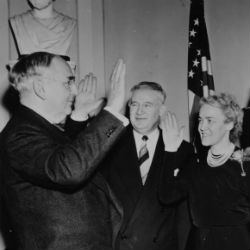 | 202008 18Women of the Senate
August 18, 2020
On August 18, 1920, the Tennessee state legislature approved the Nineteenth Amendment to the Constitution by a nail-biting margin of one vote, making Tennessee the necessary 36th state and securing the amendment’s ratification. Two years later, on November 21, 1922, Rebecca Felton of Georgia became the first woman to take the Senate oath of office. To commemorate the Woman Suffrage Centennial, and to acknowledge the service of the first woman senator, we present our new online exhibit Women of the Senate.
On August 18, 1920, the Tennessee state legislature approved the Nineteenth Amendment to the Constitution by a nail-biting margin of one vote. The Volunteer State was the 36th state to approve the amendment, and having met the constitutional requirement of approval by three-quarters of the states, the amendment was ratified. Suffragists across the nation celebrated this long and hard-fought victory.
Two years later, 87-year-old Rebecca Felton of Georgia, a Democrat, became the first woman to serve in the U.S. Senate. Appointed to fill a vacancy, Felton took the oath on November 21, 1922. She gave only one speech in the Senate Chamber, but her brief tenure tore down a long-standing barrier to women. Felton predicted a new day for women in politics. “When the women of the country come in and sit with you . . . , you will get ability, you will get integrity . . . and you will get unstinted usefulness.”
Even before Felton took office, women had already left their mark on Senate history. In fact, women have always been a part of the Senate’s story, influencing its members and guiding its actions as petitioners, activists, correspondents, spouses, witnesses, lobbyists, speakers, and most importantly, as staff and then as senators. To commemorate the centennial of the Woman Suffrage Amendment, ratified in 1920, and to acknowledge the service of the first woman senator in 1922, the Senate Historical Office celebrates the evolving role of the Women of the Senate.
Since the Senate opened its doors to the public in 1795, women have been a near-constant presence in and around the Chamber. Margaret Bayard Smith was an avid writer of letters who began writing for the National Intelligencer, Washington, D.C.’s first newspaper, in the 1820s. An articulate observer of the Senate's early years, Smith's accounts of the dramatic exchanges between Senators Daniel Webster and Robert Hayne provided a richly detailed portrait of this historic debate. In addition to chronicling Senate debates, women have played pivotal roles in shaping them, such as petitioning to abolish slavery and demanding women’s right to vote, among other issues.
Spouses have been active political participants, engaging with elected members and the nation in a variety of ways. During World War I, for example, Senate wives formed a local Red Cross branch to support U.S. troops, rolling bandages and assisting local hospitals. After the war, the Ladies of the Senate expanded their mission to include other charitable work. Today, Senate spouses—including the husbands of women senators—maintain a connection with the Red Cross and pursue a variety of activities, including hosting an annual luncheon for the First Lady. Senate spouses continue to play an important role in the Senate of the modern era, not only as partners in Senate families, but also as active, dynamic, and influential actors in the American political system.
By the time Felton took office in 1922, a growing number of pioneering women had assumed top staff positions on committees and in senators’ offices. One of those pioneers, Leona Wells, joined the Senate's clerical staff on January 14, 1901, and remained on the payroll for the next 25 years. Today, women hold many important and influential positions in the Senate. They work for committees and in members’ offices, as elected officers, policymakers, legal counsel, and staff directors. They also support the institution’s daily operations, serving on the Capitol Police force, for example, in Senate dining facilities, in building maintenance, as Senate curators and historians, and in a variety of other positions.
Felton’s historic Senate appointment paved the way for other women senators. Hattie Caraway of Arkansas became the first woman to win election to the Senate in 1932. In 1949 Margaret Chase Smith of Maine took the oath of office, becoming the first woman to serve in both the U.S. House of Representatives and the Senate. In the 21st century, women’s growing influence in politics is seen daily in the Senate Chamber, where a record number of women currently serve as U.S. senators.
Fifty-seven women have served in the United States Senate since the first woman took the oath of office in 1922. To capture some of their varied experiences, document the challenges they faced, and record their unique perspectives on social and political issues of the day, Senate historians have conducted oral history interviews with former women senators and staff. Their stories are central to understanding Senate history. They provide a fuller, richer understanding of the evolving role of women in the Senate and their impact on the institution and the country.
The Senate Historical Office continues its Women’s Suffrage Centennial series with its new online commemorative exhibit Women of the Senate.
|
 | 202006 05A Generation of World War II Veterans
June 05, 2020
Of the 16 million Americans who served in the military during the Second World War, more than 100 later served as U.S. senators. While the heroic actions of some of them are well known—John F. Kennedy leading the crew of PT-109, for example—what about the others who went on to serve as senators? Here are a few of their stories.
Of the 16 million Americans who served in the military during the Second World War, more than 100 later served as U.S. senators. While the heroic actions of some of them are well known—John F. Kennedy leading the crew of PT-109, for example—what about the others who went on to serve as senators? Here are a few of their stories.
On June 6, 1944, more than 150,000 Allied troops landed along a 50-mile stretch of beach on the coast of Normandy, France. This extraordinary military operation marked the beginning of a strategic plan to liberate continental Europe from Nazi occupation. Philip Hart waded ashore at Utah Beach that day with the U.S. Army’s 4th Infantry Division. As he and his fellow soldiers advanced on fortified German targets, an artillery shell hit his right arm, severing the main artery. He slowed the bleeding with a hastily made tourniquet and insisted that medics attend first to a fallen comrade before consenting to his own evacuation. Hart was awarded the Bronze Star and the Purple Heart. He later served 17 years in the Senate, from 1959 to 1976, representing the state of Michigan.
Miles east of Hart’s location, Lee Metcalf, a commissioned officer with the army’s 5th Division, stormed Omaha Beach. Two thousand Americans died in a single day in a battle that came to be known as Bloody Omaha. American journalist Ernie Pyle later confessed what many thought at the time: “It seemed to me a pure miracle that we ever took the beach at all.” After Omaha, Metcalf helped to liberate Paris and fought in the Battle of the Bulge. Discharged in 1946, he returned to his home state of Montana, where voters elected him to four terms in the House of Representatives, followed by three terms in the Senate, from 1961 to 1978.
While Allied forces took Normandy beaches, James Strom Thurmond crash landed miles inland at an apple orchard near Sainte-Mère-Église, France, as part of the U.S. Army’s 82nd Airborne Division. Thurmond sustained minor injuries, spent the next few days in combat, and later helped to organize local provisional governments. He was awarded the Legion of Merit with Oak Leaf Cluster, the Bronze Star with Valor device, and the Purple Heart. The native South Carolinian represented his state in the Senate from 1955 to 2003.
Other future senators also fought with distinction. Shortly after the Japanese attack on Pearl Harbor, Edward Brooke, a former ROTC cadet and recent graduate of Howard University, was assigned to the U.S. Army’s segregated 366th Combat Infantry Regiment. In addition to the hazards of combat, Brooke encountered daily reminders of the second-class status given to African American soldiers who fought bravely in the European theater while facing intimidation and even violence from military officials. The U.S. military barred black soldiers from the PX and officers’ clubs and granted them access to the base movie theaters only at designated times. Later promoted to captain, Brooke earned the Bronze Star and a Distinguished Service Medal. Brooke represented the state of Massachusetts in the Senate from 1967 to 1979.
Throughout the war, American air power offered crucial support to Allied ground forces. Army Air Corps Lieutenant George McGovern flew a B-24 bomber on 35 missions over wartime Europe and never lost a man on his crew. The army awarded him the Distinguished Flying Cross in recognition of his “high degree of courage and piloting skill … intrepid spirit … and rare devotion to duty.” He later served three Senate terms for the state of South Dakota, from 1963 to 1981, and was the 1972 Democratic presidential nominee.
In the spring of 1945, the U.S. Army’s 10th Mountain Division began an offensive to gain control of northern Italy. Robert Dole, a combat infantry officer in the division, was critically wounded while leading his platoon on a mission to neutralize a pocket of German resisters holed up in a farmhouse. Dole spent nine agonizing hours on the battlefield awaiting his medical evacuation. The army awarded the future senator two Purple Hearts and the Bronze Star with Valor device for his leadership and courage under fire. Dole represented Kansas in the Senate for 27 years, from 1969 to 1996, and won the Republican presidential nomination in 1996.
That same month, another future senator fought in the Italian countryside. When the U.S. military dropped its enlistment ban on Japanese Americans in 1943, Daniel Inouye joined the U.S. Army’s segregated all-Nisei 442nd Regimental Combat Team. On a Tuscan battlefield in April 1945, Inouye was shot in the stomach while leading a flanking maneuver. He refused medical treatment and then organized a second attack. That’s when a German rifle grenade nearly severed his arm. Doctors later amputated it. For Inouye’s effort and perseverance, the Army awarded him the Bronze Star, the Purple Heart, and the Distinguished Service Cross. Later, while recuperating in a Michigan hospital, he befriended Philip Hart and Robert Dole, both of whom were recovering from their own injuries in the same hospital. Inouye represented the state of Hawaii in the Senate for 49 years, from 1963 to 2012.
These men, and more than 100 other veterans of the Second World War, shaped the Senate for decades to come. In 2013 the Senate’s last World War II veteran, Frank Lautenberg of New Jersey, died in office. Each year, as we commemorate D-Day on June 6, the war memorials that dot the coastline of Normandy serve as reminders of the sacrifices made by Allied forces during World War II, including the future senators who served in so many theaters of war. “We are duty bound to keep [their memory],” the Omaha Beach Museum states simply, “that future generations may never forget at what cost our freedom came.”
|
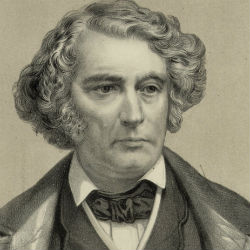 | 202005 04Charles Sumner: After the Caning
May 04, 2020
Senator Charles Sumner of Massachusetts is best remembered for his role in a dramatic incident in Senate history. On May 22, 1856, Representative Preston Brooks of South Carolina attacked the senator at his desk in the Senate Chamber. The “Caning of Sumner” is a famous event, but of course the story did not end there. To understand the importance of Sumner’s enduring legacy as statesman and legislator, particularly in the realm of civil rights, we must explore what happened after the caning.
Senator Charles Sumner of Massachusetts is best remembered for his role in a dramatic and infamous event in Senate history—what has become known as the “Caning of Sumner.” Just days earlier, Sumner had delivered a fiery speech entitled “The Crime Against Kansas,” in which he railed against the institution of slavery and unleashed a stream of vitriol against the senators who defended it. In retaliation, Representative Preston Brooks of South Carolina attacked Sumner at his desk in the Senate Chamber, beating him with a heavy walking stick until the senator was left bleeding and unconscious on the Chamber floor.
Sumner convalesced, returning only intermittently over the next three years. He resumed full-time duties in 1859 and over the next 15 years became a trailblazing legislator who left an indelible mark on the Senate and the country. As chairman of the Senate Foreign Relations Committee from 1861 to 1871, Sumner wielded great influence over the nation’s diplomacy, but his tireless efforts in the realm of abolition and civil rights were what truly defined his career.
Sumner was among the first members of Congress to argue that the Civil War had to be fought to end slavery as much as to save the Union. In fact, he said the two goals were inextricably linked. He called slavery “the main-spring of Rebellion” and insisted, “Let the National Government . . . simply throw the thing upon the flames madly kindled by itself, and the Rebellion will die at once.”1 He worked tirelessly behind the scenes to prevent moderate Republicans in Congress and in Abraham Lincoln’s administration from compromising on the question of abolishing slavery. When President Lincoln issued the Emancipation Proclamation on January 1, 1863, which freed slaves in the rebelling states, Sumner praised Lincoln’s action but quickly added that the presidential proclamation did not go far enough. Only national abolition, immune from action by the Supreme Court, could guarantee an end to the heinous institution—and that meant a constitutional amendment.
To gain Senate approval of what would become the Thirteenth Amendment, Sumner collaborated with a number of antislavery activists and forged a unique alliance with members of the Women’s National Loyal League. Created by stalwart reformers Elizabeth Cady Stanton and Susan B. Anthony, the Women’s National Loyal League held its first convention in May of 1863 and began a campaign to collect one million signatures on a petition demanding a constitutional amendment for the total abolition of slavery. To receive this and other petitions, Sumner asked the Senate to create a special committee “to take into consideration all propositions . . . concerning slavery.” The Senate complied and named Sumner as chairman.2
“By early 1864, the National Loyal League had collected 100,000 signatures on six thousand petition forms and mailed them to Sumner in a large trunk. On February 9, Sumner presented the petitions to the Senate. In a dramatic speech, he called the signers “a mighty army, one hundred thousand strong . . . . They ask for nothing less than universal emancipation.”3 Sumner’s speech became known as “The Prayer of One Hundred Thousand.”
Sumner hoped to use his position as chairman of the new committee to promote total abolition. In February of 1864, just before delivering his “Prayer” speech, he introduced a constitutional amendment to end slavery, asking that it be referred to his Select Committee on Slavery and Freedmen, although Senate practice dictated otherwise. Judiciary Committee chairman Lyman Trumbull objected, insisting that his committee was the proper one to consider such proposals. The Senate sided with Trumbull.
When the Judiciary Committee reported its version of an abolition amendment to the full Senate, Sumner thought it was not strong enough. He had insisted that any amendment must include a provision that all persons were “equal before the law,” but few senators were ready to take such a bold step. Making all persons “equal before the law,” argued one senator, might lead to dangerous consequences, such as providing voting rights to women. Instead, the committee approved more modest language that echoed the Northwest Ordinance of 1787. “Neither slavery nor involuntary servitude, except as a punishment for crime whereof the party shall have been duly convicted, shall exist within the United States.” Although the statement was less than Sumner had hoped for, he joined his colleagues in voting for passage of the Thirteenth Amendment in April of 1864.
In the years following the Civil War, Sumner recognized that abolition was only the beginning of the battle for civil rights. He used what power he could muster to protect the gains that African Americans had made in the South and urged his colleagues to approve mobilization of federal resources to do so. He emerged as a leading opponent of President Andrew Johnson’s Reconstruction policies, which Sumner and other Radical Republicans believed were designed to reinstate white supremacy in the former Confederate states. He supported impeachment and removal of the president in 1868, though the Senate came up one vote short of conviction.
Sumner’s steadfast defense of his principles often led him to oppose compromise measures. He believed that the government owed former slaves a guarantee of their suffrage rights, along with support for education and land ownership. Sumner initially opposed the Fourteenth Amendment to the Constitution, which declared that African Americans were citizens entitled to equal protection of the laws, because it did not contain a clear guarantee of voting rights. Ultimately, he cast his vote in favor of the amendment. Never shy about chastising his fellow Republicans for not going far enough, Sumner took every opportunity to place the question of equal rights before the Senate. Such radical views stirred action, but they also made enemies. “If I could cut the throats of about half a dozen senators,” confessed William Pitt Fessenden of Maine, “Sumner would be the first victim.”4
In 1870 Sumner introduced what he considered to be his most important piece of legislation, a civil rights bill to guarantee to all citizens, regardless of color, “equal and impartial enjoyment of any accommodation, advantage, facility, or privilege.” Sumner had characterized segregation and other anti-black laws in the South as “nothing but the tail of slavery,” and he predicted his civil rights bill would be the greatest achievement of Reconstruction. “Very few measures of equal importance have ever been presented,” he proclaimed.5
Unfortunately, Sumner’s idealistic and uncompromising stance had alienated him from many of his Senate colleagues, and the bill failed. In 1871 he even lost his influential position atop the Foreign Relations Committee when he entered into a fierce public battle with President Ulysses S. Grant over plans to annex Santo Domingo. The party caucus sided with Grant and removed Sumner as chairman. Despite becoming increasingly isolated within his party, Sumner persisted and continued to introduce the civil rights bill. After suffering a heart attack in 1874, Sumner’s final thoughts remained with his bill. The dying Sumner pleaded with Frederick Douglass and others at his bedside: “Don’t let the bill fail. You must take care of [my] civil rights bill.”6 Sumner did not live to see the fate of his bill.
When Sumner died on March 11, 1874, his supporters mourned him as a national leader. Thousands passed by his casket in the Capitol Rotunda, where it was placed on the same catafalque that had held President Lincoln’s casket a decade before. Thousands more lined the train route by which the senator’s body was transported north and were present upon its arrival in Massachusetts. As he lay in state in the Massachusetts State House, soldiers of the Massachusetts 54th Regiment, composed of African American soldiers who had fought in the Civil War, stood guard. The Springfield Republican lamented: “The noblest head in America has fallen, and the most accomplished and illustrious of our statesmen is no more.”7
As a final tribute to their often-difficult colleague, senators passed an amended version of Sumner’s bill, the Civil Rights Act of 1875, but again Sumner proved to be ahead of his time. The Supreme Court struck down the law as unconstitutional in 1883. It would take another 80 years for Sumner’s ideas to gain full legislative endorsement—with the Civil Rights Act of 1964.
If you seek the source of Sumner’s fame, look to the caning. To truly understand the importance of Sumner’s enduring legacy as statesman and legislator, however, you need to explore the career that came after the caning.
Notes
1. Quoted in David Donald, Charles Sumner and the Rights of Man (New York: Knopf, 1970), 29.
2. Donald, Charles Sumner and the Rights of Man, 148.
3. Congressional Globe (38th Cong., 1st Sess.), February 9, 1864, p. 536.
4. William Pitt Fessenden to Elizabeth Fessenden Warriner, June 1, 1862, quoted in Eric L. McKitrick, Andrew Johnson and Reconstruction (New York: Oxford University Press, 1988), 272.
5. Congressional Globe (38th Congress, 1st Session), May 13, 1864, p. 2246; Sumner to Henry Wadsworth Longfellow, February 25, 1872, in Edward Lillie Pierce, Memoir and Letters of Charles Sumner, 1860-1874 (Boston, 1894), 502.
6. Pierce, Memoir and Letters of Charles Sumner, 1860-1874, 598.
7. Quoted in Donald, Charles Sumner and the Rights of Man, 8.
|
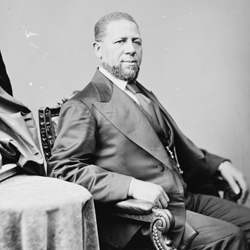 | 202002 25Hiram Revels: First African American Senator
February 25, 2020
One hundred and fifty years ago, on February 25, 1870, visitors in the packed Senate galleries burst into applause as Senator-elect Hiram Revels, a Republican from Mississippi, entered the Chamber to take his oath of office. Those present knew that they were witnessing an event of great historical significance. Revels was about to become the first African American to serve in the United States Congress.
Welcome to Senate Stories, our new Senate history blog. In recognition of Black History Month, our first blog post celebrates the sesquicentennial of the swearing in of Hiram Rhodes Revels, the first African American senator.
One hundred and fifty years ago, on February 25, 1870, visitors in the packed Senate galleries burst into applause as Senator-elect Hiram Revels, a Republican from Mississippi, entered the Chamber to take his oath of office. Those present knew that they were witnessing an event of great historical significance. Revels was about to become the first African American to serve in the United States Congress. Just 22 days earlier, on February 3, the Fifteenth Amendment to the Constitution was ratified, prohibiting states from disenfranchising voters “on account of race, color, or previous condition of servitude.” Revels was indeed “the Fifteenth Amendment in flesh and blood,” as his contemporary, the civil rights activist Wendell Phillips, dubbed him.
Hiram Revels was born a free man in Fayetteville, North Carolina, on September 27, 1827, the son of a Baptist preacher. As a youth, he took lessons at a private school run by an African American woman and eventually traveled north to further his education. He attended seminaries in Indiana and Ohio, becoming a minister of the African Methodist Episcopal Church in 1845, and eventually studied theology at Knox College in Illinois. During the turbulent decade of the 1850s, Revels preached to free and enslaved men and women in various states while surreptitiously assisting fugitive slaves.
When the Civil War began in 1861, Revels was serving as a pastor in Baltimore. Before long, he was forming regiments of African American soldiers in Maryland, serving as a Union army chaplain in Mississippi, and establishing schools for freed slaves in Missouri. He settled in Natchez, Mississippi, at war’s end, where he served as presiding elder of the African Methodist Episcopal Church. In 1868 he gained his first elected position, as alderman for the town of Natchez. The next year he won election to the state senate, as one of 35 African Americans elected to the Mississippi state legislature that year.
In 1870, as Mississippi sought readmission to representation in the U.S. Congress, the Republican Party firmly controlled both houses of Congress and also dominated the southern state legislatures. That, along with the pending ratification of the Fifteenth Amendment, set the stage for the election of Congress’s first African American members. One of the first orders of business for the new Mississippi state legislature when it convened on January 11, 1870, was to fill the vacancies in the United States Senate, which had remained empty since the 1861 withdrawal of Albert Brown and future Confederate president Jefferson Davis. Representing around one-quarter of the state legislative body, the black legislators insisted that one of the vacancies be filled by a black member of the Republican Party. “An opportunity of electing a Republican to the United States Senate, to fill an unexpired term occurred,” Revels later recalled, “and the colored members after consulting together on the subject, agreed to give their influence and votes for one of their own race for that position, as it would in their judgement be a weakening blow against color line prejudice.” Since Revels had impressed his colleagues with an impassioned prayer at the opening of the session, legislators agreed that the shorter of the two terms, set to expire in March 1871, would go to him.
Mississippi gained readmission on February 23, 1870, and Senator Henry Wilson, one of the Senate’s strongest civil rights advocates, promptly presented Revels’s credentials to the Senate. Immediately, three senators issued a challenge. They charged that Revels had not been a U.S. citizen for the constitutionally required nine years. Citing the 1857 Dred Scott Supreme Court decision, they argued that Revels did not gain citizenship until at least 1866, with passage of that year’s civil rights act, and perhaps not until the Fourteenth Amendment was ratified in 1868. By this logic, Revels could claim that he had been a U.S. citizen for, at most, four years.
Revels and his supporters dismissed the challenge. The Fourteenth Amendment had repealed the Dred Scott decision, they insisted, and they pointed out that long before 1866 Revels had voted in the state of Ohio. Certainly that qualified him as a citizen. “The time has passed for argument. Nothing more need be said …. For a long time it has been clear that colored persons must be senators,” Massachusetts senator Charles Sumner declared, bringing the debate to an end with a stirring speech. “All men are created equal, says the great Declaration, and now a great act attests to this verity. Today we make the Declaration a reality.” By an overwhelming margin, the Senate voted 48 to 8 to seat Revels. Escorted to the well by Senator Wilson, Revels took the oath of office on February 25, 1870.
Three weeks later, the Senate galleries were again filled to capacity as Revels rose to deliver his maiden speech. Seeing himself as a representative of African American interests throughout the nation, Revels spoke against an amendment to the Georgia readmission bill that could be used to prevent blacks from holding state office. “Perhaps it were wiser for me, so inexperienced in the details of senatorial duties, to have remained a passive listener in the progress of this debate,” he began, acknowledging the Senate tradition of waiting a year or more to deliver a major address, “but when I remember that my term is short, and that the issues with which this bill is fraught are momentous in their present and future influence upon the well-being of my race, I would seem indifferent to the importance of the hour and recreant to the high trust imposed upon me if I hesitated to lend my voice on behalf of the loyal people of the South.”
Revels made good use of his time in office, championing education for black Americans, speaking out against racial segregation, and fighting efforts to undermine the civil and political rights of African Americans. When his brief term ended on March 3, 1871, he returned to Mississippi, where he later became president of Alcorn College.
During the Reconstruction Era, a total of 17 African Americans served in the United States Congress, 15 in the House of Representatives and two in the Senate. In 1874 the Mississippi legislature elected Blanche K. Bruce to a full Senate term. Bruce, who had escaped slavery at the outbreak of the Civil War, became the first African American to preside over the Senate in 1879. Another eight decades passed before Senator Edward Brooke of Massachusetts followed in Revels and Bruce’s historic footsteps to take office in 1967.
The significance of the courageous and pioneering service of Revels, Bruce, and the other African American congressmen of the Reconstruction Era cannot be overstated. Although the struggle to fully achieve equality would continue for years to come, their remarkable accomplishments opened doors for others to follow.
|